Livefood Hub
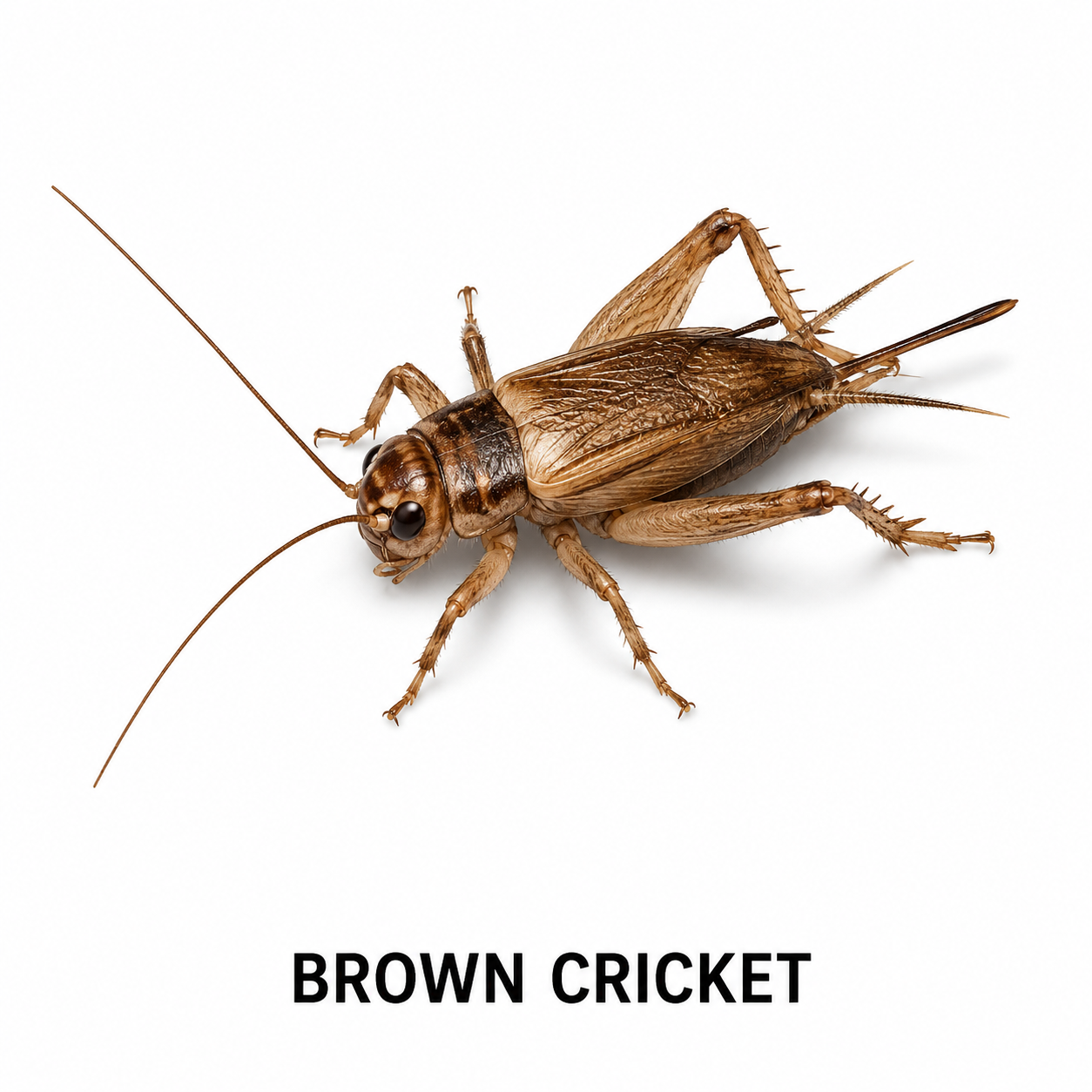
Brown Cricket for Bearded Dragons
A classic feeder that gives great hunting stimulation, but crickets smell, escape and die off faster than roaches.
Classic UK feederActive preyGood hunting
 Beardie App
Quick verdict
Staple / rotation feeder
Medium
Medium
Nutrition
| Protein | approx. 15% |
|---|---|
| Fat | approx. 3% |
| Moisture | approx. 77% |
| Calcium : Phosphorus | approx. 1:9 |
Good feeder when gut-loaded, but should be dusted due to poor calcium balance.
Nutrition values vary depending on age, gut-loading, hydration and supplier. Use these figures as a practical guide, not a lab guarantee.
Care
Keep in a ventilated tub with egg crates, dry food and vegetable moisture or water gel. Remove dead crickets quickly.
Breeding
Use a moist egg-laying container, then separate eggs from adults to avoid them being eaten.
Breeding Brown Cricket is worth trying if you need many small feeders, but many keepers prefer buying crickets because smell, die-offs and egg management can become annoying.
Brown Cricket can be bred at home, but crickets are usually more work than roaches. They need strong ventilation, regular cleaning, safe hydration and a separate egg-laying setup.
Cricket eggs usually hatch faster in warm conditions, but the full process from egg to useful feeder size takes planning, space and separate containers.
Feeding advice
Feed appropriately sized insects, no larger than the space between your bearded dragon's eyes. Gut-load livefood before feeding, dust with supplements as needed, and never treat one feeder as perfect. Variety, correct sizing and good husbandry matter more than chasing one “best” insect.
FAQ
Yes, bearded dragons can eat Brown Cricket when the feeder is healthy, gut-loaded and correctly sized. As with all livefood, the insect should be no larger than the space between the dragon's eyes. Brown Cricket can work well as part of a regular feeder rotation when balanced with greens and supplements.
Brown Cricket can be offered regularly as part of a balanced livefood rotation, with the exact amount depending on the dragon's age, body condition and appetite. Babies and juveniles usually eat insects more often than adults, while adult bearded dragons should have a diet led more by safe greens and vegetables.
Brown Cricket can be a good staple or strong rotation feeder when it is gut-loaded, dusted correctly and fed in the right size. No feeder insect is perfect, so variety and correct husbandry matter more than choosing one insect forever.
Keep in a ventilated tub with egg crates, dry food and vegetable moisture or water gel. Remove dead crickets quickly. Keep the container clean, remove dead insects or mouldy food quickly, and follow the supplier's storage advice. Crickets need strong ventilation and should not be left damp, as poor conditions quickly cause smell and die-offs.