Livefood Hub
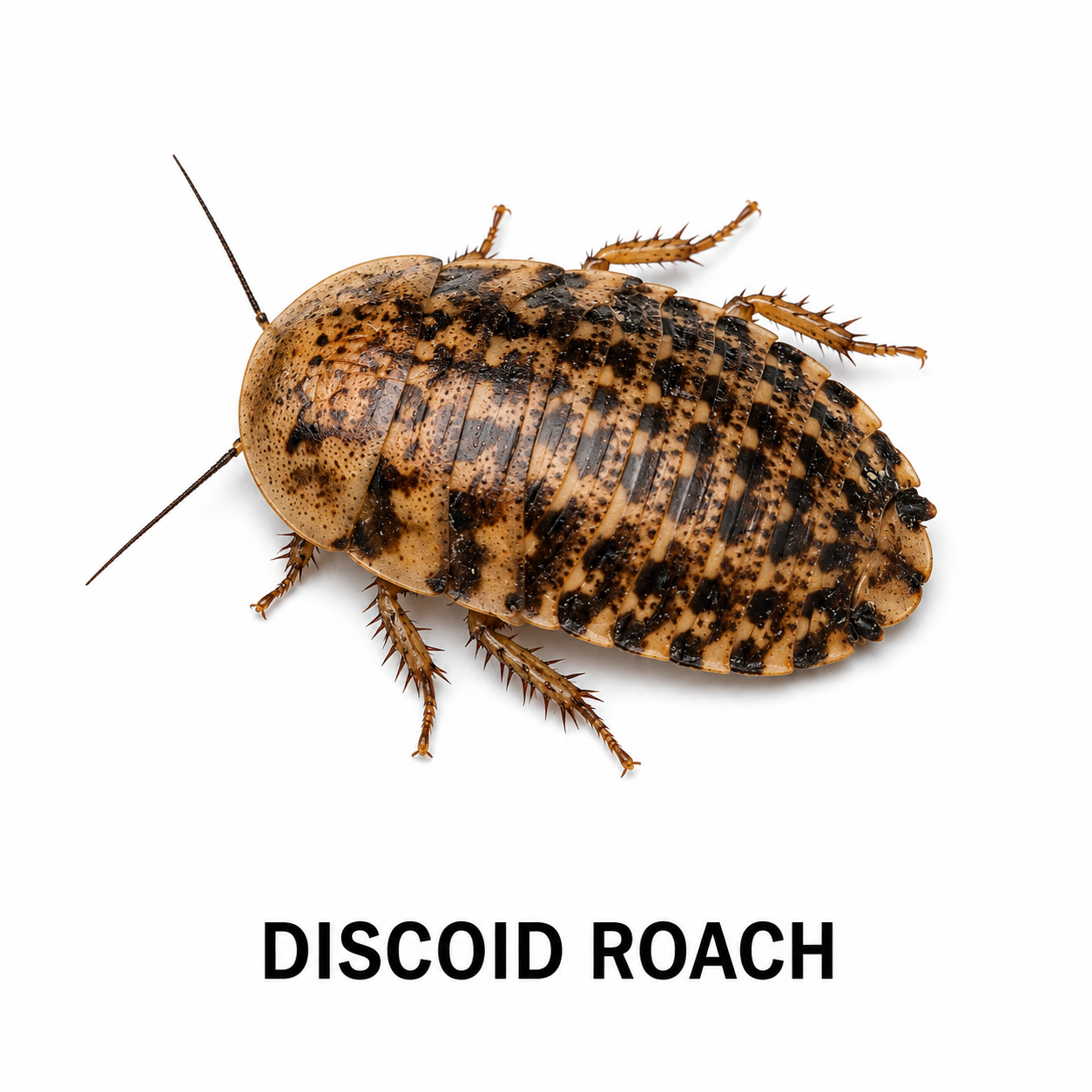
Discoid Roach for Bearded Dragons
A strong Dubia-style staple alternative, especially where Dubia roaches are unavailable or restricted.
Staple alternativeRoach feederGood nutrition
 Beardie App
Quick verdict
Staple feeder
Easy
Medium
Nutrition
| Protein | approx. 20% |
|---|---|
| Fat | approx. 7% |
| Moisture | approx. 66% |
| Calcium : Phosphorus | varies |
Practical staple alternative with similar use to Dubia roaches.
Nutrition values vary depending on age, gut-loading, hydration and supplier. Use these figures as a practical guide, not a lab guarantee.
Care
Keep similarly to Dubia roaches: warm plastic tub, egg crates, dry food, ventilation and vegetable moisture.
Breeding
Breed warm and stable. Easier than many feeders, but slower than Red Runners.
Breeding Discoid Roach is worth considering if you use roaches every week and have space for a secure warm tub. Roach colonies are not instant, but once established they are usually quieter and easier to manage than crickets.
Discoid Roach should be bred in a warm, dry-ish, well-ventilated colony setup. The goal is stable warmth, good airflow, lots of hiding surface, dry food and controlled moisture from vegetables — not a wet habitat.
Discoid Roach colonies can take weeks to settle and several months to become a reliable feeder source. Warmth, food quality and starter colony size make a big difference.
Feeding advice
Feed appropriately sized insects, no larger than the space between your bearded dragon's eyes. Gut-load livefood before feeding, dust with supplements as needed, and never treat one feeder as perfect. Variety, correct sizing and good husbandry matter more than chasing one “best” insect.
FAQ
Yes, bearded dragons can eat Discoid Roach when the feeder is healthy, gut-loaded and correctly sized. As with all livefood, the insect should be no larger than the space between the dragon's eyes. Discoid Roach can work well as part of a regular feeder rotation when balanced with greens and supplements.
Discoid Roach can be offered regularly as part of a balanced livefood rotation, with the exact amount depending on the dragon's age, body condition and appetite. Babies and juveniles usually eat insects more often than adults, while adult bearded dragons should have a diet led more by safe greens and vegetables.
Discoid Roach can be a good staple or strong rotation feeder when it is gut-loaded, dusted correctly and fed in the right size. No feeder insect is perfect, so variety and correct husbandry matter more than choosing one insect forever.
Keep similarly to Dubia roaches: warm plastic tub, egg crates, dry food, ventilation and vegetable moisture. Keep the container clean, remove dead insects or mouldy food quickly, and follow the supplier's storage advice. Roaches usually do best with warmth, ventilation and plenty of hides.