Livefood Hub
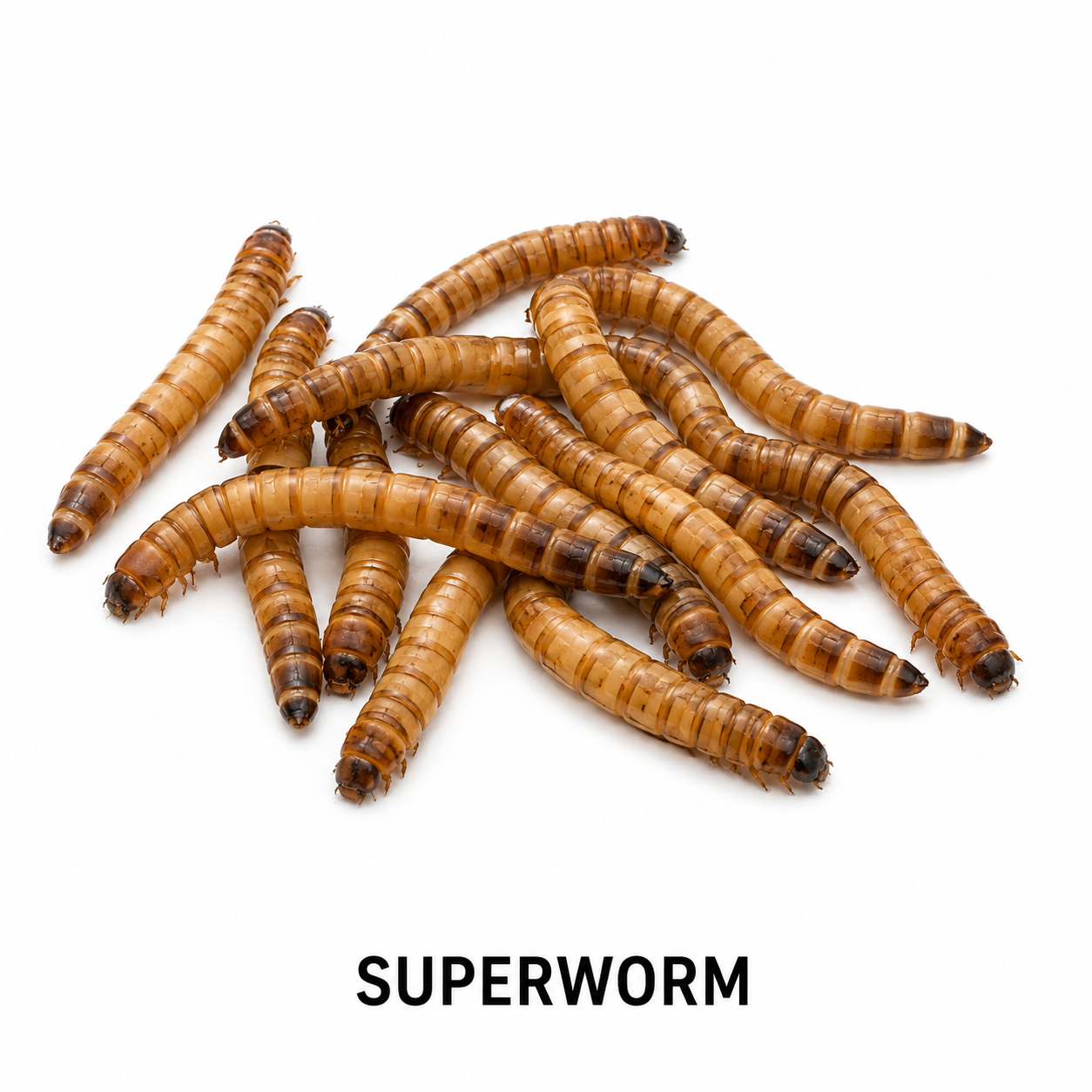
Superworms for Bearded Dragons
Very tempting for dragons, but higher fat and poor calcium balance mean they are best for occasional adult rotation.
PalatableHigher fatAdults only
 Beardie App
Quick verdict
Occasional adult rotation
Easy
Medium
Nutrition
| Protein | approx. 20% |
|---|---|
| Fat | approx. 18% |
| Moisture | approx. 58% |
| Calcium : Phosphorus | approx. 1:18 |
Best used occasionally for adult dragons, not as a staple.
Nutrition values vary depending on age, gut-loading, hydration and supplier. Use these figures as a practical guide, not a lab guarantee.
Care
Keep in bran, oats or dry bedding with small vegetable pieces for moisture.
Breeding
To breed, isolate individual larvae so they pupate, then allow beetles to breed.
Superworms are worth breeding only if you use them regularly for adult reptiles. They are higher in fat and should not become the main diet for bearded dragons.
Superworms usually need to be isolated individually before they pupate. If kept together, many larvae remain in the worm stage for a long time.
The process takes patience because isolation, pupation, beetle maturity and egg production all add time before new feeder-sized worms appear.
Feeding advice
Feed appropriately sized insects, no larger than the space between your bearded dragon's eyes. Gut-load livefood before feeding, dust with supplements as needed, and never treat one feeder as perfect. Variety, correct sizing and good husbandry matter more than chasing one “best” insect.
FAQ
Yes, bearded dragons can eat Superworms when the feeder is healthy, gut-loaded and correctly sized. As with all livefood, the insect should be no larger than the space between the dragon's eyes. Superworms is best used as part of a varied feeder rotation rather than the only insect offered.
Superworms works best as a rotation feeder. Offer it alongside other suitable insects instead of relying on it every day. Babies and juveniles usually eat insects more often than adults, while adult bearded dragons should have a diet led more by safe greens and vegetables.
Superworms is not the best single staple feeder for every dragon. It is better used for variety, enrichment or a specific feeding role rather than as the only feeder. No feeder insect is perfect, so variety and correct husbandry matter more than choosing one insect forever.
Keep in bran, oats or dry bedding with small vegetable pieces for moisture. Keep the container clean, remove dead insects or mouldy food quickly, and follow the supplier's storage advice. Worms and larvae often depend heavily on correct storage, clean bedding or the right food source.