Colour & Polygenic Traits
Genetic Stripe
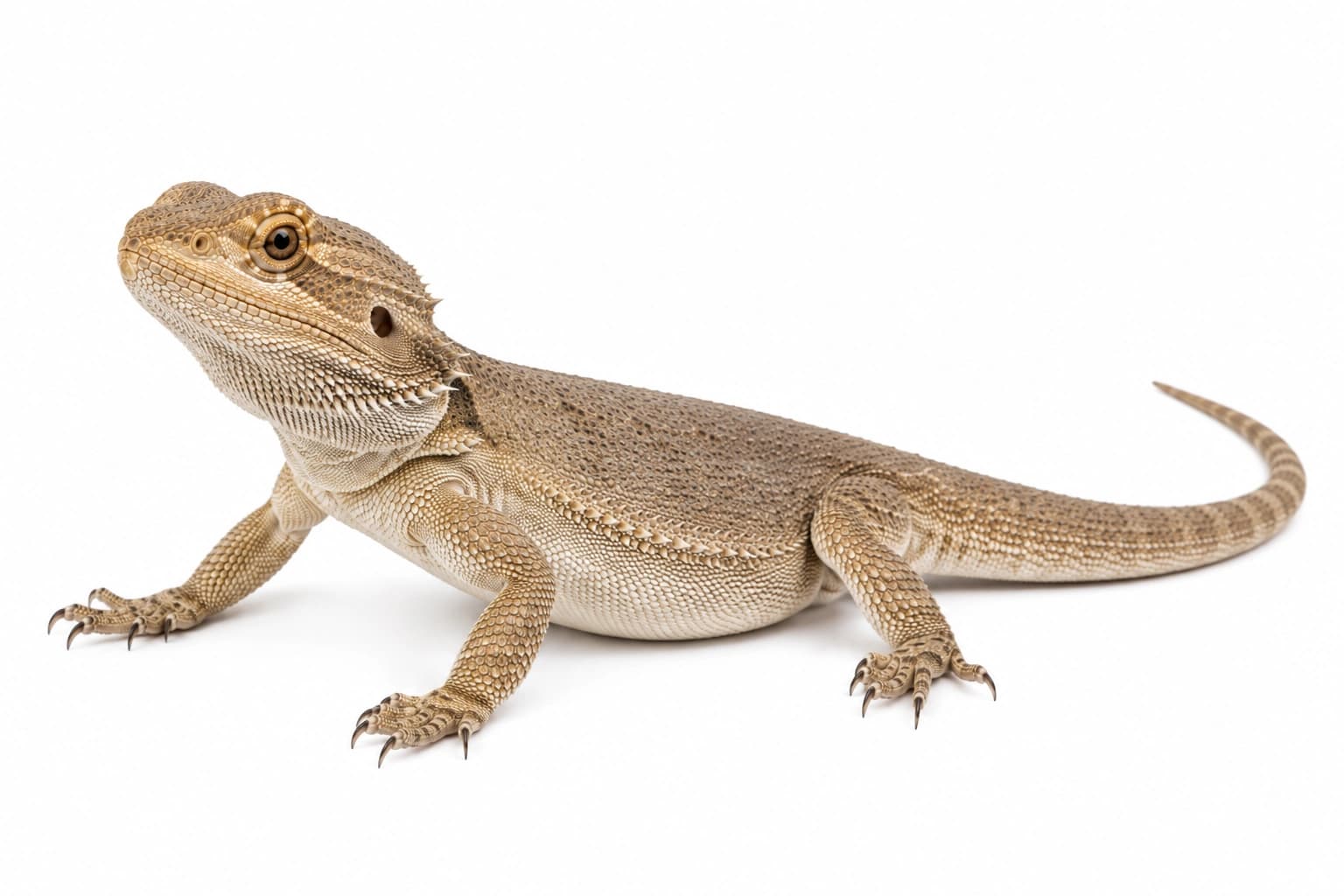
Bearded Dragon
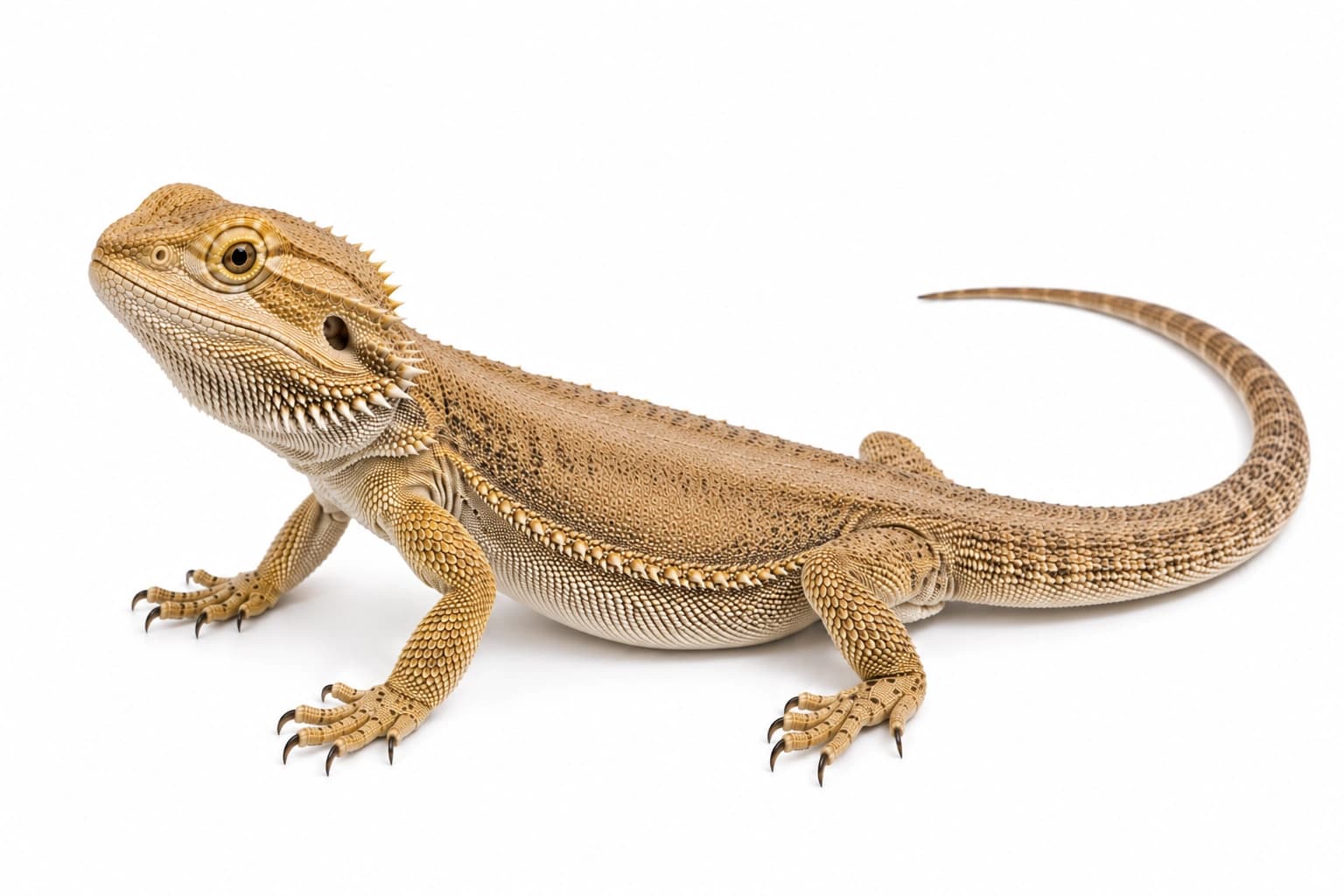
A distinctive heritable pattern recognised by paired longitudinal stripes running along the back towards the tail.
Genetic Stripe Bearded Dragons display two organised longitudinal lines running along either side of the spine from the neck towards the tail. The trait is heritable but highly variable and is better described as fixed-poly or selectively developed than as a predictable simple dominant mutation.
Trait type
Heritable pattern trait
Primary feature
Two dorsal stripes
Pattern direction
Longitudinal
Inheritance
Variable fixed poly
Het form
No simple Het G Stripe
Care requirements
Standard
Morph DNA
Genetic Stripe Morph Profile
trait
Genetic Stripe pattern
trait Type
A heritable selectively developed pattern characterised by paired longitudinal dorsal lines
inheritance
Variable fixed-poly expression rather than a consistently predictable simple dominant or recessive model
visual Expression
Two lines running along either side of the spine from the neck towards the tail
hidden Traits
There is no established hidden Het Genetic Stripe category comparable with recessive morph carriers
beginner Friendly
Yes. Genetic Stripe pattern does not normally create specialised husbandry requirements
Morph Overview
What Is a Genetic Stripe Bearded Dragon?
Genetic Stripe is a distinctive Bearded Dragon pattern characterised by two longitudinal lines running along the back.
The stripes usually begin near the neck or shoulders and continue along either side of the spine towards the base of the tail.
In high-expression animals, the lines may remain relatively straight, parallel and uninterrupted across most of the dorsal surface.
Some stripes continue visibly onto the tail. Others become weaker, broken or less organised near the hips.
The name Genetic Stripe is used to distinguish the heritable selectively developed pattern from ordinary stripes or lines that may appear through natural variation.
However, the word genetic must not be interpreted as proof of one simple dominant mutation.
Captive-breeding descriptions report substantial variation within Genetic Stripe clutches.
Some offspring may display strong, clean dorsal lines. Others may show incomplete, broken or lower-quality striping, while some can appear close to Normal.
For this reason, the trait is often described as a fixed poly or complex heritable pattern rather than a reliably expressed single-gene dominant trait.
There is no recognised Het Genetic Stripe classification comparable with Het Hypo, Het Translucent, Het Zero or Het Witblits.
An animal with Genetic Stripe ancestry but weak or absent visible striping may contribute pattern potential to offspring, but it should not be described as a hidden carrier of one proven recessive allele.
The direction of the pattern is central to identification.
Genetic Stripe lines run longitudinally, following the length of the body.
This differs from Tiger, where bands generally run transversely across the width of the body and tail.
Genetic Stripe should also be distinguished from Dunner.
Dunner changes the physical direction of the scales and commonly produces irregular, asymmetrical or multidirectional patterning.
Genetic Stripe alone does not create multidirectional scales.
The traits can occur together.
A Genetic Stripe Dunner may show lengthwise dorsal lines combined with irregular scale orientation and additional pattern disruption.
Genetic Stripe can also occur with Hypo, Translucent, Leatherback, Zero, Witblits and selectively bred colour lines.
A Red Genetic Stripe may display red pigmentation around the paired dorsal lines. A Hypo Genetic Stripe combines the pattern with clear claws and reduced melanin.
Each characteristic must be identified and recorded independently.
Colour does not define Genetic Stripe.
The pattern may occur on brown, tan, yellow, orange, red, grey or multicoloured animals.
Head Details
Head, Neck and Beginning of the Stripe Pattern
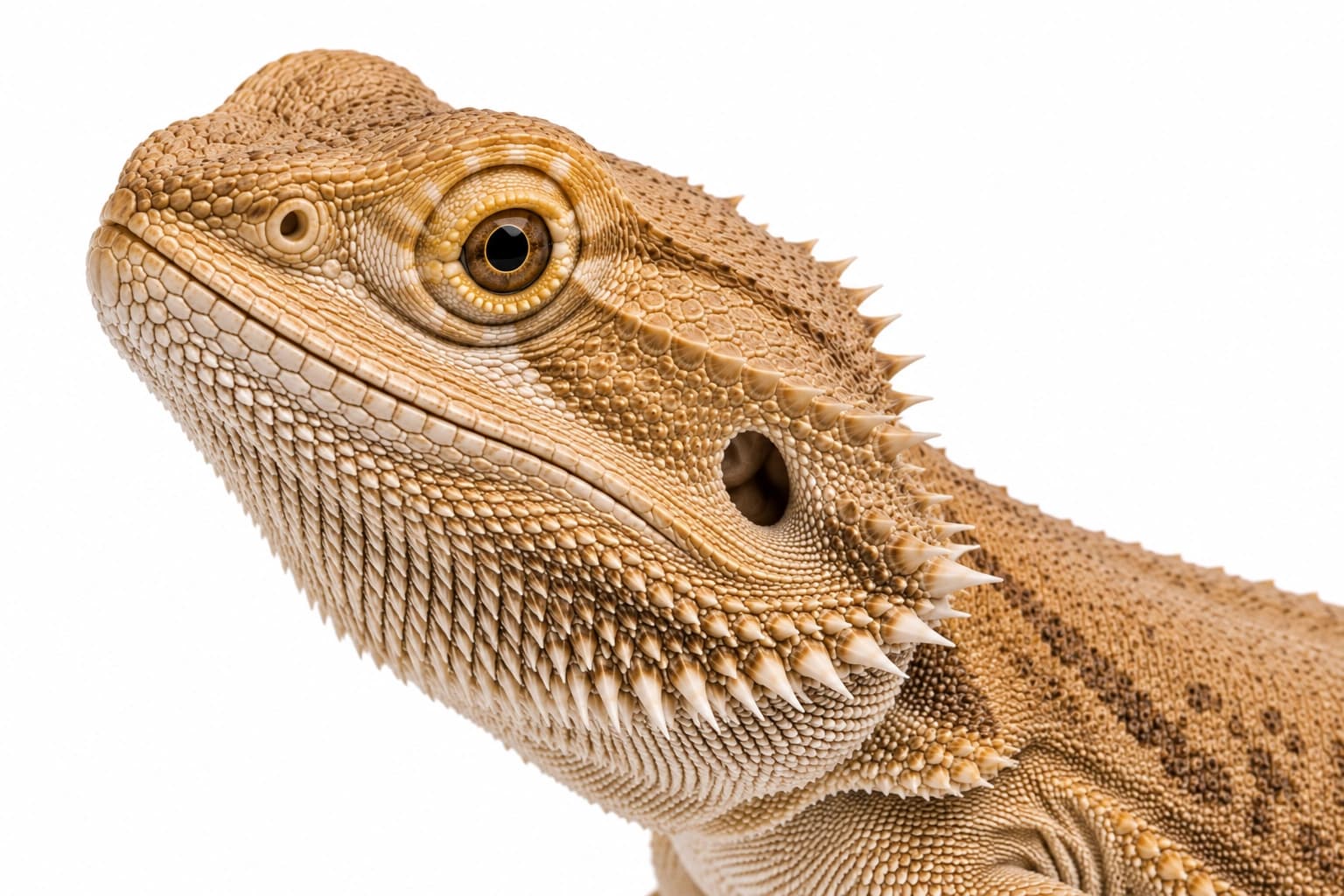
The head of a Genetic Stripe Bearded Dragon retains the broad triangular structure typical of Pogona vitticeps.
The stripe pattern usually becomes most relevant behind the head, around the neck and shoulders.
In well-defined animals, two organised lines begin near the rear of the head or shoulder region and continue backwards along either side of the spine.
Facial markings vary considerably.
The head may display bands, spots, colour patches or a relatively clean appearance depending on the dragon’s wider genetics and selective line.
Genetic Stripe does not independently alter facial scale direction.
Irregular facial scales and outward-pointing beard spikes may indicate an additional Dunner trait.
The eyes are not changed by Genetic Stripe alone.
A visible iris and pupil are generally expected unless another morph affects their appearance.
Claw pigmentation is also separate.
Clear or pale claws indicate visual Hypo, while normally dark-pigmented claws can occur in non-Hypo Genetic Stripe dragons.
Head colour depends on the wider colour line and may be brown, yellow, orange, red or multicoloured.
Characteristic Feature
Paired Longitudinal Dorsal Stripes
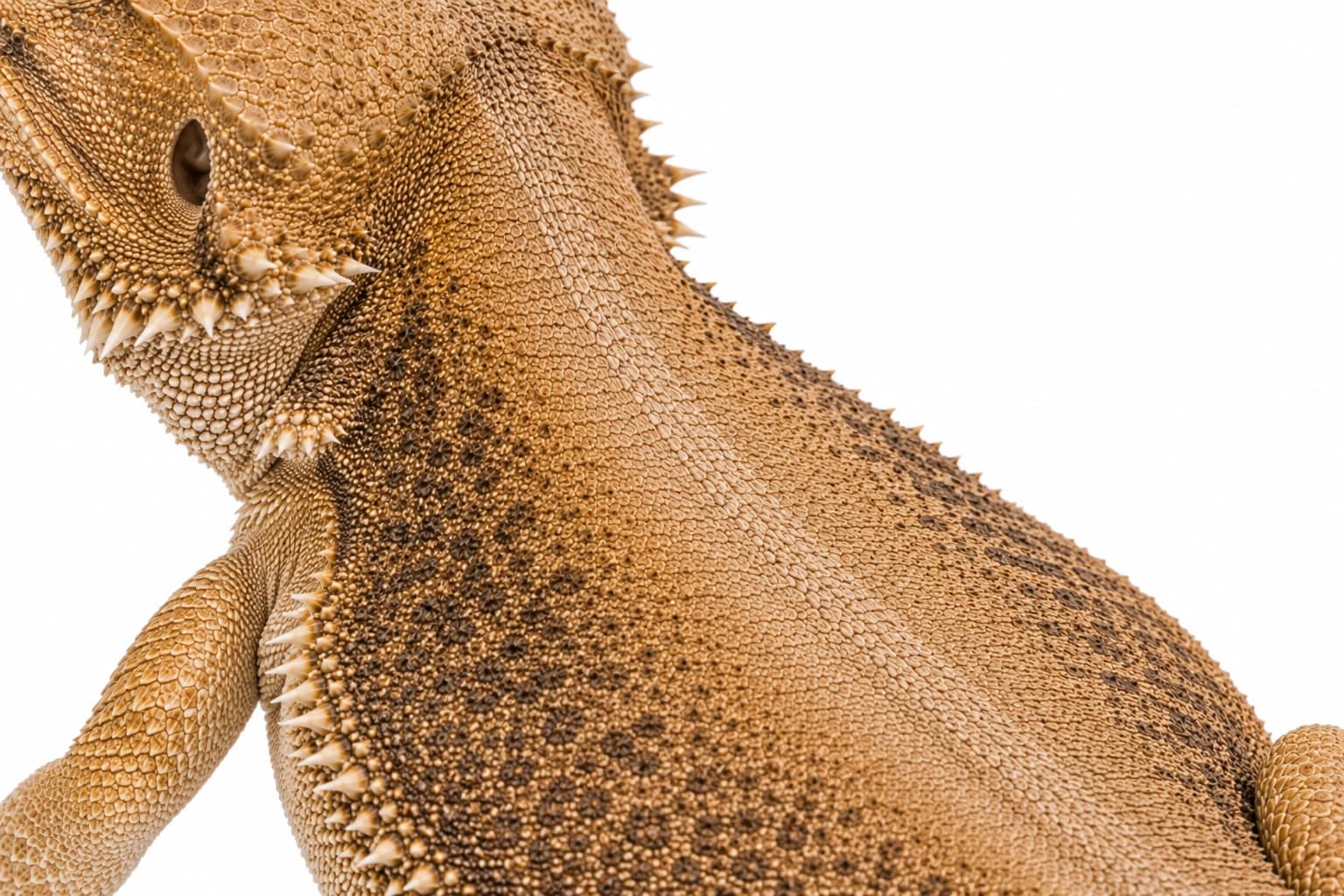
The characteristic feature of Genetic Stripe is a pair of longitudinal lines running along the back.
Longitudinal means that the stripes follow the length of the dragon from the neck towards the tail.
They do not primarily cross the body from side to side.
The stripes normally sit on either side of the spine and should remain recognisable across a meaningful portion of the dorsal surface.
High-expression lines may be straight, parallel and largely uninterrupted.
Lower-expression animals may show breaks, uneven width, fading or partial striping.
Expression therefore exists across a range.
Captive-breeding reports describe significant variation even within related offspring. Not every descendant displays two perfect unbroken lines.
The feature should be separated from ordinary juvenile markings.
Natural pattern can occasionally create short lengthwise elements, but Genetic Stripe identification is strongest when paired dorsal lines are organised, repeated through development and supported by ancestry.
The feature should also be separated from Tiger.
Tiger primarily produces transverse bands across the body and tail. Genetic Stripe follows the length of the back.
Scale direction must be examined when comparing with Dunner.
Genetic Stripe alone retains normally organised scales. Repeated multidirectional scales indicate additional Dunner expression.
Identification Guide
How to Identify a Genetic Stripe Bearded Dragon
To identify a Genetic Stripe Bearded Dragon, begin by examining the dorsal pattern from above.
Look for two organised lines running along either side of the spine.
The lines should begin near the neck or shoulders and continue towards the hips or tail.
Next, assess their direction.
Genetic Stripe lines follow the length of the body. Prominent bands crossing the width of the dragon are more consistent with Tiger pattern.
The stripes do not have to be perfectly continuous.
Expression can range from clean, uninterrupted lines to partially broken or uneven striping.
However, a few isolated lengthwise marks are not enough to confirm Genetic Stripe.
Inspect the physical scales.
Genetic Stripe alone does not produce multidirectional scalation. Scales pointing forwards, sideways and diagonally may indicate an additional Dunner trait.
Examine the pattern throughout growth.
Juvenile stripes may be strongly contrasted and can soften, strengthen or become more interrupted as the animal matures.
Assess other characteristics independently.
Clear claws indicate Hypo. Reduced dorsal scales indicate Leatherback. Dark eyes or reduced skin opacity may support Translucent.
Consider neutral lighting.
Temperature, stress and shedding can change pattern contrast, although they do not alter the underlying direction of the stripes.
Finally, examine documented ancestry.
Because expression is highly variable and does not behave like a consistently predictable simple dominant trait, lineage provides valuable support.
The strongest identification combines paired longitudinal stripes, appropriate dorsal placement, development through age and reliable breeding history.
Juvenile Development
What Does a Juvenile Genetic Stripe Bearded Dragon Look Like?
Juvenile Genetic Stripe Bearded Dragons may display paired dorsal lines from an early age.
The stripes commonly begin behind the head or across the shoulders and extend along either side of the spine towards the hips and tail.
Juvenile contrast may be particularly strong.
Dark or clearly outlined stripes can stand out against a lighter tan, yellow, orange, red or cream background.
However, juvenile expression is variable.
Some hatchlings display clean, nearly uninterrupted lines. Others show narrow, broken, uneven or partially developed stripes.
Clutchmates from the same pairing may differ considerably.
One juvenile may show high-quality continuous lines, another may have lower-expression striping and another may appear close to a normally patterned dragon.
The pattern can change through growth.
Stripes may widen, narrow, fade or become more interrupted as the back expands. In other animals, previously subtle lines become more organised after repeated sheds.
Final adult pattern quality cannot be guaranteed from one hatchling photograph.
Natural juvenile markings can also create short lengthwise elements.
A Genetic Stripe identification is strongest when two organised dorsal lines persist through development and are supported by documented ancestry.
Colour should be evaluated separately.
A juvenile may be Yellow, Citrus, Orange, Red, Hypo or another colour combination while displaying the same basic stripe direction.
Clear claws indicate visual Hypo rather than Genetic Stripe. Reduced dorsal scales indicate Leatherback. Multidirectional scales indicate Dunner.
Skin approaching a shed may become pale, grey or dull, temporarily reducing stripe contrast.
A cold or stressed juvenile may darken and make the lines appear more prominent.
Neutral photographs taken after several sheds provide a more reliable record of pattern development.
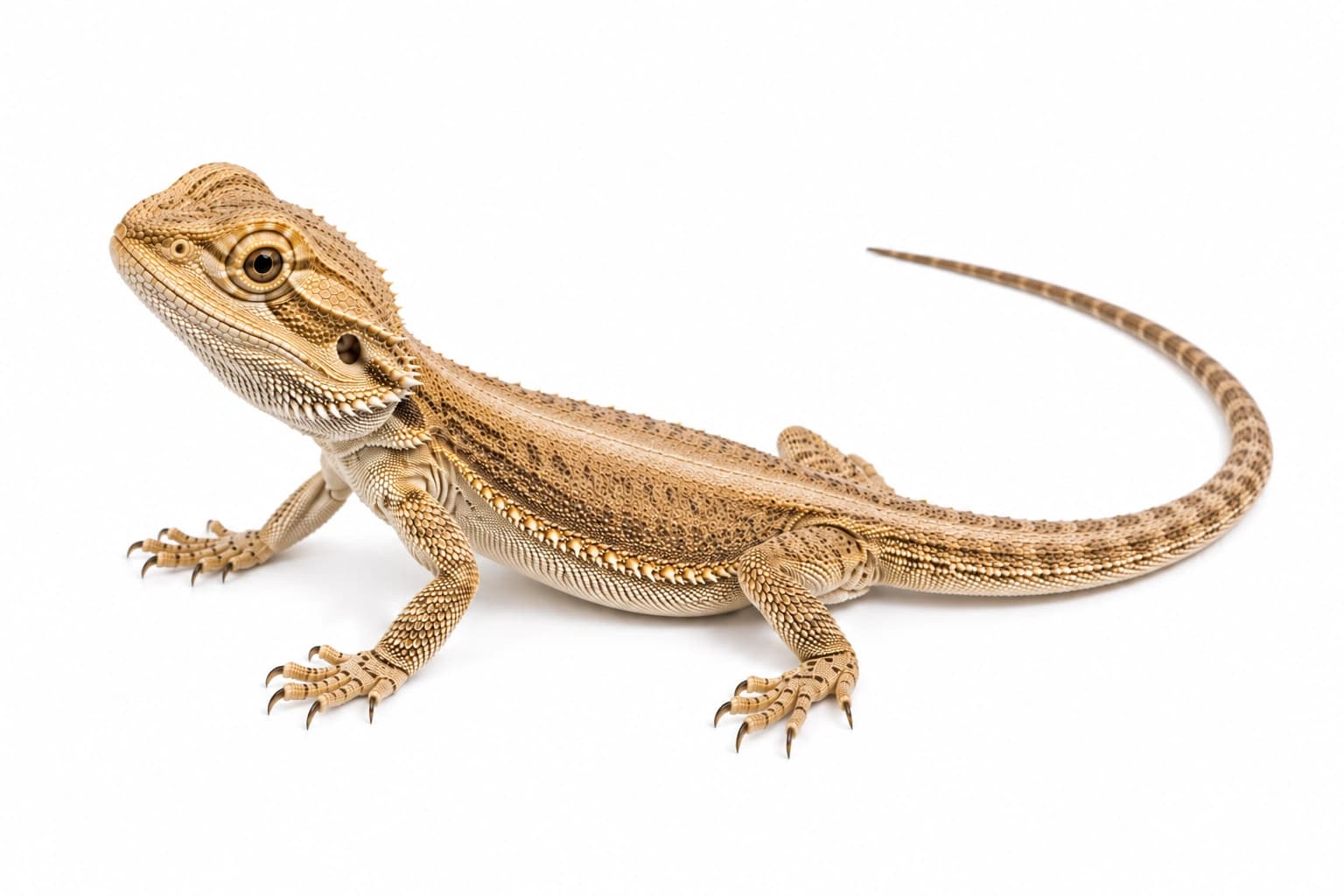
Appearance
Genetic Stripe Bearded Dragon Appearance
The defining appearance of a Genetic Stripe Bearded Dragon is a pair of organised longitudinal lines across the back.
The stripes generally sit on either side of the spine rather than forming one central line.
They commonly begin behind the head or across the shoulders and continue towards the hips and tail.
High-expression animals may have relatively straight, clean and uninterrupted stripes.
Moderate-expression dragons may display lines that narrow, widen, fade or break into shorter sections.
The distance between the stripes can also vary.
Some animals show a narrow central dorsal area, while others have more widely separated lines positioned closer to the sides of the back.
Stripe colour depends on the dragon’s wider pigmentation.
Dark brown, grey, burgundy, orange, red or lighter cream lines may contrast against the surrounding body colour.
In some dragons, the stripes are defined primarily by cleaner edges or reduced pattern inside the central dorsal area rather than by one dramatically different pigment.
The surrounding pattern may include spots, bands, side bars or irregular markings.
Genetic Stripe does not automatically remove all other pattern.
A Genetic Stripe Tiger may display longitudinal dorsal lines together with transverse body bands.
A Genetic Stripe Dunner may show disrupted markings and multidirectional scales around the stripe pattern.
The tail may continue the paired-line effect or transition into bands and natural markings.
Scale structure is inherited separately.
A normally scaled Genetic Stripe retains standard rough dorsal scales. A Genetic Stripe Leatherback has reduced dorsal scalation, which can make the lines appear cleaner.
Claw pigmentation is also independent.
Clear claws indicate visual Hypo rather than proving Genetic Stripe.
Eye appearance is not defined by the stripe pattern.
Very dark or solid-looking eyes may be connected with Translucent expression or individual variation.
Pattern visibility can change temporarily.
A cold or stressed dragon may darken, increasing contrast. Skin approaching a shed may become dull or pale, while freshly shed areas can show cleaner lines.
Neutral lighting and repeated observations provide the most reliable assessment.
Adult Development
Adult Genetic Stripe Bearded Dragon
Adult Genetic Stripe Bearded Dragons may retain two organised longitudinal lines running along the back.
As the dragon matures, the body becomes broader and more muscular. This growth can alter the width, separation and continuity of the stripes.
High-expression adults may preserve clean, parallel lines from the shoulders towards the hips or tail.
Moderate-expression animals may develop interruptions, uneven sections or fading along part of the dorsal surface.
The stripes do not need to be perfectly identical on both sides.
Some asymmetry can occur without changing the general Genetic Stripe classification.
Pattern retention is an important selective-breeding characteristic.
Breeders may prefer adults whose lines remain clearly visible after juvenile development rather than selecting solely from strongly striped hatchlings.
Adult colour remains independent from Genetic Stripe pattern.
The lines may appear against brown, tan, yellow, orange, red, grey or multicoloured pigmentation.
A Red Genetic Stripe may have dark crimson or burgundy lines. A Hypo Genetic Stripe may display softer pattern contrast because of reduced melanin.
A Genetic Stripe Leatherback may show cleaner-looking lines because smaller dorsal scales interrupt the visible surface less.
A Genetic Stripe Dunner may display irregular scale direction and more disrupted striping due to the independent Dunner trait.
An adult Genetic Stripe Tiger may combine lengthwise dorsal lines with transverse body or tail bands.
Temporary colour changes can affect visible contrast.
A cold or stressed dragon may darken, while a warm and relaxed animal may appear lighter. Shedding can temporarily make parts of the stripes look uneven.
Adult identification should rely on persistent pattern direction, development history and lineage rather than one photograph.
Genetics
Genetic Stripe Genetics and Inheritance
Genetic Stripe is a heritable Bearded Dragon pattern, but its inheritance is not described consistently across captive-breeding sources.
Some databases classify Genetic Stripe broadly as dominant.
However, breeder descriptions also report extreme variation within clutches and describe the trait as behaving more like a fixed poly than a predictable simple dominant mutation.
A simple dominant model would normally allow breeders to calculate consistent visual probabilities from known parental genotypes.
Reported Genetic Stripe outcomes do not appear sufficiently uniform for that assumption.
Related offspring may include high-expression stripes, lower-quality or broken stripes and animals that appear close to Normal.
For this reason, this encyclopedia treats Genetic Stripe as a heritable, variably expressed and selectively developed pattern rather than presenting guaranteed dominant percentages.
There is no widely established simple Het Genetic Stripe category.
Het terminology should not be applied as though Genetic Stripe were a confirmed recessive mutation with invisible single-copy carriers.
An animal with Genetic Stripe ancestry but weak visible expression may still contribute pattern potential to its offspring.
It should be described through its actual appearance and documented ancestry rather than labelled Het Genetic Stripe.
Expression exists across a range.
High-expression animals may have two clean, parallel and largely uninterrupted lines. Moderate animals may have broken or uneven stripes, while lower-expression descendants may look close to Normal.
Selective breeding can increase the consistency of the pattern.
Breeders may choose parents with desirable stripe length, continuity, symmetry, contrast and adult retention.
Even so, the exact appearance of every offspring cannot be guaranteed.
Genetic Stripe remains separate from established colour and structural morphs.
A Hypo Genetic Stripe combines the stripe pattern with the recessive Hypo trait. A Genetic Stripe Leatherback combines the pattern with reduced dorsal scalation.
Dunner, Translucent, Zero and Witblits must similarly be tracked through their own inheritance models.
Until the molecular basis and inheritance of Genetic Stripe are better established, breeding claims should clearly distinguish observed lineage outcomes from confirmed single-gene genetics.
Trait type
Heritable selectively developed pattern
Primary expression
Two longitudinal stripes along either side of the spine
Inheritance
Variable fixed-poly expression rather than reliably predictable simple Mendelian inheritance
Dominant classification
Used by some databases, but reported clutch variation does not support guaranteed simple percentages
Het Genetic Stripe
Not a clearly established hidden-carrier classification
Expression range
Varies from clean unbroken lines to partial, broken or weak striping
Breeding predictability
Pattern tendencies can be selected, but exact results are not guaranteed
Lineage
Important for documenting inherited stripe development
Care Guide
Caring for a Genetic Stripe Bearded Dragon
Genetic Stripe Bearded Dragons require the same fundamental husbandry as other healthy Pogona vitticeps.
The dorsal stripe pattern does not create separate UVB, heating, humidity, dietary or enclosure requirements.
Care should be based on the dragon’s species, age, size, health and individual condition rather than the continuity of its stripes.
The enclosure must provide sufficient usable space for movement, climbing, basking, hiding and behavioural thermoregulation.
A bright basking area should be positioned at one end, with progressively cooler and more shaded conditions available elsewhere.
A suitable linear UVB lamp is essential.
UVB exposure supports vitamin D3 production, calcium metabolism, skeletal health and muscular function. The UVB source should overlap appropriately with the basking area while allowing access to shade and lower exposure.
Temperatures should be measured using suitable equipment rather than estimated by touch.
Diet must be appropriate for the dragon’s age and condition.
Growing juveniles generally require more frequent access to appropriately sized live invertebrates. Healthy adults usually consume a greater proportion of varied leafy greens and safe vegetables.
Feeder insects should be correctly sized, well gut-loaded and supplemented according to an appropriate calcium and vitamin schedule.
Food cannot create an inherited Genetic Stripe pattern.
A balanced diet supports normal growth and skin health but cannot transform ordinary markings into a selectively developed stripe line.
The visibility of the stripes may change temporarily.
A cold or stressed dragon may darken, increasing contrast. A warm and relaxed animal may appear lighter.
Skin approaching a shed can become pale, grey or dull. Different areas may shed at different times, temporarily making one stripe appear weaker or broken.
Freshly shed skin often reveals cleaner colour and more visible pattern.
Lighting and image contrast can alter the apparent quality of the lines.
Pattern should therefore be assessed under neutral lighting and from a clear dorsal view.
Persistent changes in appetite, activity, weight, movement, breathing or body condition should be assessed independently from the pattern.
A veterinarian experienced with reptiles should investigate persistent or concerning health changes.
UVB
Provide a suitable linear UVB source that overlaps with the basking zone and creates access to appropriate exposure and shade.
Heating
Create a bright basking area and a cooler end so the dragon can regulate its body temperature naturally.
Diet
Offer an age-appropriate combination of nutritious live insects, leafy greens and safe vegetables.
Supplementation
Use an appropriate calcium and vitamin schedule alongside correct UVB exposure and a balanced diet.
Pattern assessment
Evaluate the stripes from above under neutral lighting and remember that shedding can temporarily interrupt their appearance.
Health monitoring
Monitor weight, appetite, activity, mobility, shedding and waste production rather than judging health from pattern quality.
Breeding
Genetic Stripe Breeding and Genetic Outcomes
Breeding Genetic Stripe Bearded Dragons is a selective pattern-breeding process.
Although the pattern is heritable, available breeder descriptions do not support treating every pairing as a simple dominant calculation.
Pairing two strong Genetic Stripe animals may improve the probability of producing organised dorsal lines, but it cannot guarantee identical pattern in every offspring.
Clutches may contain considerable variation.
Some hatchlings may display clean, uninterrupted stripes. Others may show broken or lower-expression lines, and some may appear close to Normal.
Breeding animals should be evaluated as adults.
Juvenile stripes can change as the back expands. An animal that looks exceptional when young may develop interrupted lines or reduced contrast later.
Important selection characteristics include stripe length, continuity, width, symmetry, placement, contrast and adult retention.
Lineage records are valuable.
Breeders should document the appearance of parents, grandparents, siblings and previous offspring. Multi-generational records provide better information than one visual label.
The term Het Genetic Stripe should not be used casually.
A weakly patterned or visually Normal descendant may have Genetic Stripe ancestry and pattern-producing potential, but that does not prove it carries one identified recessive allele.
When Genetic Stripe is combined with established morphs, each confirmed gene should be calculated separately.
Hypo, Translucent, Zero, Witblits, Leatherback and Dunner retain their own inheritance models regardless of stripe quality.
Genetic Stripe should also be separated from Tiger in breeding records.
Longitudinal dorsal lines and transverse Tiger banding represent different pattern characteristics, even when they occur in the same animal.
Health, structure, temperament and genetic diversity must take priority over stripe continuity.
Closely related animals should not be paired solely to preserve perfectly unbroken lines.
Responsible outcrossing may initially produce more variable pattern, but it can support healthier long-term breeding programmes.
Genetic Stripe × Genetic Stripe
May increase the likelihood of paired dorsal stripes, but offspring can range from high-expression unbroken lines to broken, weaker or nearly Normal pattern. No fixed visual percentage should be guaranteed.
Genetic Stripe × Normal-patterned line
May produce variable pattern expression. Some offspring may develop visible lengthwise lines, while others show partial stripes or ordinary natural markings.
High-expression Genetic Stripe × Moderate Genetic Stripe
May strengthen stripe quality within a selected line, but continuity, symmetry and adult retention remain variable.
Genetic Stripe × Tiger
May produce offspring with varying combinations of longitudinal dorsal lines and transverse body bands. Both pattern components should be evaluated separately.
Genetic Stripe × Dunner
Offspring inheriting Dunner may display multidirectional scales and disrupted pattern organisation. Dunner inheritance must be tracked separately from stripe expression.
Genetic Stripe Leatherback × Normal-scale Genetic Stripe
Leatherback outcomes depend on the scale genetics. Offspring inheriting Leatherback may show cleaner-looking stripes, while Genetic Stripe quality remains variable.
Hypo Genetic Stripe × Hypo Genetic Stripe
All offspring are genetically expected to be visual Hypo when both parents are confirmed visual Hypo. Genetic Stripe continuity and expression remain variable.
Genetic Stripe Het Hypo × Genetic Stripe Het Hypo
Hypo follows recessive probability, while Genetic Stripe expression remains variable. Approximately 25% visual Hypo is expected statistically, but no fixed high-expression stripe percentage exists.
Genetic Stripe Translucent × Genetic Stripe Het Translucent
Translucent follows recessive inheritance, while stripe expression remains variable. Each component must be recorded independently.
Red Genetic Stripe × Orange Genetic Stripe
May produce red, coral, orange and intermediate colour with variable longitudinal striping. Colour and stripe quality cannot be guaranteed for each offspring.
Important Genetic Stripe Breeding Note
Genetic Stripe is heritable, but reported expression is highly variable. Some databases classify the trait as dominant, while breeder descriptions report clutch outcomes that behave more like a fixed-poly or complex selectively developed pattern. For this reason, breeders should not promise simple dominant percentages without evidence from a clearly documented line and pairing history. The term Het Genetic Stripe should not be used as though the trait were a confirmed simple recessive mutation. Not every offspring from Genetic Stripe parents will necessarily display two clean, unbroken lines. Each animal should be labelled according to its actual pattern and documented ancestry. Photographs should represent stripe quality honestly. Increased contrast, selective angles and image editing can make broken lines appear cleaner or more continuous. Health, structure, temperament, genetic diversity and long-term welfare must remain more important than producing perfectly unbroken stripes.
Identification Mistakes
Common Misidentifications
Genetic Stripe vs Tiger
Genetic Stripe produces longitudinal lines running along the back. Tiger produces prominent transverse bands crossing the body and tail. The two directions of pattern should not be treated as interchangeable.
View comparison morph →Genetic Stripe vs Dunner
Genetic Stripe alone retains normally organised scales. Dunner produces multidirectional scales, irregular beard spikes and more chaotic pattern organisation.
View comparison morph →Genetic Stripe vs Normal pattern
Normal dragons may display partial lengthwise markings, particularly when young. Genetic Stripe identification is strongest when two organised dorsal lines persist through development and are supported by lineage.
View comparison morph →Genetic Stripe vs Leatherback
Leatherback changes dorsal scale structure and can make existing patterns look cleaner. It does not independently create the paired longitudinal lines associated with Genetic Stripe.
View comparison morph →Genetic Stripe vs temporary shed boundary
Different areas of the back can enter shed at different times, temporarily forming pale lengthwise boundaries. These disappear after the shed and do not establish Genetic Stripe.
Genetic Stripe vs edited photographs
Increased contrast, selective cropping and retouching can make broken dorsal markings look cleaner and more continuous than they appear naturally.
Morph Comparison
How Genetic Stripe Compares With Other Morphs
Frequently Asked Questions
Genetic Stripe Bearded Dragon FAQ
What is a Genetic Stripe Bearded Dragon?
A Genetic Stripe Bearded Dragon displays two longitudinal lines running along either side of the spine from the neck towards the tail.
Is Genetic Stripe a genuine genetic trait?
The pattern is heritable, but reported expression is highly variable. It is commonly described as a fixed-poly or selectively developed pattern rather than a consistently predictable simple mutation.
Is Genetic Stripe dominant or recessive?
Some databases classify it broadly as dominant, while breeder descriptions report substantial clutch variation. It should not be presented as a reliably predictable simple dominant or recessive trait.
Can a Bearded Dragon be Het Genetic Stripe?
There is no clearly established Het Genetic Stripe category comparable with carriers of simple recessive morphs.
How do you identify a Genetic Stripe Bearded Dragon?
Look for two organised lines running lengthwise along either side of the spine, ideally persisting from the neck or shoulders towards the hips or tail.
Do Genetic Stripe lines have to be completely unbroken?
No. High-expression animals may have clean uninterrupted lines, while moderate individuals can display breaks, fading or uneven width.
Can a Genetic Stripe have only partial lines?
Yes. Expression varies, but partial markings require careful assessment because Normal dragons can also display short lengthwise pattern elements.
What does G Stripe mean?
G Stripe is a shortened form of Genetic Stripe and refers to the same paired longitudinal dorsal pattern.
What does Unbroken Lines mean?
Unbroken Lines is a term used for selected Genetic Stripe expression in which the two dorsal lines remain especially clean and continuous.
What is the difference between Genetic Stripe and Tiger?
Genetic Stripe lines run lengthwise along the back. Tiger markings generally run transversely across the body and tail.
What is the difference between Genetic Stripe and Dunner?
Genetic Stripe affects pattern organisation. Dunner physically changes scale direction and commonly produces irregular or multidirectional patterning.
Can a Normal Bearded Dragon have dorsal stripes?
Normal variation can create partial lengthwise markings. Persistent paired lines and documented ancestry provide stronger support for Genetic Stripe.
Can Genetic Stripe be combined with Tiger?
Yes. A dragon may display paired longitudinal dorsal stripes together with transverse Tiger bands.
Can Genetic Stripe be combined with Dunner?
Yes. Dunner can alter scale direction and disrupt the organisation of the Genetic Stripe pattern.
Can Genetic Stripe be combined with Hypo?
Yes. Hypo reduces melanin and produces clear claws, while Genetic Stripe describes the dorsal pattern.
Can Genetic Stripe be combined with Translucent?
Yes. Translucent follows its own recessive inheritance and can occur alongside Genetic Stripe.
Can Genetic Stripe be combined with Leatherback?
Yes. Reduced dorsal scales may make the paired stripe pattern appear cleaner or more visible.
Can Genetic Stripe be combined with Zero or Witblits?
The genetics may occur together, although the patternless Zero or Witblits phenotype can mask or significantly reduce visible stripe expression.
Can Genetic Stripe occur in Red or Citrus dragons?
Yes. Genetic Stripe does not determine colour and can occur with brown, yellow, Citrus, orange, red and other colour lines.
Do Genetic Stripe patterns change with age?
Yes. Lines may widen, narrow, fade, break or become more defined as the dragon grows and sheds.
Can juvenile Genetic Stripes disappear?
Juvenile lines may become less distinct during growth. Pattern retention varies between individuals and breeding lines.
Do two Genetic Stripe parents always produce striped offspring?
No. Related offspring may range from high-expression stripes to partial, weak or nearly Normal pattern.
Can Genetic Stripe breeding be calculated with a Punnett square?
Not reliably under the variable fixed-poly model. Punnett squares can still calculate established simple morphs present in the same pairing.
Do Genetic Stripe Bearded Dragons require special care?
No special husbandry is required because of the pattern. They need correct UVB, heating, nutrition, supplementation and enclosure space.
Are Genetic Stripe Bearded Dragons healthy?
The stripe pattern itself is not generally associated with a specific health problem. Health depends more strongly on breeding quality, diversity and husbandry.
Can food improve Genetic Stripe pattern?
A balanced diet supports normal growth and skin health but cannot create an inherited stripe pattern.
Does shedding affect Genetic Stripe appearance?
Yes. Uneven shedding can temporarily make the lines look pale, broken or asymmetrical.
Can photographs exaggerate Genetic Stripe quality?
Yes. Increased contrast, selective angles and editing can make partial markings appear cleaner or more continuous.
Why do some Genetic Stripe offspring look Normal?
The trait is variably expressed. Some descendants may inherit pattern potential but display weak or nearly Normal visible markings.
Continue Exploring
Related Morphs
Continue Learning
Bearded Dragon Care Guides
Explore our practical guides covering enclosure setup, UVB lighting, heating, feeding, humidity, enrichment and everyday Bearded Dragon care.
Explore Care Guides →Scientific References
This article was prepared using established zoological, husbandry and scientific references.