Genetic Morphs
Normal
Bearded Dragon
The natural reference point for understanding every Bearded Dragon morph.
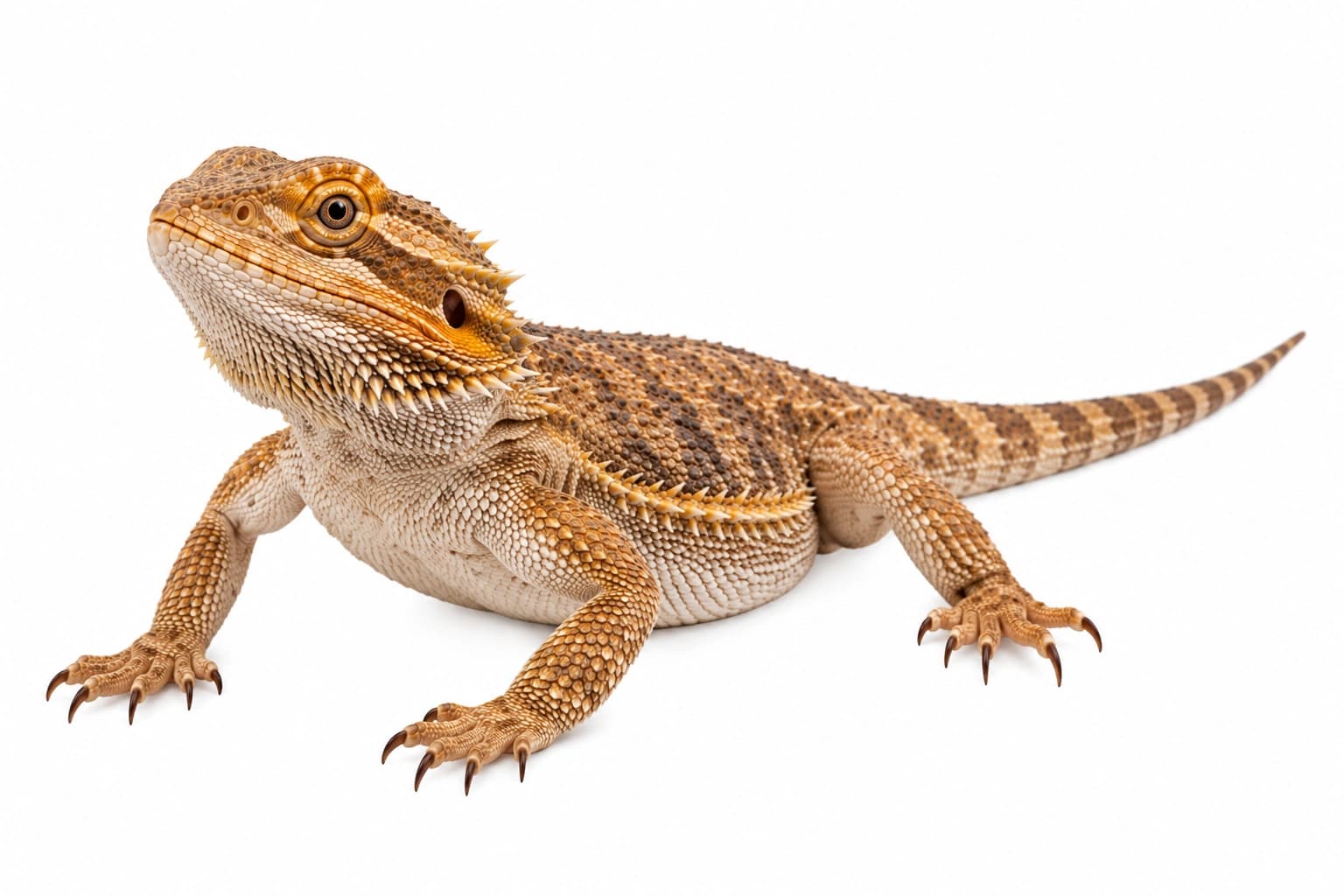
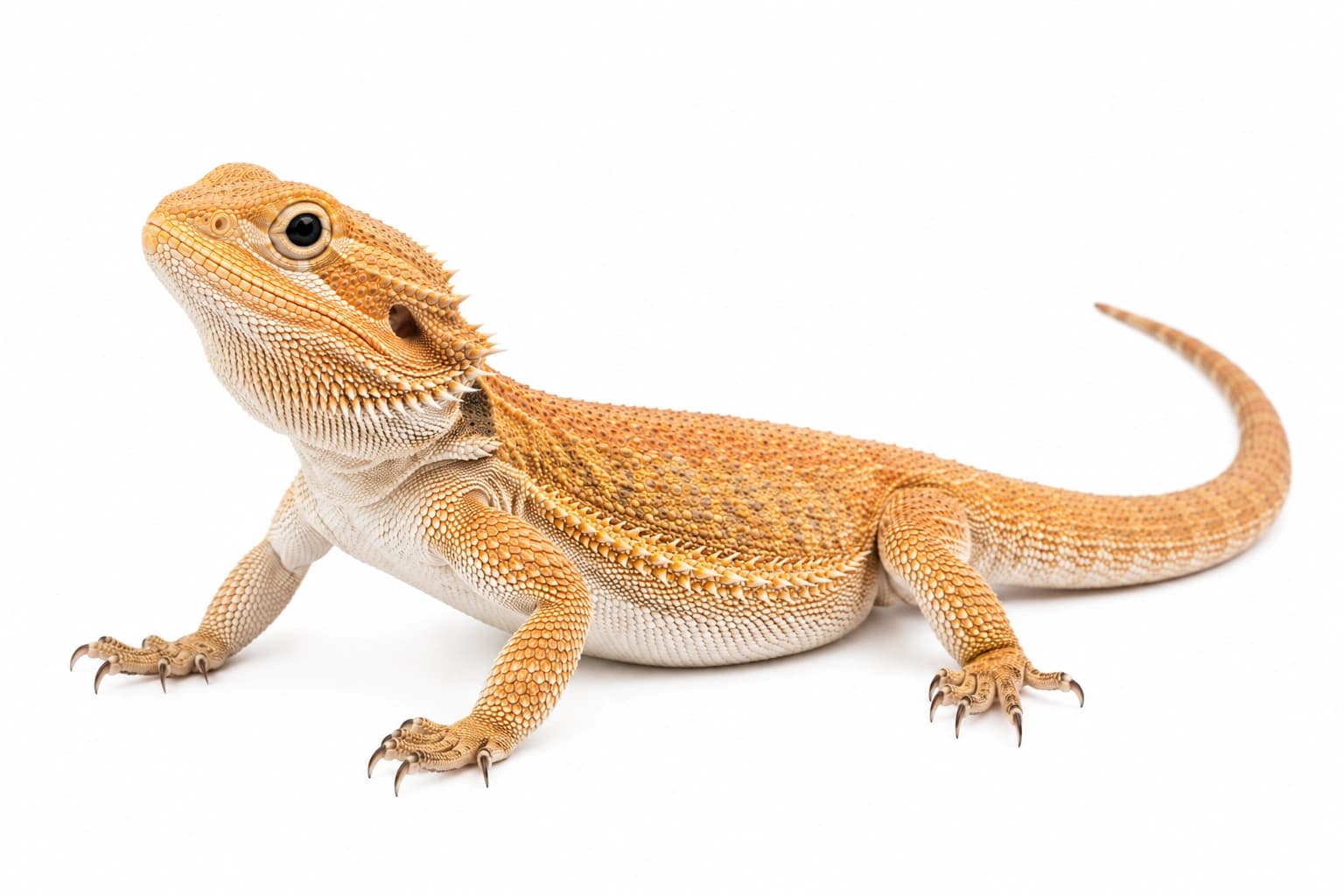
The Normal Bearded Dragon represents the classic, wild-type appearance of Pogona vitticeps. It retains standard dorsal scales, naturally pigmented eyes, dark claws and the familiar bands, spots and earthy colouration associated with traditionally patterned bearded dragons.
Trait type
Reference phenotype
Inheritance
Not one specific mutation
Scale type
Standard
Claws
Normally dark-pigmented
Eyes
Visible iris
Pattern
Natural bands and markings
Morph DNA
Normal Morph Profile
trait
Normal / wild-type appearance
trait Type
Reference phenotype rather than one isolated morph mutation
inheritance
Depends on the individual genes carried by the animal
visual Expression
Standard scales, natural pigmentation, dark claws and an organised body pattern
hidden Traits
A visually Normal dragon may carry recessive traits without displaying them
beginner Friendly
Yes, provided all standard husbandry requirements are met
Morph Overview
What Is a Normal Bearded Dragon?
A Normal Bearded Dragon is the reference phenotype used when describing the appearance of captive Pogona vitticeps. It is also commonly called Classic, Standard or Wild Type. These names describe an animal that retains the ordinary scales, claws, eyes and patterned appearance of the species rather than visibly expressing a recognised pigment, scale or pattern mutation.
The term Normal can be slightly misleading because it does not mean that every Normal dragon looks identical. Considerable variation exists within naturally patterned bearded dragons. Individuals may display sandy brown, tan, grey, gold, muted yellow, orange or reddish tones. Pattern strength can also vary, with some animals showing bold bands and strong contrast while others appear softer or more uniform.
Normal should therefore be understood as a reference category rather than a single colour. A red, orange or yellow dragon can still be visually Normal in relation to traits such as Hypo, Translucent, Leatherback, Dunner, Zero or Witblits. Colour lines and genetic morphs describe different aspects of the animal and can occur independently.
The Normal phenotype is especially important in a morph encyclopedia because it provides the baseline against which other traits are recognised. Clear claws become meaningful when compared with naturally dark claws. Reduced dorsal scales become easier to identify when compared with standard scalation. Patternless morphs become clearer when viewed beside the typical bands, spots and markings of a Normal dragon.
Head Details
Head, Eyes and Facial Features
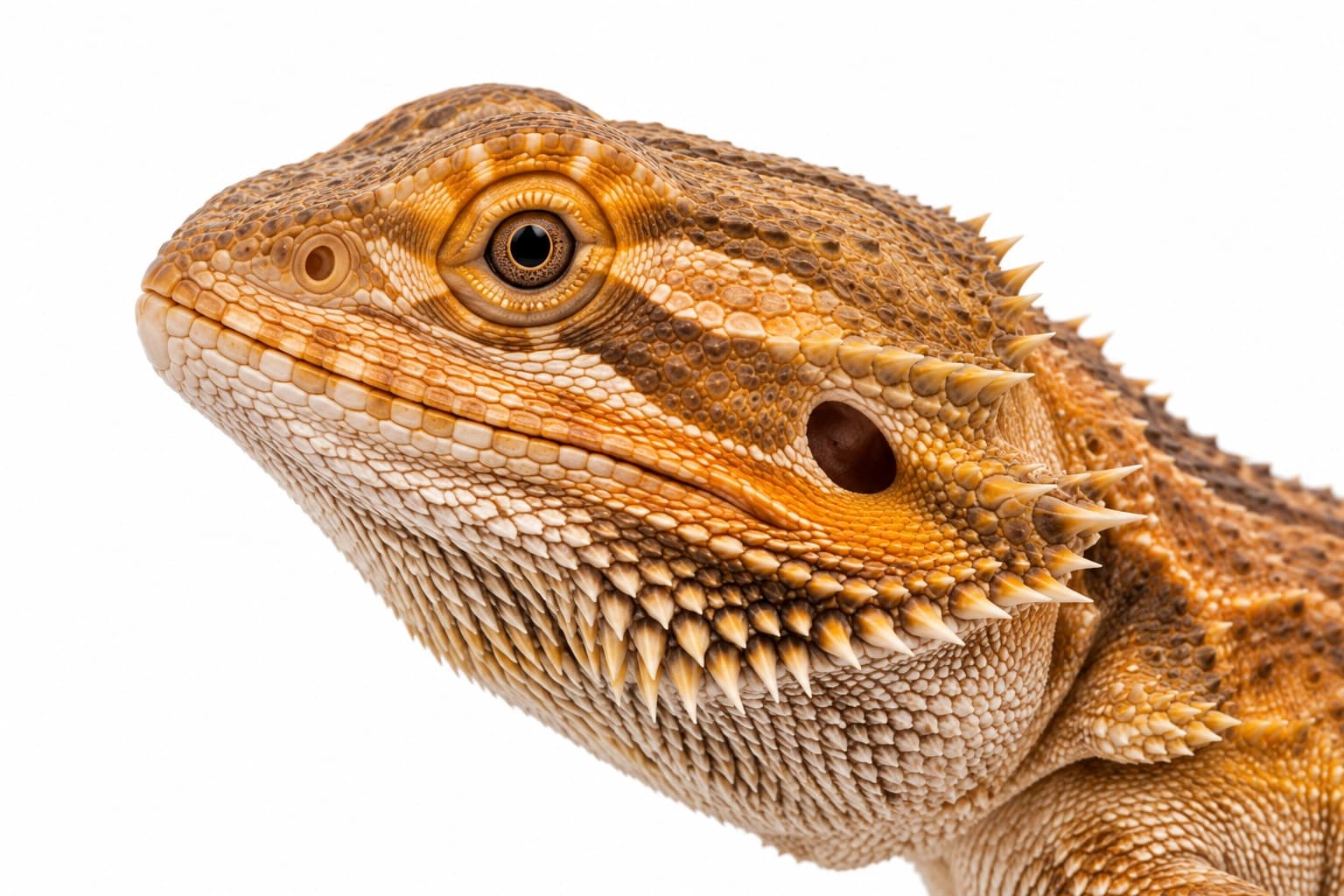
The head of a Normal Bearded Dragon is broad and triangular, with clearly visible scales across the snout, cheeks, brow and beard. Enlarged spiny scales around the jaw create the characteristic bearded appearance for which the species is named.
The eyes normally show a visible iris and pupil. They should not have the consistently solid black appearance commonly associated with many visual Translucent dragons. Eye colour and darkness can vary naturally, so the eyes should always be assessed together with the dragon's other physical traits.
The head may display earthy bands, pale highlights, dark markings or warmer red, orange and yellow pigmentation. Strong colour on the head does not by itself establish a genetic morph. The overall combination of scales, eyes, claws, pattern and known lineage is more informative than colour alone.
Characteristic Feature
Standard Scales and Natural Pigmentation
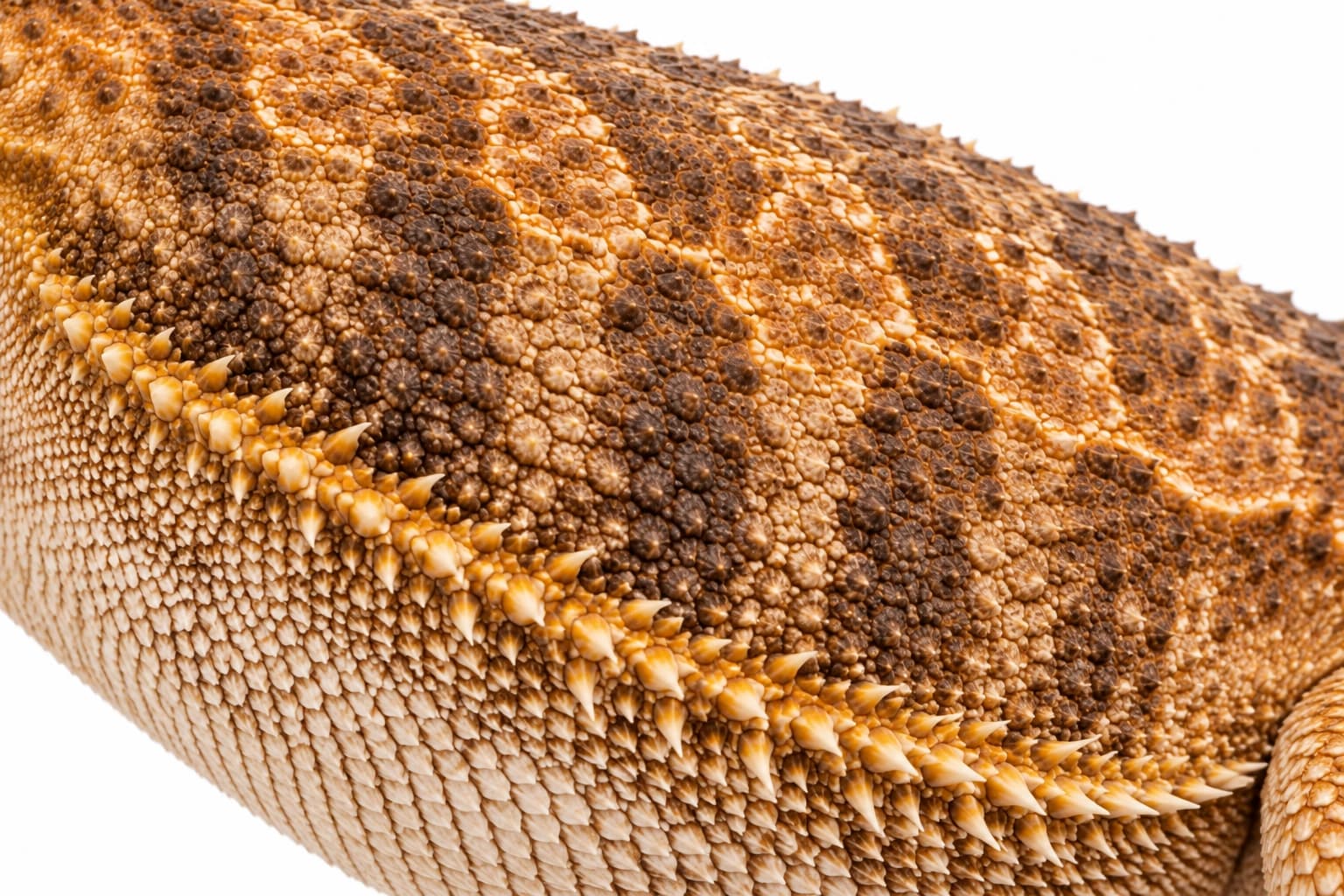
The defining value of the Normal phenotype is not one unusual feature but the retention of the standard characteristics of Pogona vitticeps. Normal dragons have the ordinary rough dorsal scales, prominent side spikes, naturally pigmented claws and a recognisable patterned appearance.
The claws usually contain dark brown, grey or black pigment extending through at least part of the nail. This feature is useful when comparing Normal dragons with visual Hypo animals, whose claws characteristically lack dark melanin.
The back should retain normal scalation rather than the visibly reduced and smoother dorsal surface of a Leatherback. Scale direction should also remain relatively organised rather than displaying the distinctly irregular orientation associated with Dunner.
No single characteristic should be used in isolation. Correct identification comes from examining several traits together and, whenever possible, confirming the animal's breeding history.
Identification Guide
How to Identify a Normal Bearded Dragon
To identify a Normal Bearded Dragon, examine the entire animal rather than relying on colour alone. Begin with the claws. Normal dragons usually retain visible dark pigment inside the nails, while visual Hypo dragons characteristically have clear or pale claws.
Next, inspect the dorsal scales. A Normal dragon should have the standard rough texture and prominent scales expected in Pogona vitticeps. A noticeably smoother back with reduced central scalation may indicate Leatherback, while an almost scaleless body indicates Silkback.
Examine the orientation of the scales and body markings. Normal scales generally follow an organised direction, and the pattern commonly forms recognisable bands, spots and symmetrical elements. Dunner dragons tend to show more irregular scale orientation and less organised patterning.
The eyes should normally show a visible iris and pupil rather than the strongly dark or solid-looking eyes frequently associated with visual Translucent dragons. However, eye appearance can vary with lighting, age and individual expression, so eye colour alone should never determine identification.
Finally, inspect the body pattern. A Normal dragon usually retains visible markings. Completely patternless white, silver or grey animals may suggest Zero, while patternless cream, tan or muted earthy animals may suggest Witblits.
Lineage remains essential. A visually Normal dragon may carry recessive genes that cannot be identified from appearance. Visual classification and genetic status are related, but they are not the same thing.
Juvenile Development
What Does a Juvenile Normal Bearded Dragon Look Like?
Juvenile Normal Bearded Dragons often display stronger contrast than adults. Bands across the back and tail may appear dark and clearly defined, while the lighter base colour may range from sandy beige to warm brown, yellow, gold or muted orange.
The head can appear proportionally large in relation to the body, and the limbs and tail may look slender. Standard dorsal scales and side spikes are already visible, although the body becomes broader, heavier and more muscular as the animal matures.
Young dragons can change significantly through repeated shedding cycles. Colour may become brighter, softer or deeper with age, while some juvenile bands become less prominent. For this reason, a breeder should avoid making highly specific colour predictions from one early photograph.
The juvenile image is particularly valuable when identifying traits such as Translucent, because some features may be most obvious in young animals. By contrast, a Normal juvenile retains ordinary pigmentation, standard scales and the expected patterned appearance without the defining visual signs of another established morph.
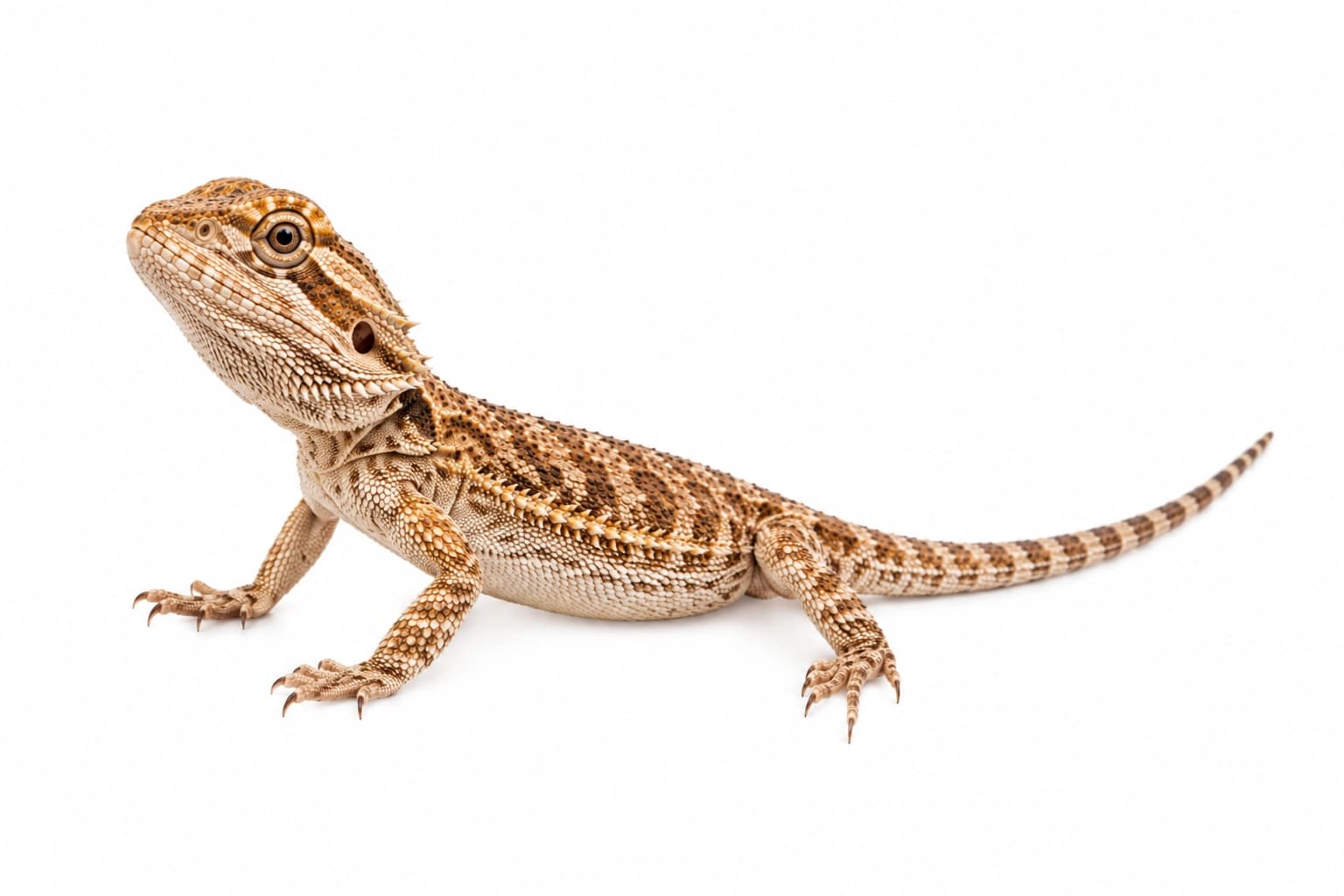
Appearance
Normal Bearded Dragon Appearance
Normal Bearded Dragons usually have a broad, triangular head, a low and sturdy body, strong limbs and a long muscular tail. Rows of enlarged scales and flexible spikes are visible around the sides of the head, along the beard and down the sides of the body. The back retains a rough texture created by standard dorsal scalation.
The natural colour range commonly includes brown, tan, beige, sandy grey, gold and muted orange. Darker markings may form transverse bands across the back and tail, irregular blotches along the body and contrasting markings around the head and limbs. These patterns help break up the outline of the animal and resemble the natural camouflage of the species.
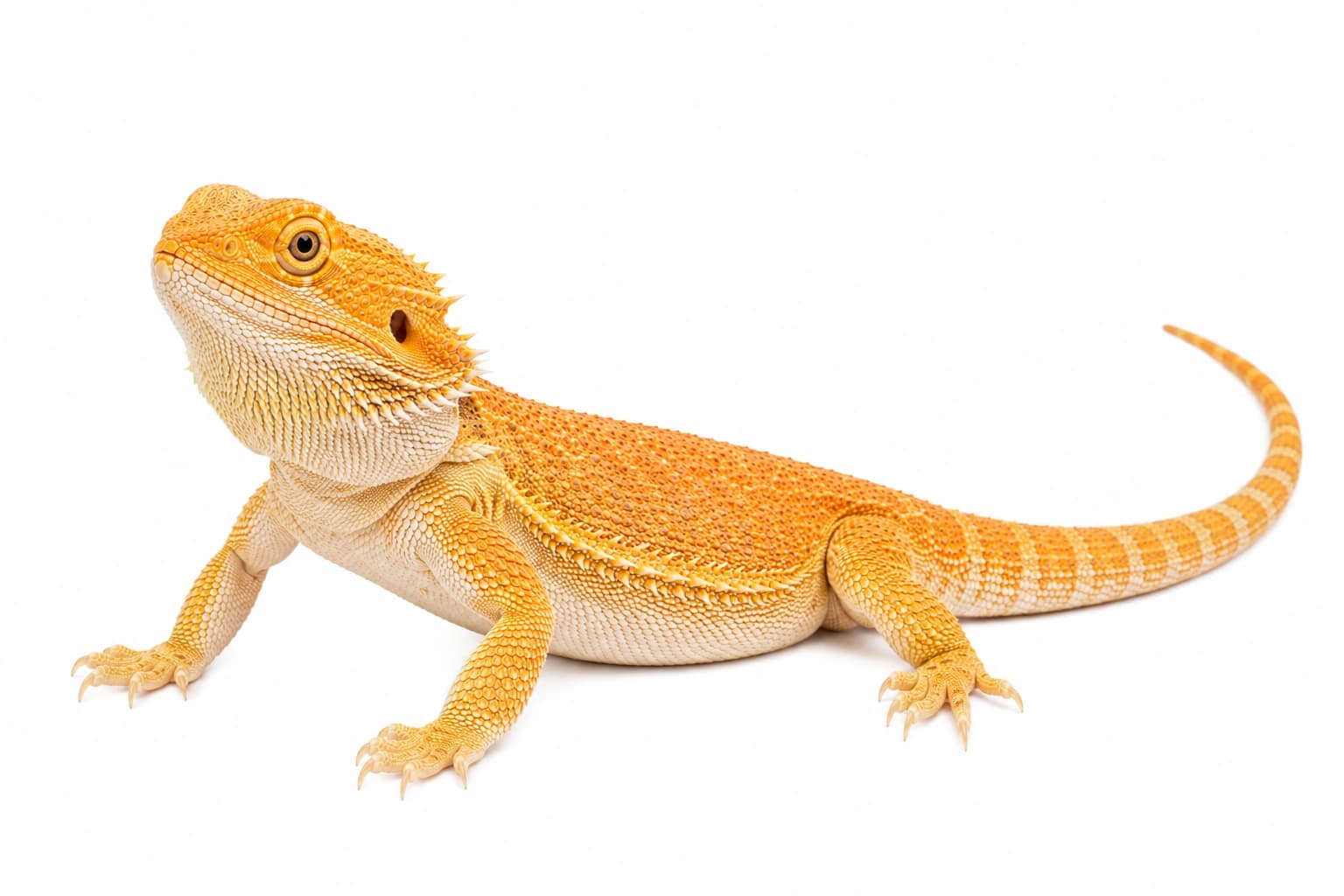
A Normal dragon is not required to be dull or brown. Selective breeding can intensify red, orange or yellow pigmentation while the animal continues to retain standard scales, normally pigmented claws and eyes, and an otherwise classic pattern.
Colour must also be assessed carefully because bearded dragons can temporarily lighten or darken. Their appearance may change with body temperature, lighting, time of day, stress, social signalling, shedding and general physiological condition. A single photograph is therefore not always enough to judge the permanent colour or morph of an individual.
Adult Development
Adult Normal Bearded Dragon
As a Normal Bearded Dragon matures, the head broadens, the beard becomes more pronounced and the body gains greater depth and muscularity. Adult males often develop a broader head and more prominent femoral pores, although sex should not be determined from general appearance alone.
The colour and pattern may change considerably from the juvenile stage. Some individuals retain strong bands and high contrast, while others develop a softer, more blended appearance. Selectively bred animals may show increasingly strong yellow, orange or red pigmentation without expressing a separate structural morph.
An adult can also appear temporarily darker while basking or lighter when warm and relaxed. The beard may darken during stress, territorial behaviour, courtship or other social displays. Areas approaching a shed frequently become duller or paler before the old skin separates.
These temporary changes must not be confused with permanent morph characteristics. Morph identification should be based on consistent physical features observed under neutral lighting and, ideally, supported by reliable lineage information.
Genetics
Normal Genetics and Inheritance
Normal is not one specific mutation with one simple inheritance pattern. It is a visual reference term describing a dragon that does not express the particular morph traits being evaluated.
A visually Normal dragon can still carry one copy of a recessive allele. Such an animal may be described as het Hypo, het Translucent, het Zero or het Witblits when its genetic status is supported by a known pairing or reliable lineage record. The hidden gene does not have to alter the dragon's visible appearance.
For example, two visually Normal dragons that are both proven het for the same recessive trait may produce visual offspring for that trait. This does not mean the parents were incorrectly classified visually. It means they carried a recessive allele that was not expressed because each parent possessed only one copy.
The label Normal should therefore never be interpreted as meaning genetically empty. Without documented parentage or test breeding, it may be impossible to know every recessive trait carried by an individual.
Colour adds another layer of complexity. A Normal-scaled dragon may belong to a selectively bred red, orange or yellow line. Polygenic colour intensity is not equivalent to a simple recessive morph and should be recorded separately from traits affecting claws, eyes, scales or pattern.
Normal
A reference phenotype without the visible morph trait being assessed
Het
An animal carrying one copy of a recessive allele without visually expressing it
Visual
An animal physically expressing the relevant genetic trait
Wild type
The reference form against which a mutation is compared
Polygenic colour
Colour influenced by multiple genes and selective breeding
Care Guide
Caring for a Normal Bearded Dragon
Normal Bearded Dragons require the same complete husbandry as other healthy, fully scaled Pogona vitticeps. The word Normal does not mean that the animal can thrive with minimal equipment or simplified care.
A suitable enclosure must provide enough space for movement, climbing, basking, hiding and access to distinct temperature zones. A bright basking area should be paired with a cooler shaded end so the dragon can regulate its body temperature through behaviour.
A high-quality linear UVB system is essential. UVB exposure supports vitamin D3 synthesis and healthy calcium metabolism. The enclosure should provide a usable UV gradient, allowing the dragon to move between stronger exposure near the basking zone and lower exposure in shaded areas.
Heating and UVB must work together. The primary basking area should be bright, warm and accessible, while the dragon must also be able to move away from the heat. Temperatures should be measured with appropriate equipment rather than estimated by touch.
The diet should be appropriate for the dragon's age and condition. Growing juveniles generally consume a greater proportion of suitable live invertebrates, while healthy adults usually eat a larger proportion of varied leafy greens and safe vegetables. Live food should be appropriately sized, well nourished and supplemented according to the animal's needs.
Fresh water should be available, the enclosure should be kept hygienic and the dragon should be monitored for changes in appetite, weight, activity, posture, breathing, mobility, urates and faeces. Concerns should be discussed with a veterinarian experienced in reptile medicine.
UVB
Provide a strong linear UVB source and a gradient that allows access to both appropriate exposure and shade.
Heating
Create a bright basking zone and a cooler end so the dragon can thermoregulate.
Diet
Offer an age-appropriate balance of nutritious live food, leafy greens and safe vegetables.
Calcium
Use appropriate supplementation alongside correct UVB and diet.
Monitoring
Track weight, appetite, activity, shedding and waste production over time.
Veterinary care
Use a reptile-experienced veterinarian when illness, injury or abnormal behaviour is suspected.
Breeding
Normal Breeding and Genetic Outcomes
A Normal-looking Bearded Dragon should never be assumed to have no morph genetics. Breeding outcomes depend on the genes carried by both parents, not only on the traits visible in their appearance.
Before pairing dragons, breeders should maintain accurate records of parentage, known visual traits, possible or proven heterozygous traits, health history and previous offspring. Labels such as possible het should not be presented with the same certainty as a proven genetic status.
If two visually Normal parents both carry the same recessive allele, visual morph offspring may be produced. If only one parent carries the allele, visual offspring for that recessive trait would not be expected from that pairing, although some offspring may inherit the hidden allele.
Selective colour breeding is less predictable than simple recessive inheritance. Pairing two brightly coloured Normal-scaled dragons may increase the chance of colourful offspring, but the exact intensity, distribution and adult development of colour cannot be guaranteed.
Breeding decisions must prioritise health, structure, behaviour, genetic diversity and welfare rather than appearance alone. Animals with significant health or anatomical concerns should not be bred simply because they carry desirable colours or morph traits.
Normal × Normal
Visual appearance depends on the hidden genetics and lineage of both parents.
Normal het Hypo × Normal het Hypo
The pairing may produce visual Hypo, het Hypo and non-carrier offspring.
Normal het Hypo × Visual Hypo
The pairing may produce both visual Hypo and visually Normal het Hypo offspring.
Normal colour line × Normal colour line
Colour intensity remains variable because selective colour traits are polygenic.
Identification Mistakes
Common Misidentifications
Normal vs Hypo
Normal dragons usually retain dark pigment inside the claws. Visual Hypo dragons characteristically have clear or pale claws because of reduced melanin. Bright colour alone does not prove that a dragon is Hypo.
View comparison morph →Normal vs Leatherback
Normal dragons have standard rough dorsal scalation. Leatherbacks have reduced scales and a noticeably smoother back that often makes colour and pattern appear more prominent.
View comparison morph →Normal vs Dunner
Normal dragons generally have organised scale direction and recognisable body bands. Dunner expression produces irregular scale orientation and more chaotic pattern organisation.
View comparison morph →Normal vs Translucent
Normal dragons typically show a visible iris and ordinary pigmentation. Visual Translucent dragons may display unusually dark eyes and can show translucent or bluish characteristics, particularly when young.
View comparison morph →Normal vs colour line
Red, Orange, Yellow and Citrus describe selected colour expression. A colourful dragon can still retain the standard scales, eyes, claws and pattern associated with a Normal phenotype.
Morph Comparison
How Normal Compares With Other Morphs
Frequently Asked Questions
Normal Bearded Dragon FAQ
What is a Normal Bearded Dragon?
A Normal Bearded Dragon displays the classic reference appearance of Pogona vitticeps, including standard scales, normally pigmented claws and eyes, and a natural body pattern.
Is Normal a genuine Bearded Dragon morph?
Normal is more accurately treated as a reference phenotype than as one specific mutation. It describes an animal that does not visually express the particular morph traits being evaluated.
Is Normal the same as wild type?
The terms are often used similarly in the reptile community. Wild type refers to the reference appearance found before a specific mutation is introduced, although captive Normal dragons may still differ significantly in colour from wild animals.
Can a Normal Bearded Dragon carry morph genes?
Yes. A visually Normal dragon may carry one copy of a recessive gene such as Hypo, Translucent, Zero or Witblits without visually expressing that trait.
How do you identify a Normal Bearded Dragon?
Look for standard dorsal scales, naturally dark-pigmented claws, a visible iris, organised scale direction and the typical patterned appearance of Pogona vitticeps.
Can a Normal Bearded Dragon be red or orange?
Yes. Selective breeding can produce strong red, orange or yellow pigmentation while the dragon retains standard scales, claws, eyes and pattern.
Do all Normal Bearded Dragons look brown?
No. Brown and tan are common, but Normal dragons can also display grey, gold, yellow, orange and reddish tones.
What is the difference between Normal and Hypo?
Normal dragons usually have dark pigment within the claws. Visual Hypo dragons have reduced melanin and characteristically clear or pale claws.
What is the difference between Normal and Leatherback?
Normal dragons have standard rough dorsal scales. Leatherbacks have reduced dorsal scalation and a noticeably smoother back.
What is the difference between Normal and Dunner?
Normal dragons generally have organised scale direction and recognisable patterning. Dunner dragons show irregular scale orientation and more chaotic markings.
Can two Normal Bearded Dragons produce morph offspring?
Yes. Two visually Normal parents can produce visual recessive morph offspring when both carry compatible copies of the same recessive gene.
Does a Normal Bearded Dragon need special care?
It does not need morph-specific care, but it still requires correct UVB, heating, diet, supplementation, enclosure space and veterinary support.
Does a darker colour mean the dragon is a different morph?
Not necessarily. Bearded Dragons can temporarily darken or lighten in response to temperature, lighting, time of day, stress, shedding and social behaviour.
Can appearance reveal every gene a Normal dragon carries?
No. Recessive genes can remain hidden in visually Normal animals. Reliable lineage and breeding records are needed to establish possible or proven heterozygous traits.
Continue Exploring
Related Morphs
Continue Learning
Bearded Dragon Care Guides
Explore our practical guides covering enclosure setup, UVB lighting, heating, feeding, humidity, enrichment and everyday Bearded Dragon care.
Explore Care Guides →Scientific References
This article was prepared using established zoological, husbandry and scientific references.