Genetic Morphs
Leatherback
Bearded Dragon
A distinctive scale morph recognised by its reduced dorsal scales, smoother back and clearly visible colour and pattern.
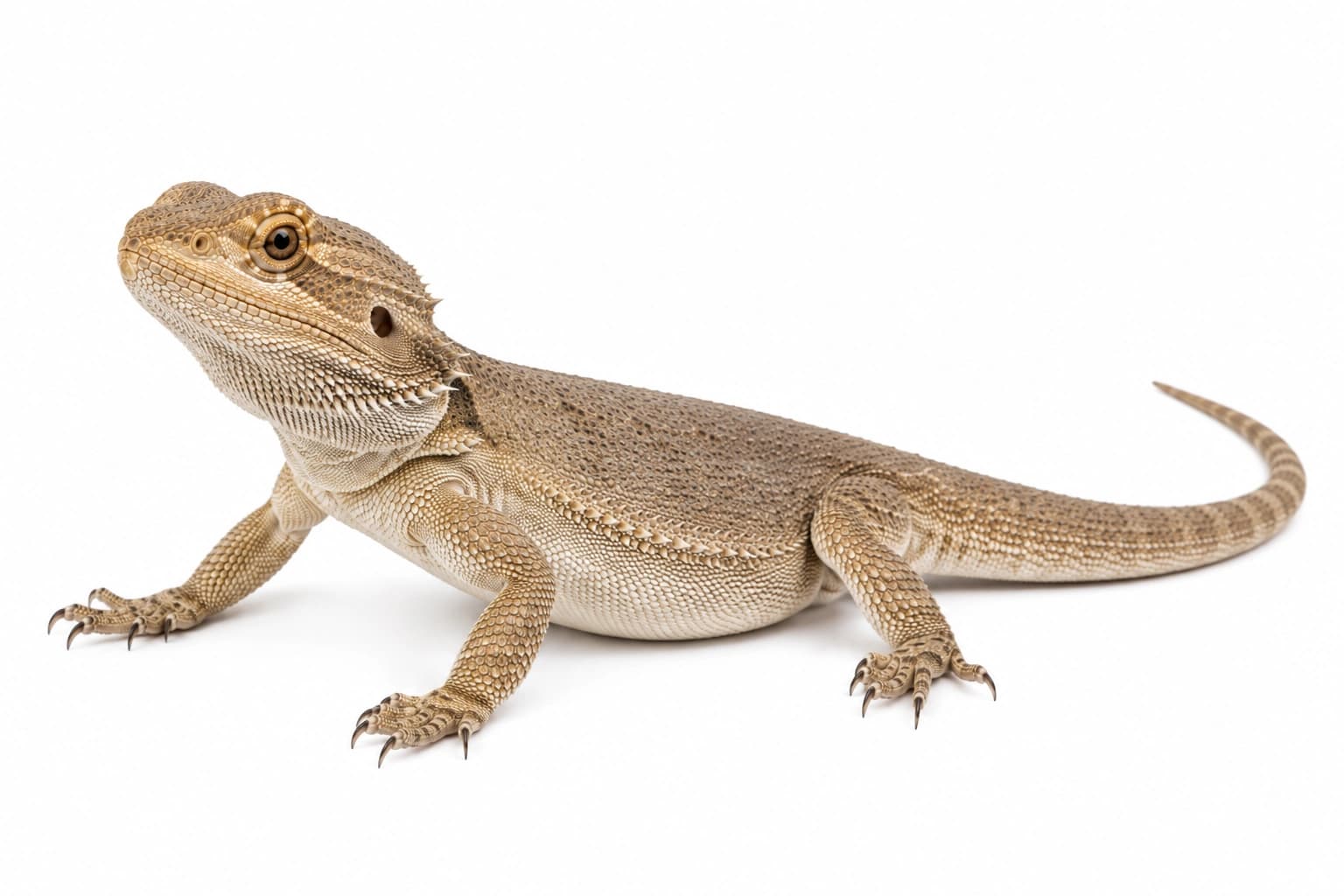
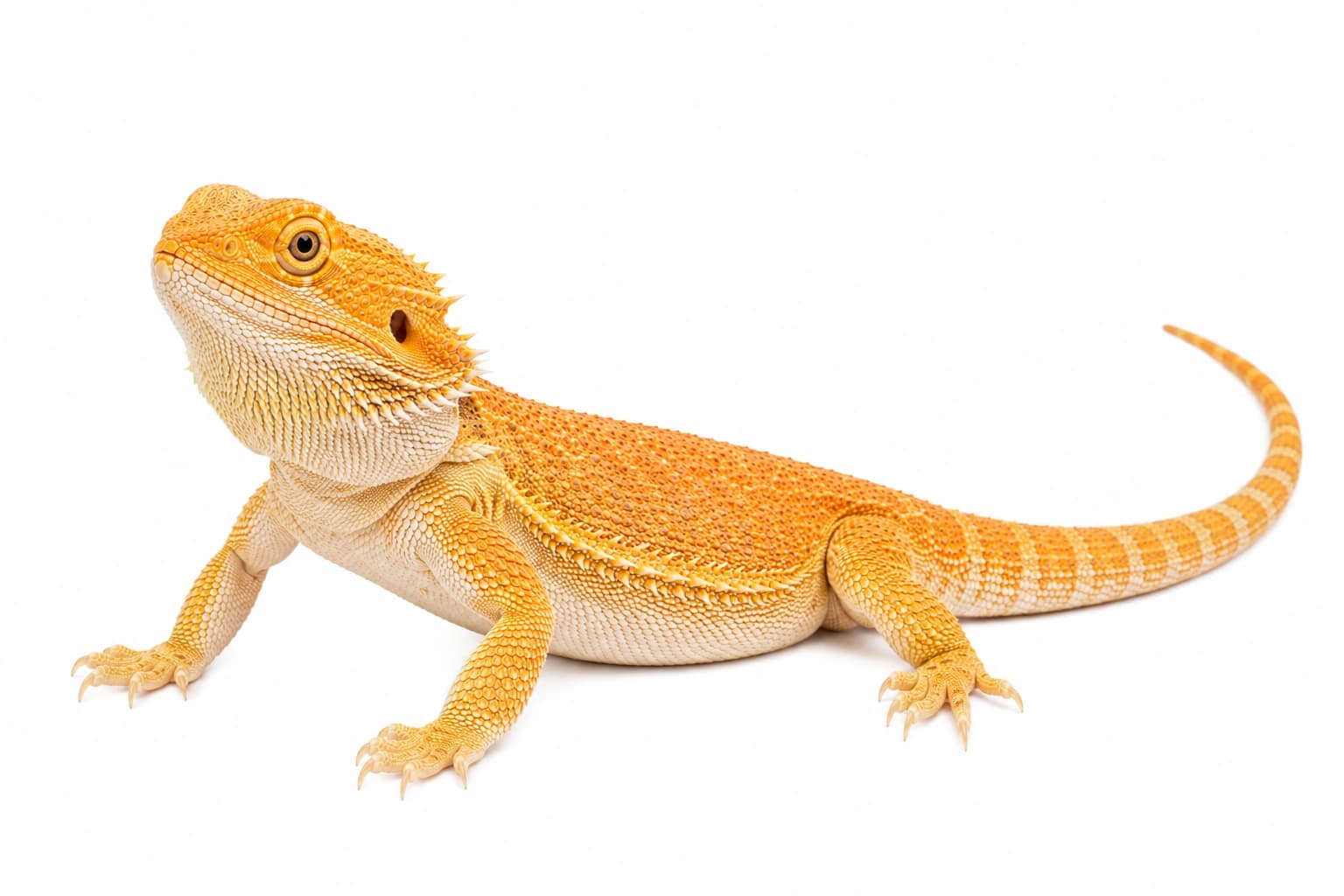
The Leatherback Bearded Dragon is an incomplete-dominant scale morph of Pogona vitticeps. Leatherbacks retain scales but have significantly smaller and less prominent scales across the back, producing a smoother appearance that allows the underlying colour and pattern to remain especially visible.
Trait type
Scale reduction
Inheritance
Incomplete dominant
Dorsal scales
Small and reduced
Back texture
Smoother than Normal
Pattern
Usually retained
Homozygous form
Silkback
Morph DNA
Leatherback Morph Profile
trait
Leatherback
trait Type
Incomplete-dominant structural mutation reducing the size and prominence of dorsal scales
inheritance
A visual Leatherback generally carries one copy of the scale-reduction allele
visual Expression
Small dorsal scales, a smoother back and reduced dorsal spiking
hidden Traits
Leatherback is visually expressed; it is not a hidden recessive carrier state like Het Hypo
beginner Friendly
Yes. A healthy Leatherback generally requires standard Bearded Dragon husbandry
Morph Overview
What Is a Leatherback Bearded Dragon?
The Leatherback Bearded Dragon is one of the most recognisable structural morphs of captive Pogona vitticeps. Its defining characteristic is a substantial reduction in the size and prominence of the scales across the back.
A Normal Bearded Dragon has a rough dorsal surface covered with clearly raised scales and prominent spikes. A Leatherback retains scales, but many of the dorsal scales are much smaller, flatter and less visually dominant.
This creates the smooth, leather-like appearance that gives the morph its name.
Because fewer large scales interrupt the surface of the body, colour and pattern often appear cleaner and more vivid. Reds, oranges, yellows, bands and dorsal markings can be easier to see on a Leatherback than on a similarly coloured Normal dragon.
Leatherback does not create a particular colour. A Leatherback can be brown, tan, yellow, orange, red, grey or nearly any other colour produced through separate genetics and selective breeding.
The morph should not be confused with Silkback. Leatherbacks still possess protective scales. Silkbacks are the homozygous or super form associated with the same incomplete-dominant scale trait and are nearly or completely scaleless.
This genetic relationship is extremely important when breeding. Pairing two Leatherbacks can produce Silkback offspring, which have delicate exposed skin and substantial welfare concerns.
Leatherback should also be distinguished from Dunner. Leatherback reduces scale size and creates a smoother dorsal surface. Dunner alters scale direction and pattern organisation, commonly producing a rougher and more irregular appearance.
The two traits can occur together. A Leatherback Dunner may have reduced dorsal scales while still displaying multidirectional scale orientation, irregular beard spikes and disrupted patterning.
Leatherback can also be combined with Hypo, Translucent, Zero, Witblits, Genetic Stripe and selectively bred colour lines.
Head Details
Head, Beard and Facial Scales
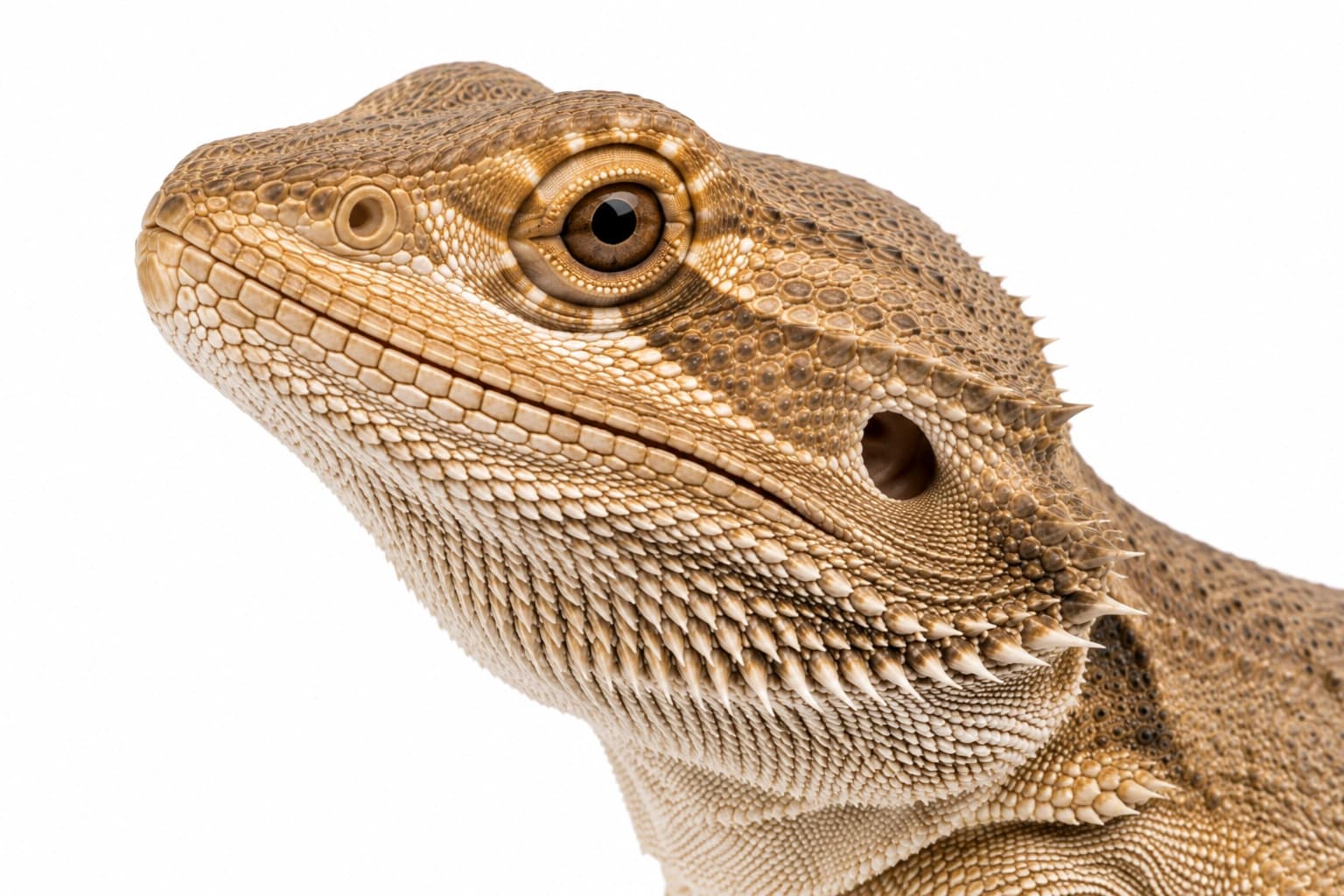
The head of a Leatherback Bearded Dragon retains the broad triangular shape, pronounced brow and expandable beard typical of Pogona vitticeps.
Facial scales and beard spikes remain present. The morph primarily reduces scales across the dorsal body rather than removing all scales from the head.
The head may therefore look relatively similar to that of a Normal Bearded Dragon, especially when viewed without the back.
The transition from the head to the shoulders can be informative. Behind the head, the dorsal surface becomes noticeably smoother and less heavily spiked than in a Normal dragon.
Leatherback does not independently alter eye pigmentation. A visible iris is expected unless another trait, such as Translucent, is also expressed.
Leatherback also does not produce clear claws. Clear or pale claws are associated with Hypo.
Head colour depends on separate pigmentation and selective colour-line genetics. The reduced body scalation may make colour appear cleaner, but it does not create red, orange or yellow pigment.
Characteristic Feature
Reduced Dorsal Scales and a Smoother Back
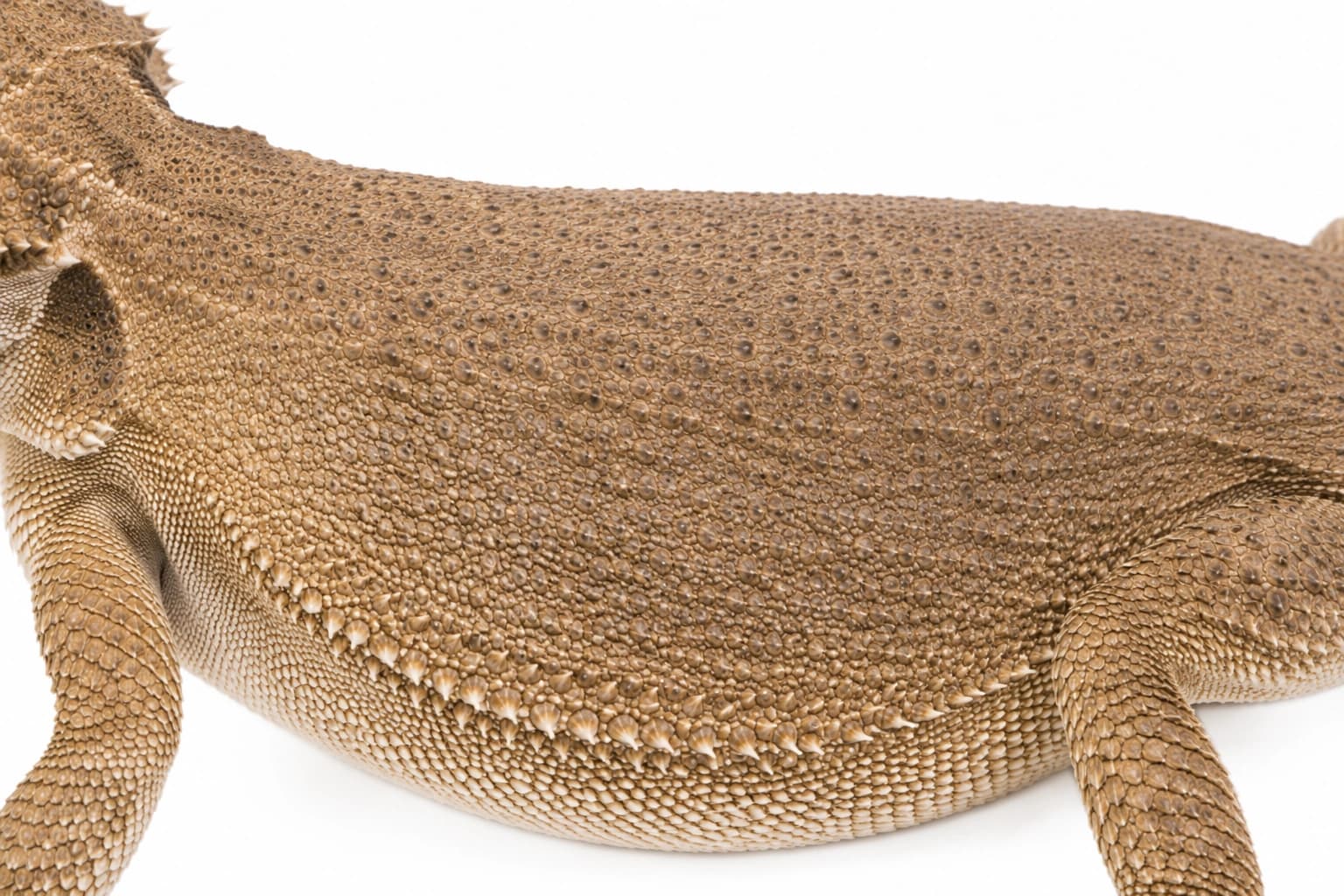
The defining characteristic of a Leatherback Bearded Dragon is the reduction of scales across the dorsal surface.
A Normal dragon has large, raised scales and prominent spikes forming a rough texture along the back. A Leatherback has much smaller, flatter dorsal scales and substantially reduced central spiking.
This produces a smooth, leather-like visual appearance. The animal is not genuinely smooth like bare skin because protective scales remain present.
The difference is usually easiest to recognise by examining the shoulders, central back and area above the hind legs under angled lighting.
On a Normal dragon, individual scales cast obvious shadows and interrupt the colour pattern. On a Leatherback, the smaller scales create a flatter surface and allow markings to remain more continuous.
The side spikes and beard spikes generally remain visible, helping distinguish Leatherback from the nearly scaleless Silkback form.
Leatherback should not be identified from vivid colour alone. Colour frequently looks brighter because the scales are smaller, but intense pigmentation can occur in any scale type.
The entire dorsal surface should be assessed. A small smooth patch caused by injury, scarring, abnormal development or damaged scales does not make a dragon Leatherback.
Identification Guide
How to Identify a Leatherback Bearded Dragon
To identify a Leatherback Bearded Dragon, begin by examining the dorsal scales rather than colour.
View the shoulders and central back under clear, angled lighting. A visual Leatherback should have smaller, flatter and less prominent scales than a Normal Bearded Dragon.
The back should appear smoother and less heavily spiked. Body markings often look cleaner because they are not interrupted by large raised scales.
Next, inspect the sides, beard and head. Leatherbacks normally retain lateral spikes, facial scales and beard spikes. Their presence helps distinguish the morph from Silkback.
Compare the animal with a standard-scaled dragon whenever possible. The difference in dorsal texture is often immediately visible when the two scale types are viewed together.
Do not identify Leatherback only because a dragon feels relatively smooth. Age, body condition, shedding and natural variation can affect perceived texture.
Do not identify the morph from bright colour. A Normal dragon can be intensely red, orange or yellow, while a Leatherback can have muted brown or tan pigmentation.
Inspect scale direction separately. Leatherback reduces scale size but does not inherently cause multidirectional scales. Repeated irregular scale direction suggests that Dunner may also be present.
A genuine Leatherback should retain body scales. Nearly bare skin, extreme smoothness and absence of normal protective scalation indicate Silkback rather than ordinary Leatherback.
Reliable lineage remains valuable, particularly when distinguishing established Leatherback lines and planning breeding pairings.
Juvenile Development
What Does a Juvenile Leatherback Bearded Dragon Look Like?
Juvenile Leatherback Bearded Dragons display reduced dorsal scalation from a young age. The back appears smoother and less heavily spiked than that of a standard-scaled hatchling.
Because juvenile dragons are small, the difference may initially be easier to see under angled lighting or when the animal is compared directly with a Normal sibling.
The shoulders and central back provide the clearest identification areas. A young Leatherback has fine, flattened scales instead of the larger raised dorsal scales expected in a Normal dragon.
Side spikes, beard spikes and facial scales remain present. Their presence confirms that the animal is reduced-scaled rather than nearly scaleless like a Silkback.
Juvenile body pattern can appear unusually clear. Bands, spots and colour transitions remain less interrupted by large scales, sometimes making the animal look more vividly coloured than a standard-scaled sibling from the same lineage.
Leatherback does not determine colour. A juvenile may be brown, tan, yellow, orange, red or another colour depending on its wider ancestry.
The scale reduction does not normally alter healthy growth, movement, feeding or behaviour. A properly bred juvenile Leatherback should develop like another healthy Pogona vitticeps.
Repeated sheds do not cause the dragon to become progressively smoother. The Leatherback scale structure is genetically established, although its appearance becomes easier to assess as the body grows.
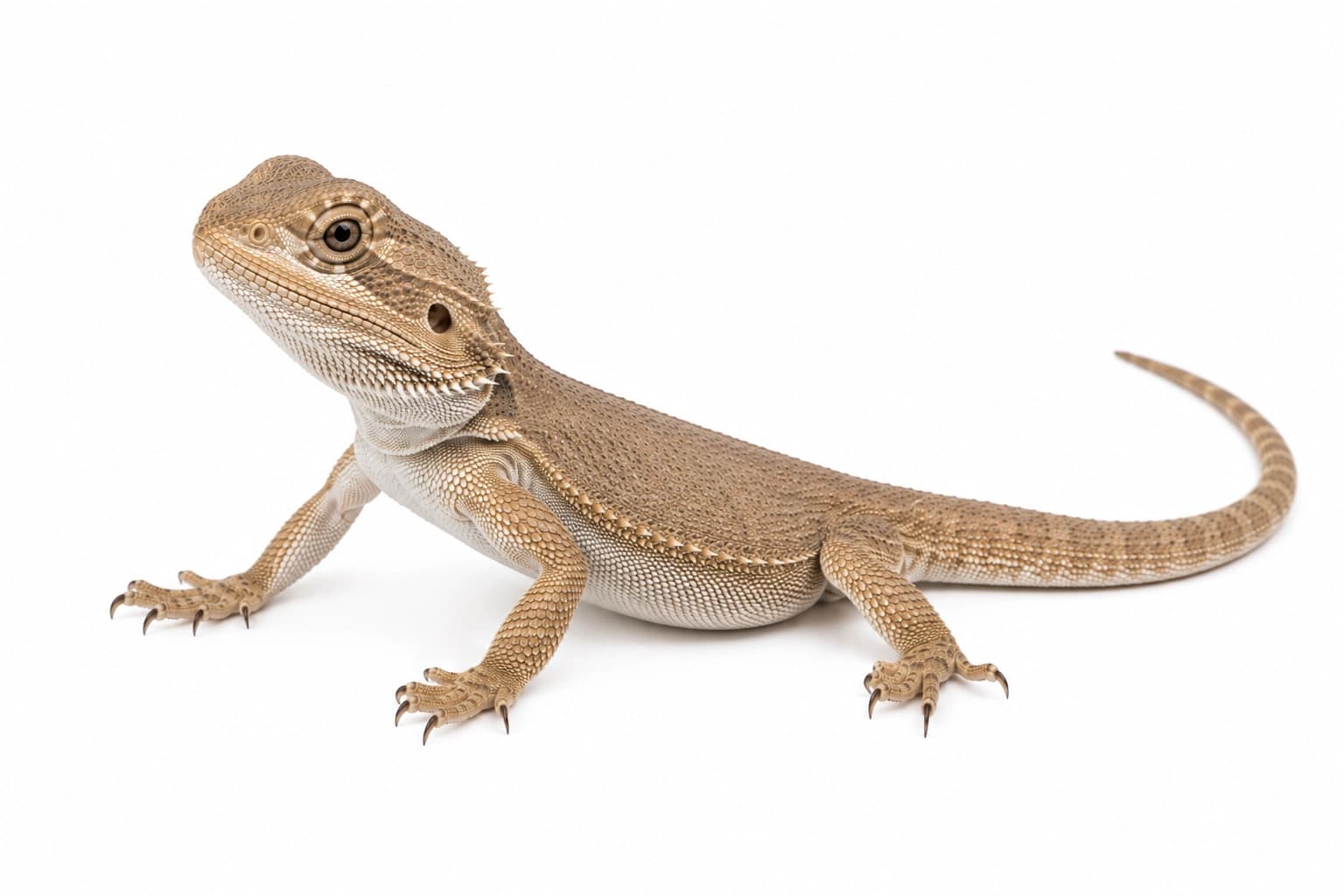
Appearance
Leatherback Bearded Dragon Appearance
Leatherback Bearded Dragons have a noticeably smoother and less heavily armoured appearance than standard-scaled dragons.
The greatest difference is visible across the back. Dorsal scales are smaller, flatter and less prominent, while the central dorsal spikes are significantly reduced.
The side spikes, beard spikes and scales around the head usually remain present. Leatherback is therefore a reduced-scale morph rather than a scaleless morph.
The smoother surface allows body markings to appear especially clear. Bands, spots, stripes and colour transitions are less interrupted by large raised scales.
Colour may appear brighter, but Leatherback does not produce colour pigment. A bright red Leatherback owes its red pigmentation to separate colour-line genetics.
Expression can vary between individuals and bloodlines. Some Leatherbacks have an extremely smooth back with very fine scales, while others retain a slightly rougher texture.
Historically, breeders have described Italian Leatherbacks as particularly smooth. Other established lines may show different degrees of scale reduction. These labels should be supported by reliable lineage rather than appearance alone.
The limbs, tail and sides may also show reduced scale size, although the dorsal surface usually provides the clearest identification area.
A Leatherback should still have a protective covering of scales. A dragon with nearly bare, delicate skin and no ordinary body scalation is more consistent with Silkback.
The eyes and claws are not changed by Leatherback alone. Clear claws indicate that Hypo may also be present, while unusually dark eyes may indicate Translucent.
Adult Development
Adult Leatherback Bearded Dragon
Adult Leatherback Bearded Dragons display a broad, low-profile body with a noticeably smooth dorsal surface.
As the animal matures, the difference between reduced dorsal scales and standard scalation becomes increasingly easy to recognise. The shoulders, central back and area above the hind legs appear flatter and less heavily armoured.
The side spikes, beard spikes and facial scales normally remain visible. These features preserve the characteristic Bearded Dragon appearance despite the smoother back.
Adult colour and pattern frequently look especially clean because smaller scales interrupt the visible pigmentation less than the large raised scales of a Normal dragon.
This does not mean that Leatherback produces stronger colour genetically. A vivid red, orange or yellow Leatherback belongs to a separately selected colour line.
The degree of smoothness varies. Some adults have extremely fine dorsal scales, while others retain slightly more texture. Reliable lineage can help explain these differences.
A healthy adult Leatherback should retain normal mobility, behaviour, appetite and body proportions. The morph itself does not normally require the specialised skin management associated with Silkback.
Leatherbacks continue to shed their scaled skin in sections. Normal variation in shedding should not be mistaken for a transition towards Silkback or loss of scales.
Genetics
Leatherback Genetics and Inheritance
Leatherback is generally described as an incomplete-dominant scale mutation.
Incomplete dominance means that the physical appearance differs according to whether the dragon inherits zero, one or two copies of the relevant allele.
A dragon with no Leatherback allele has standard scales and is visually Normal for this trait.
A dragon with one copy displays the Leatherback phenotype. This is the familiar reduced-scale form with a smoother back and retained protective scales.
A dragon inheriting two copies expresses the homozygous or super form commonly called Silkback. Silkbacks are nearly or completely scaleless and have exposed, delicate skin.
These three visibly distinguishable outcomes are why incomplete dominant is more accurate than describing Leatherback as a simple dominant or recessive mutation.
A Leatherback is visually expressed, so the term Het Leatherback can be confusing. In older hobby terminology, Leatherbacks have sometimes been described as heterozygous for the Silkback-associated allele. For clarity, Beardie App uses the visible phenotype names Normal, Leatherback and Silkback.
When a Leatherback carrying one copy of the allele is paired with a Normal-scaled non-Leatherback, the expected outcome is approximately:
• 50% Leatherback
• 50% Normal-scaled
When two Leatherbacks are paired, the expected outcome is approximately:
• 25% Normal-scaled
• 50% Leatherback
• 25% Silkback
The production of Silkback offspring creates a serious welfare concern. Silkbacks lack the normal protective scalation of Pogona vitticeps and can experience fragile skin, injury, difficult shedding and specialised care requirements.
For this reason, many responsible breeders avoid Leatherback × Leatherback pairings and instead use Leatherback × Normal-scaled pairings when maintaining the trait.
Genetic percentages describe the probability for each egg rather than a guaranteed distribution within a single clutch.
Leatherback can be combined with independently inherited traits such as Hypo, Translucent, Dunner, Zero, Witblits and Genetic Stripe. Each additional trait must be calculated separately.
Inheritance
Incomplete dominant scale mutation
Normal form
No Leatherback allele; standard dorsal scales
Leatherback form
One copy; reduced dorsal scales and a smoother back
Silkback form
Two copies; homozygous form with nearly or completely absent scales
Leatherback × Normal
Approximately 50% Leatherback and 50% Normal-scaled
Leatherback × Leatherback
Approximately 25% Normal, 50% Leatherback and 25% Silkback
Care Guide
Caring for a Leatherback Bearded Dragon
A healthy Leatherback Bearded Dragon generally requires the same core husbandry as another healthy, fully scaled Pogona vitticeps.
Leatherbacks retain protective scales. Their reduced dorsal scalation does not normally require the specialised daily skin management associated with Silkbacks.
A suitable enclosure should provide sufficient space for movement, climbing, basking, hiding and behavioural thermoregulation.
The dragon needs a bright basking area together with a cooler, shaded region. This allows it to regulate body temperature by moving between different environmental zones.
A suitable linear UVB system is essential. Appropriate UVB exposure supports vitamin D3 synthesis, calcium metabolism, healthy skeletal development and normal muscular function.
The UVB source should overlap with the basking zone while still allowing access to shade and lower-exposure areas.
Leatherbacks do not normally require weaker UVB because of their reduced dorsal scales. They remain scaled animals, and lighting should be selected according to enclosure dimensions, lamp output and evidence-based Pogona vitticeps husbandry.
Temperatures should be measured using reliable equipment rather than estimated by touch.
Diet should be appropriate for the dragon's age, body condition and health. Juveniles generally consume a greater proportion of suitable live invertebrates, while healthy adults usually eat a larger proportion of varied leafy greens and safe vegetables.
Live food should be appropriately sized, well nourished and supplemented according to the animal's needs.
Leatherbacks normally shed without requiring special intervention. The smaller dorsal scales may make the shed appear finer or less heavily textured than on a Normal dragon.
Retained shed should never be forcibly removed. Correct temperatures, hydration, nutrition and access to safe textured surfaces generally support natural shedding.
The skin should still be checked for abrasions, burns, retained shed, bites and other damage. Any injury should be treated as a health concern rather than assumed to be a normal effect of the morph.
Fresh water should be available, the enclosure should remain hygienic and the animal should be monitored for changes in appetite, weight, activity, mobility, breathing, urates and faeces.
Persistent abnormalities should be assessed by a veterinarian experienced in reptile medicine.
UVB
Provide an appropriate linear UVB system overlapping the basking zone, with access to shade and lower-exposure areas.
Heating
Create a bright basking area and a cooler end so the dragon can thermoregulate naturally.
Skin
Leatherbacks retain protective scales and do not normally require Silkback-style skin management.
Shedding
Allow shedding to occur naturally and never forcibly pull retained skin from the body.
Diet
Offer an age-appropriate balance of nutritious live food, leafy greens and safe vegetables.
Supplementation
Use appropriate calcium and vitamin supplementation alongside correct UVB exposure and diet.
Monitoring
Regularly monitor body weight, appetite, activity, skin condition, shedding and waste production.
Veterinary care
Consult a reptile-experienced veterinarian when injury, illness or abnormal behaviour is suspected.
Breeding
Leatherback Breeding and Genetic Outcomes
Breeding Leatherback Bearded Dragons requires an understanding of incomplete-dominant inheritance and the welfare implications of producing the homozygous Silkback form.
A visual Leatherback generally carries one copy of the scale-reduction allele. Pairing it with a Normal-scaled dragon is expected to produce approximately equal numbers of Leatherback and Normal-scaled offspring.
This pairing does not produce Silkbacks when the Normal parent does not carry another compatible scale-reduction allele.
Pairing two Leatherbacks is genetically expected to produce approximately 25% Silkback offspring. Although the exact result of an individual clutch can vary, every egg has a calculated one-in-four probability of inheriting two copies.
Silkbacks lack the ordinary protective scales of Bearded Dragons. Their skin is significantly more vulnerable to abrasion, bites, mating injuries, retained shed, dehydration and environmental damage.
Producing Silkbacks intentionally is therefore widely regarded as a serious welfare issue. MorphMarket currently identifies fragile skin as an issue associated with the homozygous form and does not support Silkback sales.
Responsible breeding programmes commonly prefer Leatherback × Normal-scaled pairings. This maintains the visual Leatherback phenotype without intentionally creating the scaleless homozygous form.
A Silkback × Normal-scaled pairing is genetically expected to produce Leatherbacks, but breeding a Silkback still raises substantial welfare concerns. Mating can cause injury, particularly when a Silkback female is exposed to biting and physical restraint from a male.
Breeding decisions must consider the health, body structure, skin condition, temperament, genetic diversity and lineage of both parents.
Colour should never take priority over welfare. A highly coloured Leatherback should not be bred if the pairing creates an unacceptable risk of producing compromised offspring.
Leatherback × Normal-scaled
Expected approximately 50% Leatherback and 50% Normal-scaled offspring. This is generally the preferred pairing for producing Leatherbacks without creating Silkbacks.
Leatherback × Leatherback
Expected approximately 25% Normal-scaled, 50% Leatherback and 25% Silkback offspring. Many responsible breeders avoid this pairing because it can intentionally produce the fragile scaleless Silkback form.
Silkback × Normal-scaled
Genetically expected to produce Leatherback offspring. However, using a Silkback as a breeding animal raises significant welfare concerns because its exposed skin can be injured during mating.
Leatherback × Silkback
Expected approximately 50% Leatherback and 50% Silkback offspring. This pairing is strongly discouraged because it deliberately produces a high proportion of scaleless offspring and exposes the Silkback parent to breeding-related risks.
Hypo Leatherback × Hypo Normal-scaled
Can produce visual Hypo offspring, with approximately half also expected to express Leatherback when the Leatherback parent carries one copy of the scale allele.
Leatherback Dunner × Normal-scaled
May produce Leatherback, Dunner, combined Leatherback Dunner and visually Normal offspring depending on the alleles inherited by each baby.
Important Silkback Welfare Warning
Leatherback × Leatherback pairings can produce Silkback offspring. Silkbacks are the homozygous form associated with the incomplete-dominant Leatherback trait. They are nearly or completely scaleless and lack the ordinary physical protection provided by reptile scales. Their exposed skin is vulnerable to abrasion, cuts, bites, mating injuries, difficult shedding and environmental damage. Silkbacks require substantially more specialised management than ordinary Leatherbacks. For this reason, many responsible breeders avoid Leatherback × Leatherback, Leatherback × Silkback and Silkback × Silkback pairings. A Leatherback × Normal-scaled pairing is generally preferred when producing healthy visual Leatherbacks because it avoids intentionally creating the scaleless homozygous form. Breeding decisions should always prioritise welfare, skin integrity, health, genetic diversity and long-term quality of life over novelty or appearance.
Identification Mistakes
Common Misidentifications
Leatherback vs Normal
Normal Bearded Dragons have larger, rougher and more prominent dorsal scales. Leatherbacks have much smaller dorsal scales and a visibly smoother back.
View comparison morph →Leatherback vs Dunner
Leatherback reduces dorsal scale size and produces a smoother surface. Dunner changes scale direction and pattern organisation, commonly producing a rougher and more irregular appearance.
View comparison morph →Leatherback vs Silkback
Leatherbacks retain protective scales, side spikes and beard scales. Silkbacks are nearly or completely scaleless and have exposed, delicate skin.
View comparison morph →Leatherback vs a naturally smooth Normal
Individual Normal dragons vary in texture, but they retain clearly raised dorsal scales. A genuine Leatherback shows consistent scale reduction across the dorsal surface.
Leatherback vs damaged scales
Scarring, burns, bites or developmental damage may create isolated smooth areas. Leatherback scale reduction is consistent across a substantial portion of the back.
Leatherback vs bright colour line
Clear or vivid colour does not prove Leatherback. Identification must be based on dorsal scale structure rather than red, orange or yellow pigmentation.
Morph Comparison
How Leatherback Compares With Other Morphs
Frequently Asked Questions
Leatherback Bearded Dragon FAQ
What is a Leatherback Bearded Dragon?
A Leatherback Bearded Dragon is an incomplete-dominant scale morph with reduced dorsal scales, a smoother back and less prominent central spiking.
How do you identify a Leatherback Bearded Dragon?
Examine the shoulders and central back for small, flattened dorsal scales and reduced spiking. Leatherbacks retain side spikes, beard scales and protective body scalation.
Is Leatherback a colour morph?
No. Leatherback affects scale structure rather than pigmentation. A Leatherback may occur in many different colour lines.
Is Leatherback dominant or recessive?
Leatherback is generally classified as an incomplete-dominant trait. One copy produces the Leatherback phenotype, while two copies produce the homozygous Silkback form.
What is the difference between Leatherback and Normal?
Normal dragons have large, raised dorsal scales and prominent back spikes. Leatherbacks have smaller dorsal scales and a noticeably smoother back.
What is the difference between Leatherback and Dunner?
Leatherback reduces dorsal scale size. Dunner changes scale direction and pattern organisation. A dragon can inherit both traits.
What is the difference between Leatherback and Silkback?
Leatherbacks retain protective scales. Silkbacks are the homozygous form associated with the trait and are nearly or completely scaleless, resulting in fragile exposed skin.
Is a Leatherback scaleless?
No. Leatherbacks have reduced scales but remain scaled animals. The nearly scaleless form is called Silkback.
Do Leatherback Bearded Dragons have spikes?
Yes. Dorsal spikes are reduced, but side spikes, facial scales and beard spikes normally remain present.
Why do Leatherback colours look brighter?
Smaller dorsal scales interrupt the visible pigmentation less, allowing colour and pattern to appear cleaner. Leatherback does not create colour pigment itself.
Can a Leatherback also be Hypo?
Yes. A Hypo Leatherback expresses reduced melanin and clear claws together with reduced dorsal scales.
Can a Leatherback also be Translucent?
Yes. Leatherback and Translucent are separate traits and can occur together in the same dragon.
Can a Leatherback also be Dunner?
Yes. A Leatherback Dunner may display reduced dorsal scales together with multidirectional scalation and disrupted patterning.
Do Leatherback Bearded Dragons need special care?
Healthy Leatherbacks generally require the same core husbandry as other scaled Bearded Dragons. They do not normally require the specialised skin management needed by Silkbacks.
Do Leatherbacks need weaker UVB?
No. Leatherbacks remain scaled animals and normally require appropriate linear UVB exposure like other healthy Bearded Dragons, together with access to shade.
Do Leatherback Bearded Dragons have shedding problems?
Leatherbacks generally shed normally. Their finer dorsal scales may make shed look different, but retained skin should be handled using correct husbandry rather than forcibly removed.
Are Leatherback Bearded Dragons healthy?
A responsibly bred Leatherback can be as healthy as another scaled Bearded Dragon. Health depends on lineage, genetic diversity, husbandry, nutrition and veterinary care.
What happens when a Leatherback is bred to a Normal dragon?
A Leatherback carrying one copy of the allele paired with a Normal-scaled dragon is expected to produce approximately 50% Leatherback and 50% Normal-scaled offspring.
What happens when two Leatherbacks are bred together?
The expected outcome is approximately 25% Normal-scaled, 50% Leatherback and 25% Silkback. Many responsible breeders avoid this pairing because it can produce scaleless offspring with serious welfare concerns.
Should Leatherback Bearded Dragons be bred together?
Many responsible breeders avoid Leatherback × Leatherback pairings because approximately one quarter of the offspring are expected to be Silkbacks. Leatherback × Normal-scaled is generally preferred.
What is an Italian Leatherback?
Italian Leatherback commonly refers to an established Leatherback lineage historically associated with strong and consistent dorsal scale reduction. Lineage claims should be supported by breeder records.
Can colour alone identify a Leatherback?
No. Identification must be based on dorsal scale reduction and back texture. Red, orange, yellow and other colours are inherited independently.
Continue Exploring
Related Morphs
Continue Learning
Bearded Dragon Care Guides
Explore our practical guides covering enclosure setup, UVB lighting, heating, feeding, humidity, enrichment and everyday Bearded Dragon care.
Explore Care Guides →Scientific References
This article was prepared using established zoological, husbandry and scientific references.