Genetic Morphs
Hypo
Bearded Dragon
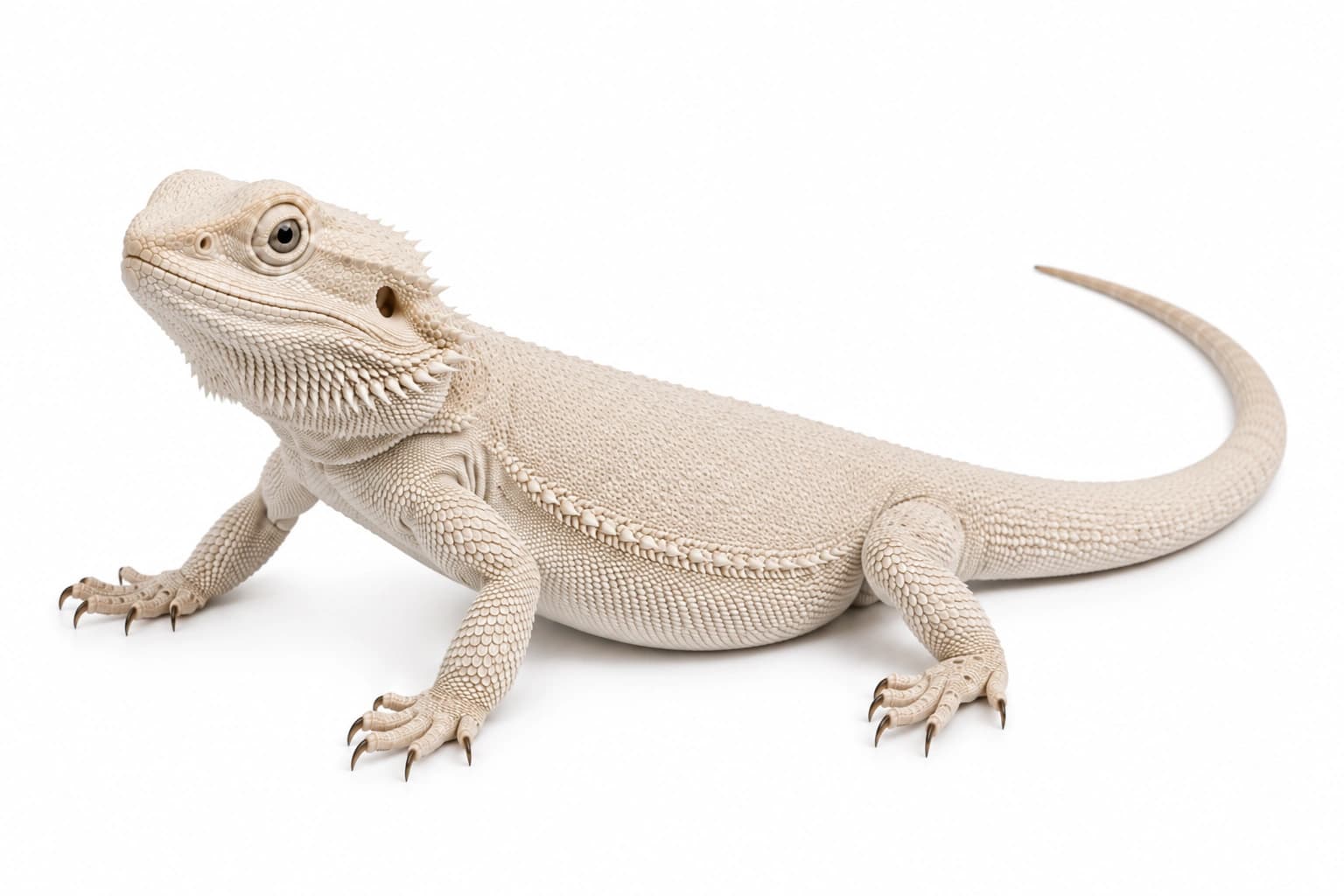
A classic recessive morph recognised by reduced dark pigmentation and characteristically clear claws.
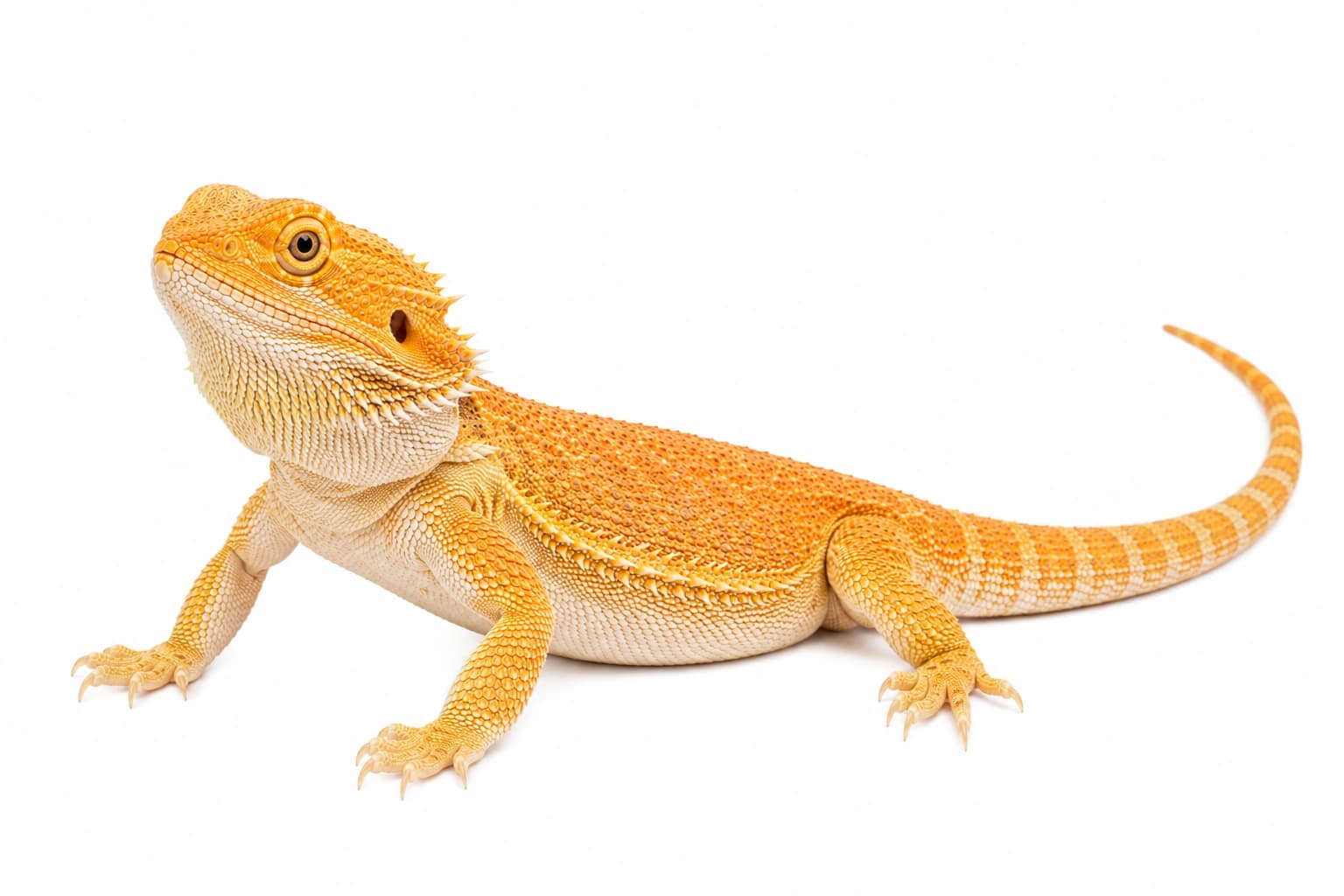
The Hypo Bearded Dragon is a hypomelanistic genetic morph of Pogona vitticeps. It produces less dark pigment than a Normal dragon, creating a lighter, cleaner appearance while preserving the animal's underlying colour and pattern. Clear claws are the most widely recognised visual feature.
Trait type
Pigment reduction
Inheritance
Simple recessive
Scale type
Standard unless combined
Claws
Clear or pale
Eyes
Visible iris
Pattern
Usually retained
Morph DNA
Hypo Morph Profile
trait
Hypomelanism
trait Type
Recessive reduction of dark melanin pigmentation
inheritance
A visual Hypo inherits the recessive allele from both parents
visual Expression
Clear claws, reduced black pigmentation and a lighter overall appearance
hidden Traits
A visually Normal dragon may carry one Hypo allele and be het Hypo
beginner Friendly
Yes, provided all standard Bearded Dragon husbandry requirements are met
Morph Overview
What Is a Hypo Bearded Dragon?
The Hypo Bearded Dragon is one of the most established and recognisable genetic morphs of captive Pogona vitticeps. Hypo is short for hypomelanistic, a term used for animals that display reduced production or expression of melanin, the pigment responsible for much of the black and dark brown colouration in the skin, scales and claws.
In Bearded Dragons, the Hypo trait does not create one specific colour. Instead, it reduces the dark overlay that would normally mute or interrupt the animal's underlying pigmentation. A Hypo may therefore be cream, tan, yellow, orange, red or a combination of colours depending on its wider genetic background and selective breeding history.
The most commonly used visual indicator is the absence of the dark stripe or dark pigment normally seen inside the claws. Visual Hypo dragons characteristically have clear, white or pale claws. This feature is usually visible from hatching and remains present as the animal matures.
Hypo should not be confused with a general marketing description such as bright, pastel or high colour. A Normal dragon may be naturally light or vividly coloured while still retaining dark claw pigment. Equally, a Hypo can display muted colour if it does not come from a strongly selected colour line.
The trait affects pigment rather than scale structure. A Hypo can have standard scales, or it can be combined with Leatherback, Dunner, Translucent, Zero, Witblits, Genetic Stripe and many other independently inherited traits.
Head Details
Head, Eyes and Facial Features
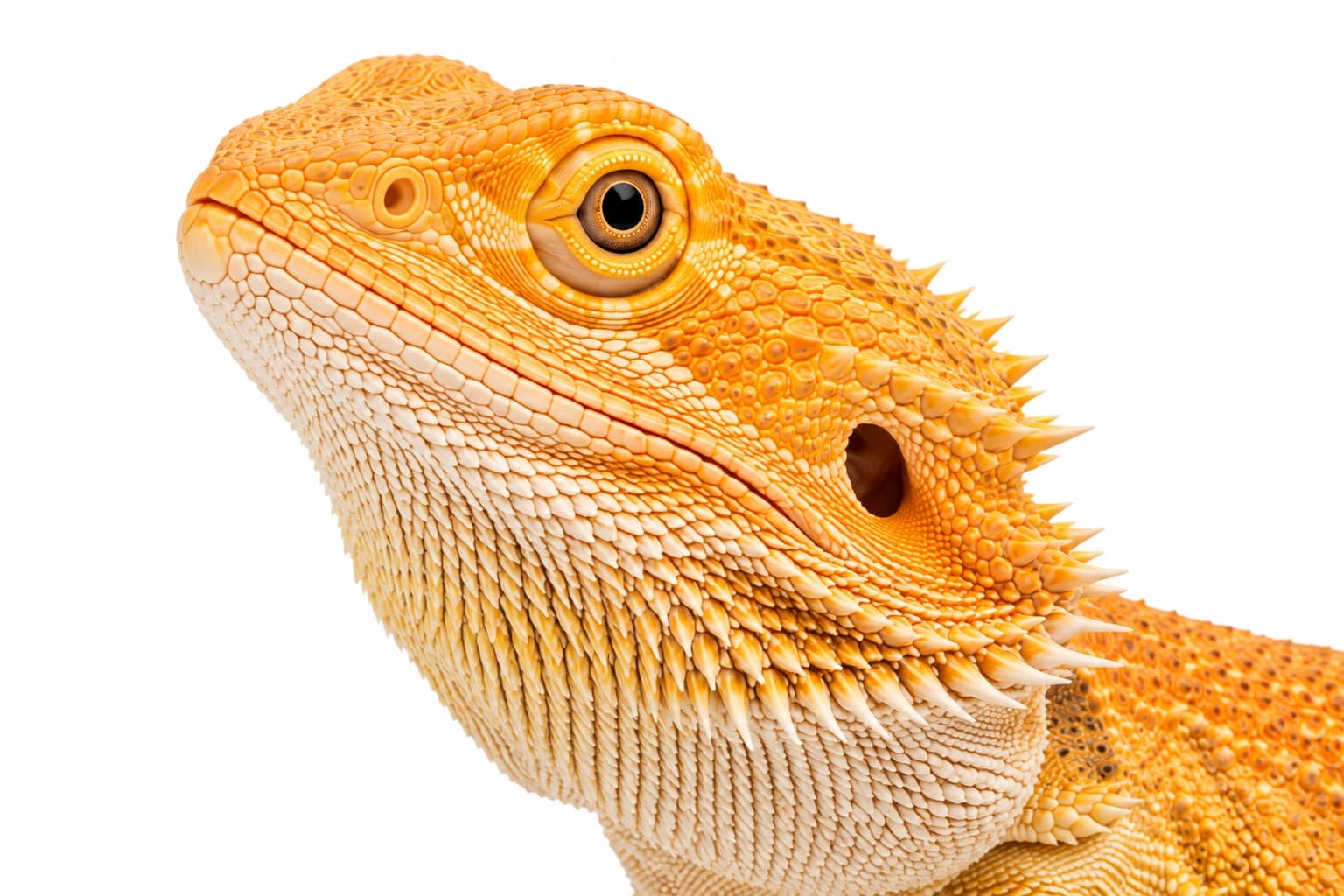
The head of a Hypo Bearded Dragon retains the broad triangular shape, beard scales and facial structure typical of Pogona vitticeps. The main difference is a reduction in heavy dark pigmentation around the brow, cheeks, snout and beard.
Facial markings may appear softer, cleaner or more pastel than those of a comparable Normal dragon. Yellow, orange and red pigmentation can look more prominent because it is less obscured by black or dark brown melanin.
The eyes normally retain a visible iris and pupil. Consistently solid-looking black eyes are more closely associated with visual Translucent expression and are not required for Hypo. A dragon can be both Hypo and Translucent, in which case the traits should be recorded separately.
The beard can still darken during stress, courtship, territorial behaviour or other social displays. Hypomelanism reduces dark pigment but does not prevent every temporary darkening response.
Characteristic Feature
Clear Claws and Reduced Melanin
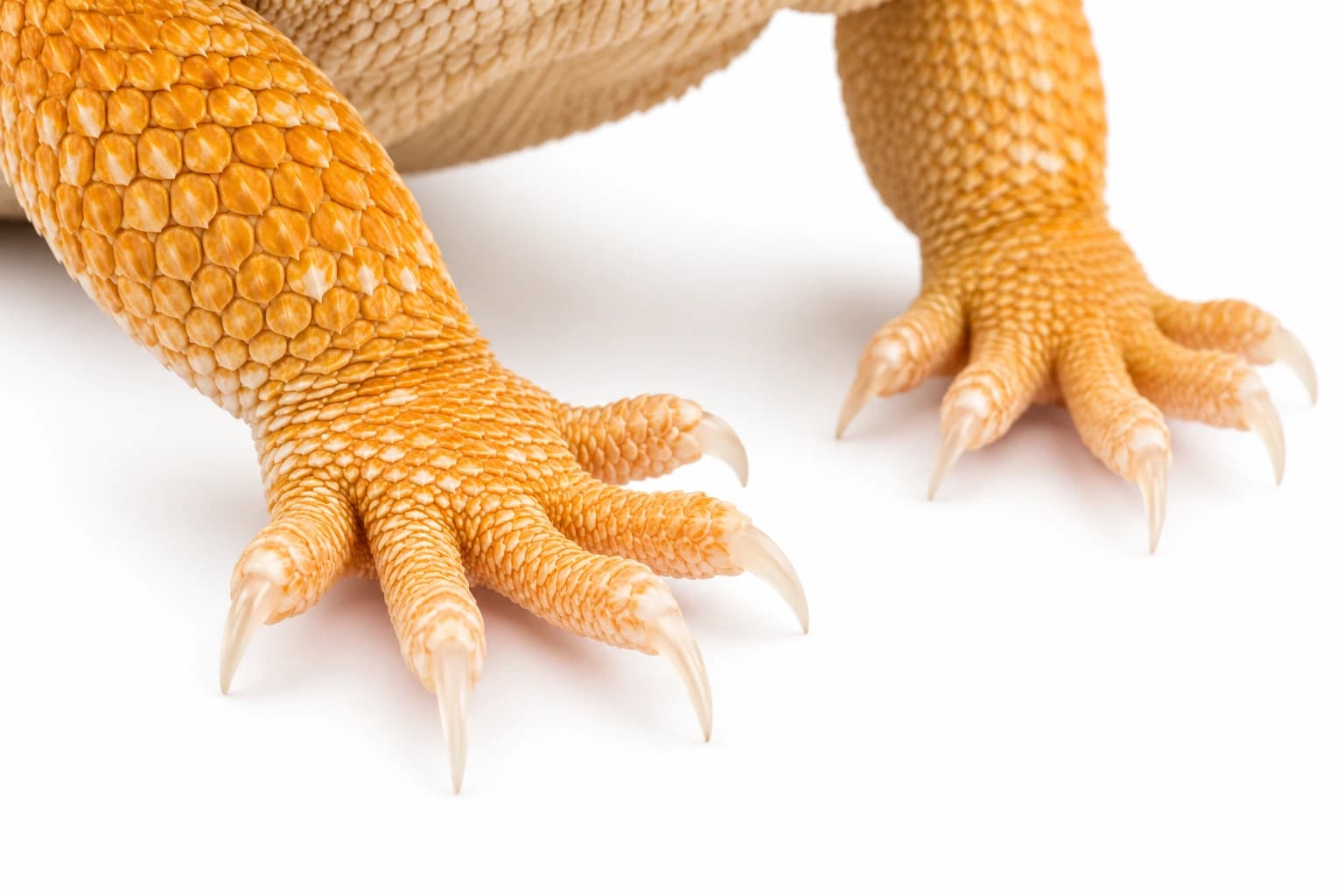
Clear claws are the most widely recognised visual sign of the Hypo morph. In a visual Hypo, the claws lack the dark brown or black stripe commonly visible within the nails of a Normal Bearded Dragon.
The claws may appear transparent, translucent-white, ivory or pale cream depending on lighting, age and the colour of the surrounding toes. All claws should be inspected because damage, retained shed, staining, lighting and natural variation can make an individual nail difficult to assess.
Reduced melanin should also be visible elsewhere on the body. Dark pattern elements tend to appear softer, and the overall animal often looks brighter or cleaner than a similarly coloured Normal dragon.
Clear claws are a strong practical indicator, but lineage remains important. Morph identification is most reliable when visual examination is supported by documented parentage and breeder records. The presence of pale nails alone should not be used to make unsupported claims about every gene carried by the animal.
Identification Guide
How to Identify a Hypo Bearded Dragon
To identify a Hypo Bearded Dragon, begin by examining every claw under neutral, bright lighting. A visual Hypo should lack the dark central stripe or dark internal pigment normally found in the claws of a Normal dragon. The nails typically appear clear, white, ivory or pale cream.
Next, assess the overall pigmentation. Hypo dragons commonly show reduced black and dark brown colour across the head, back, limbs and tail. Pattern may still be present, but the darkest elements are usually softer, lighter or less dominant.
Do not rely on brightness alone. A selectively bred Normal dragon can be intensely red, orange or yellow while still retaining dark claws. Conversely, a Hypo from a muted colour line may be beige, cream or light brown rather than vividly coloured.
Inspect the scale structure separately. Hypo does not reduce the number of scales. A standard Hypo retains rough dorsal scalation. A smoother back indicates an additional Leatherback trait, while irregular scale orientation may indicate Dunner.
Inspect the eyes as another independent feature. Hypo dragons normally retain a visible iris. Solid-looking black eyes may suggest that Translucent is also present, although eye appearance must be judged carefully under suitable lighting.
Whenever possible, confirm identification through reliable lineage. A visual Hypo carries two copies of the Hypo allele, while a visually Normal het Hypo carries only one and cannot be identified by appearance alone.
Juvenile Development
What Does a Juvenile Hypo Bearded Dragon Look Like?
Juvenile Hypo Bearded Dragons often display the defining characteristics of the morph from the moment they hatch. The claws are typically pale or transparent, while the body already shows noticeably reduced black pigmentation compared with a Normal hatchling from the same bloodline.
Young Hypos frequently appear cleaner and brighter because the darker juvenile markings never become as intense as those of a Normal dragon. However, the overall colour should not be mistaken for the final adult appearance. Like all Bearded Dragons, Hypos continue developing colour throughout repeated shedding cycles.
Body bands remain visible across the back and tail, although they usually appear softer, lighter and less sharply defined. Some hatchlings display surprisingly vivid orange, yellow or red tones at an early age, while others remain relatively pale until several months old.
Juvenile Hypo dragons retain normal body proportions, rough dorsal scales and prominent side spikes. The mutation affects pigmentation only and does not alter growth, skeletal development or body shape.
Because colour changes rapidly during the first year of life, breeders should avoid making assumptions about future colour intensity from a single hatchling photograph. The claws remain the most reliable permanent feature.
Appearance
Hypo Bearded Dragon Appearance
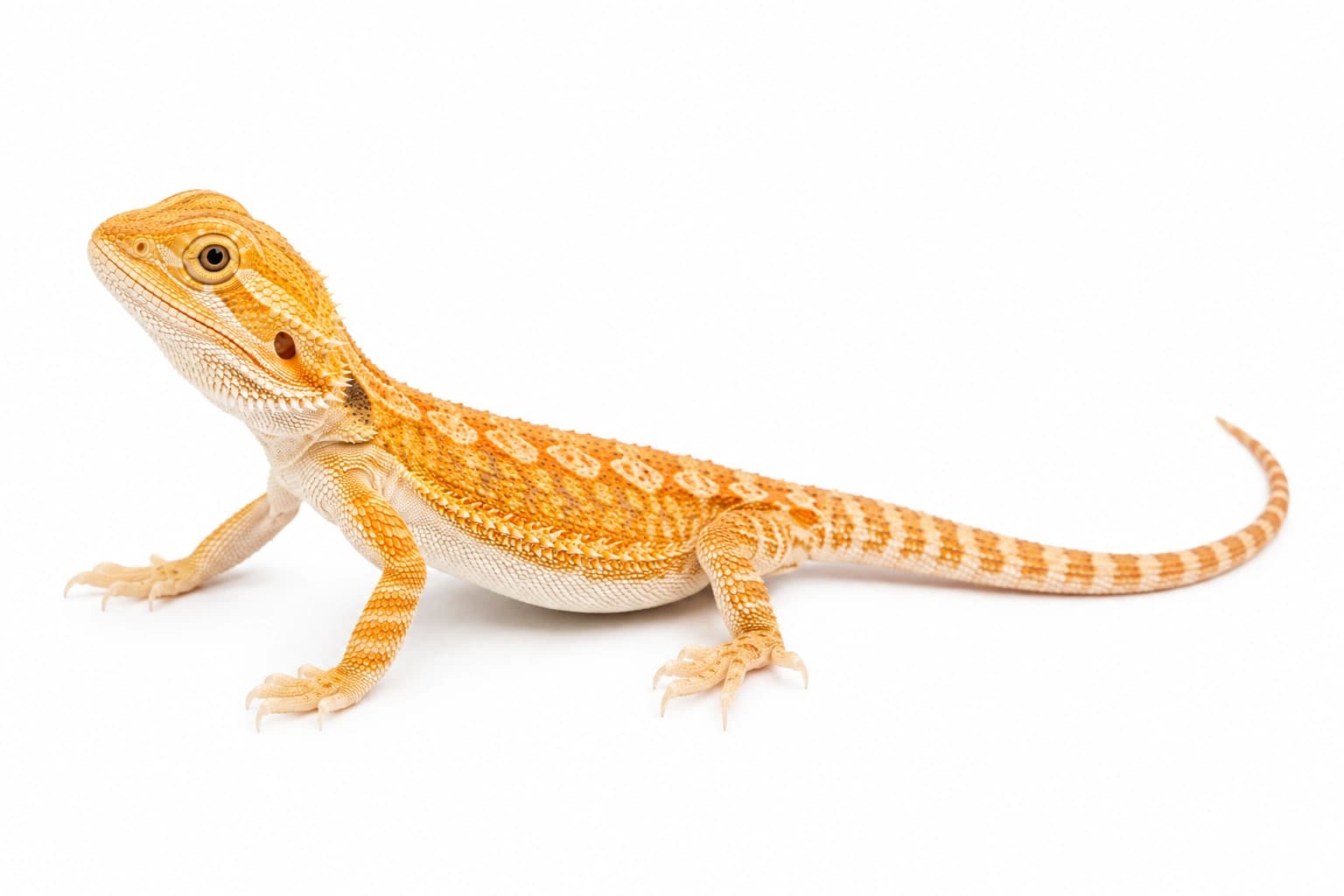
Hypo Bearded Dragons usually have a cleaner and lighter appearance than comparable Normal dragons. Dark brown and black areas are reduced, softened or replaced by lighter grey, lavender, cream or warm-toned pigmentation. The degree of brightness depends heavily on the dragon's colour line and the other genes it carries.
The underlying body pattern is generally retained. Bands, spots and markings may still be visible across the back, limbs and tail, but they often appear less heavily outlined because the darkest melanin is reduced. In orange, yellow and red lines this can make the colour look more saturated and less obscured.
A Hypo is not necessarily patternless. Patternless appearance is associated with separate traits such as Zero and Witblits. A Hypo can be heavily patterned, lightly patterned or combined with a pattern-reducing morph.
The scale texture also remains unchanged unless another structural trait is present. A standard-scaled Hypo should retain the ordinary rough dorsal scales and lateral spikes of Pogona vitticeps. A Hypo Leatherback will have reduced dorsal scalation, while a Hypo Silkback will be nearly scaleless.
Like all Bearded Dragons, a Hypo may temporarily darken or lighten in response to temperature, lighting, stress, social behaviour, shedding and physiological condition. These temporary changes do not alter its genetic morph.
Adult Development
Adult Hypo Bearded Dragon
As a Hypo Bearded Dragon matures, the reduction in melanin becomes increasingly obvious. Adults often display cleaner oranges, brighter yellows, richer reds or warmer cream tones because less dark pigment masks the underlying colour.
The exact appearance depends heavily on selective breeding. Two visual Hypos can look dramatically different if one comes from a strong Red Monster lineage while the other comes from a more traditional wild-type colour background.
Pattern generally remains visible throughout adulthood. Dorsal bands, tail markings and facial markings often become softer but rarely disappear completely unless another morph influences the pattern.
The claws remain clear throughout life and continue to be the simplest field characteristic for identifying a visual Hypo.
Temporary colour changes are completely normal. Adult Hypos may darken while basking, during stress, breeding behaviour or before shedding. These temporary physiological colour changes do not alter the underlying genetics.
Genetics
Hypo Genetics and Inheritance
Hypo is generally accepted within the Bearded Dragon hobby as a simple recessive mutation. A dragon must inherit one Hypo allele from each parent before it visually expresses the trait.
Animals carrying only one copy are known as heterozygous Hypo, commonly shortened to Het Hypo. These dragons usually appear completely Normal because one recessive allele is not sufficient to reduce melanin.
When two Hypo alleles are inherited, the dragon becomes visually Hypo. Reduced melanin, lighter pigmentation and clear claws become visible because no dominant Normal allele masks the mutation.
If a visual Hypo is paired with a visually Normal dragon that does not carry Hypo, every offspring is expected to become 100% Het Hypo. They inherit one Hypo allele but remain visually Normal.
Pairing two Het Hypo dragons produces the familiar recessive probability:
• 25% Visual Hypo
• 50% Het Hypo
• 25% Normal (non-carrier)
It is important to remember that these percentages describe probability, not guaranteed clutch ratios. A clutch of six eggs could theoretically contain zero visual Hypos or all visual Hypos simply due to chance.
Because Hypo affects pigmentation only, it combines easily with numerous independent morphs including Leatherback, Dunner, Translucent, Zero, Witblits, Genetic Stripe, Tiger and Red Monster.
Inheritance
Simple recessive mutation.
Visual Hypo
Carries two Hypo alleles and visibly expresses reduced melanin.
Het Hypo
Carries one Hypo allele but normally appears visually Normal.
Hypo × Normal
Produces 100% Het Hypo offspring when the Normal parent is not carrying Hypo.
Hypo × Het Hypo
Expected outcome: 50% Visual Hypo and 50% Het Hypo.
Het × Het
Expected outcome: 25% Visual, 50% Het and 25% non-carriers.
Care Guide
Caring for a Hypo Bearded Dragon
Hypo Bearded Dragons require the same complete husbandry as other healthy Pogona vitticeps. The Hypo mutation affects pigmentation and does not create different temperature, UVB, diet or enclosure requirements.
A suitable enclosure must provide enough room for movement, climbing, basking, hiding and natural thermoregulation. The dragon should have access to a bright basking area as well as a cooler, shaded section of the enclosure.
A high-quality linear UVB system is essential. Appropriate UVB exposure supports vitamin D3 production, calcium metabolism, skeletal health, muscle function and normal behaviour. The UVB source should overlap the basking area while still allowing the dragon to move into lower-exposure zones.
Heating and UVB must work together. Surface temperatures should be measured with reliable equipment rather than estimated by touch. The dragon must be able to warm itself efficiently and then retreat to a cooler area when necessary.
Hypo dragons do not require weaker UVB simply because they have reduced melanin. They are not albino, and there is no established evidence that healthy visual Hypos require fundamentally different lighting from other fully scaled Bearded Dragons.
Diet should be adjusted according to age, body condition and veterinary guidance. Juveniles generally consume a greater proportion of appropriately sized live invertebrates, while healthy adults usually eat a larger proportion of varied leafy greens and safe vegetables.
Live food should be nutritious, appropriately sized and well gut-loaded. Calcium and vitamin supplementation should be used alongside correct UVB exposure and a balanced diet rather than as a replacement for proper husbandry.
Fresh water should be available, the enclosure should remain hygienic and the dragon should be monitored for changes in weight, appetite, activity, posture, breathing, mobility, urates and faeces.
Any persistent change in behaviour, eating, movement or waste production should be discussed with a veterinarian experienced in reptile medicine.
UVB
Provide a strong linear UVB source with access to both appropriate exposure and shaded areas.
Heating
Create a bright basking zone and a cooler end so the dragon can thermoregulate naturally.
Lighting sensitivity
Hypo is not albinism. Healthy Hypo dragons do not normally require weaker UVB solely because of reduced melanin.
Diet
Offer an age-appropriate balance of nutritious live food, leafy greens and safe vegetables.
Supplementation
Use appropriate calcium and vitamin supplementation alongside correct UVB and diet.
Monitoring
Track weight, appetite, activity, shedding, hydration and waste production over time.
Veterinary care
Consult a reptile-experienced veterinarian when illness, injury or abnormal behaviour is suspected.
Breeding
Hypo Breeding and Genetic Outcomes
Because Hypo is treated as a simple recessive trait, breeding outcomes can be estimated when the genetic status of both parents is known.
A visual Hypo carries two copies of the Hypo allele. A Het Hypo carries one copy but does not normally display the clear claws and reduced melanin of the visual morph.
Pairing two visual Hypo dragons is expected to produce 100% visual Hypo offspring because every baby receives one Hypo allele from each parent.
Pairing a visual Hypo with a confirmed non-carrier Normal dragon is expected to produce 100% Het Hypo offspring. The babies normally appear visually non-Hypo but each carries one copy of the mutation.
Pairing a visual Hypo with a confirmed Het Hypo is expected to produce approximately 50% visual Hypo and 50% Het Hypo offspring.
Pairing two Het Hypo dragons is expected to produce approximately 25% visual Hypo, 50% Het Hypo and 25% non-carriers.
These percentages represent the probability for each individual egg rather than a guaranteed distribution within one clutch. Small clutches can differ substantially from the theoretical ratio.
When two Het Hypo dragons produce visually non-Hypo offspring, those babies are commonly labelled 66% Possible Het Hypo. This does not mean each animal carries two-thirds of a gene. It means that, among the three possible non-visual genetic outcomes, two carry one Hypo allele and one does not.
Possible het labels must be recorded accurately. A dragon described as 66% possible het is not genetically confirmed. Its carrier status can only be established through reliable parentage, suitable genetic testing where available or carefully documented breeding outcomes.
Hypo is commonly combined with other traits such as Translucent, Leatherback, Dunner, Zero, Witblits, Genetic Stripe and selected colour lines. Each independent gene must be calculated separately.
Breeding decisions should prioritise health, structure, temperament, genetic diversity and welfare rather than colour or commercial value alone. Animals with significant health or anatomical concerns should not be bred simply because they express desirable morph traits.
Hypo × Hypo
Expected to produce 100% visual Hypo offspring.
Hypo × Normal non-carrier
Expected to produce 100% Het Hypo offspring and no visual Hypos.
Hypo × Het Hypo
Expected to produce approximately 50% visual Hypo and 50% Het Hypo offspring.
Het Hypo × Het Hypo
Expected to produce approximately 25% visual Hypo, 50% Het Hypo and 25% non-carriers.
Hypo × 66% Possible Het Hypo
The result depends on whether the possible het parent actually carries the Hypo allele.
Hypo colour line × Hypo colour line
All offspring may be visual Hypo, but colour intensity remains variable because colour lines are polygenic.
Identification Mistakes
Common Misidentifications
Hypo vs Normal
Visual Hypo dragons characteristically have clear or pale claws and reduced dark pigmentation. Normal dragons usually retain a visible dark stripe or dark pigment inside the claws. Bright body colour alone does not prove Hypo.
View comparison morph →Hypo vs Leatherback
Hypo affects pigmentation, while Leatherback affects dorsal scale structure. A Hypo can have standard rough scales, and a Leatherback can have normally pigmented dark claws. A dragon may also express both traits.
View comparison morph →Hypo vs Translucent
Hypo is identified primarily through clear claws and reduced melanin. Translucent affects tissue pigmentation and is often associated with unusually dark eyes and bluish or translucent characteristics, especially in juveniles. The two recessive traits can occur together.
View comparison morph →Hypo vs Zero
Hypo usually retains natural bands and body markings. Zero is a separate patternless morph commonly displaying white, silver or grey colouration. A Zero may also be Hypo, so claw pigmentation and lineage must be considered separately.
View comparison morph →Hypo vs Witblits
Hypo reduces dark pigmentation but generally preserves pattern. Witblits is a separate patternless mutation usually associated with cream, tan or muted earthy colouration.
View comparison morph →Hypo vs bright colour line
A red, orange, yellow or Citrus dragon is not automatically Hypo. Colour lines describe selected pigmentation, while Hypo is a recessive melanin-reduction mutation identified most reliably through clear claws and lineage.
Pale claw vs true clear claw
Lighting, retained shed, staining, injury or naturally pale nail tips can make a claw appear lighter. A true visual Hypo should consistently lack the normal dark internal stripe across the claws.
Morph Comparison
How Hypo Compares With Other Morphs
Frequently Asked Questions
Hypo Bearded Dragon FAQ
What is a Hypo Bearded Dragon?
A Hypo Bearded Dragon is a hypomelanistic genetic morph that produces reduced dark pigmentation. Visual Hypos are best recognised by clear or pale claws.
What does Hypo mean in Bearded Dragons?
Hypo is short for hypomelanistic, meaning that the dragon displays reduced melanin, the pigment responsible for much of the black and dark brown colouration.
How can you identify a Hypo Bearded Dragon?
Inspect the claws for the absence of a dark internal stripe, then assess the dragon for reduced dark pigmentation. Reliable lineage should be used whenever possible.
Do all Hypo Bearded Dragons have clear claws?
Clear or pale claws are the principal visual marker of a true visual Hypo. Individual claws can be affected by injury, staining or retained shed, so every claw should be inspected carefully.
Can a Hypo Bearded Dragon have dark markings?
Yes. Hypo reduces melanin but does not remove all dark pigmentation or natural pattern. Bands and markings may still be visible, although they are often softer.
Are all yellow or orange Bearded Dragons Hypo?
No. Yellow, orange and red colour can occur in Normal dragons. Hypo is a recessive pigment mutation and should not be identified from body colour alone.
Is Hypo the same as Albino?
No. Hypo dragons still produce melanin and normally retain pigmented eyes. True albinism involves a much more complete loss of melanin.
Do Hypo Bearded Dragons have red or pink eyes?
No. Hypo alone does not produce red or pink eyes. The eyes normally retain a visible iris and pupil.
Is Hypo a recessive morph?
Yes. A visual Hypo must inherit one Hypo allele from each parent.
What does Het Hypo mean?
Het Hypo means the dragon carries one copy of the recessive Hypo allele but does not normally express the visual morph.
What does 66% possible Het Hypo mean?
It means a visually non-Hypo dragon has a calculated two-in-three chance of carrying one Hypo allele based on its parents. It is not genetically confirmed.
What happens when two Hypo Bearded Dragons breed?
Two correctly identified visual Hypo parents are expected to produce 100% visual Hypo offspring.
What happens when Hypo is bred to Normal?
When a visual Hypo is bred to a confirmed non-carrier Normal dragon, all offspring are expected to be visually Normal but 100% Het Hypo.
Can Hypo be combined with Leatherback?
Yes. Hypo Leatherbacks express both reduced melanin and reduced dorsal scalation because the traits affect different physical characteristics.
Can Hypo be combined with Translucent?
Yes. Hypo Translucent dragons express two separate recessive traits and may display clear claws together with Translucent characteristics.
Can Hypo be combined with Zero or Witblits?
Yes. Hypo can occur alongside patternless mutations such as Zero or Witblits. Lineage and claw pigmentation are important because the patternless appearance can hide other visual clues.
Do Hypo Bearded Dragons need special UVB?
No morph-specific UVB system is normally required. Healthy Hypo dragons need the same appropriate linear UVB exposure and gradient as other Bearded Dragons.
Are Hypo Bearded Dragons more sensitive to light?
Hypo is not albinism, and healthy Hypos are not generally treated as requiring weaker lighting solely because of the morph. Every dragon should still have access to shade and lower-exposure areas.
Do Hypo Bearded Dragons require different care?
No. They require the same correct enclosure, heating, UVB, diet, supplementation, hygiene and veterinary care as other healthy Bearded Dragons.
Does Hypo affect health or lifespan?
Hypo is primarily a pigmentation trait and is not generally considered to shorten lifespan by itself. Health depends more strongly on husbandry, nutrition, lineage and responsible breeding.
Does Hypo make a Bearded Dragon brighter?
It can make existing colour appear cleaner and brighter by reducing the dark pigment that would otherwise mask it. Hypo does not create red, orange or yellow colour by itself.
Can a pale Bearded Dragon be non-Hypo?
Yes. A Normal dragon may be naturally pale or selectively bred for light colour while still retaining dark claw pigmentation.
Can appearance prove that a dragon is Het Hypo?
No. A Het Hypo normally looks visually non-Hypo. Carrier status must be established through reliable lineage, appropriate testing or documented breeding outcomes.
Continue Exploring
Related Morphs
Continue Learning
Bearded Dragon Care Guides
Explore our practical guides covering enclosure setup, UVB lighting, heating, feeding, humidity, enrichment and everyday Bearded Dragon care.
Explore Care Guides →Scientific References
This article was prepared using established zoological, husbandry and scientific references.