Genetic Morphs
Zero
Bearded Dragon
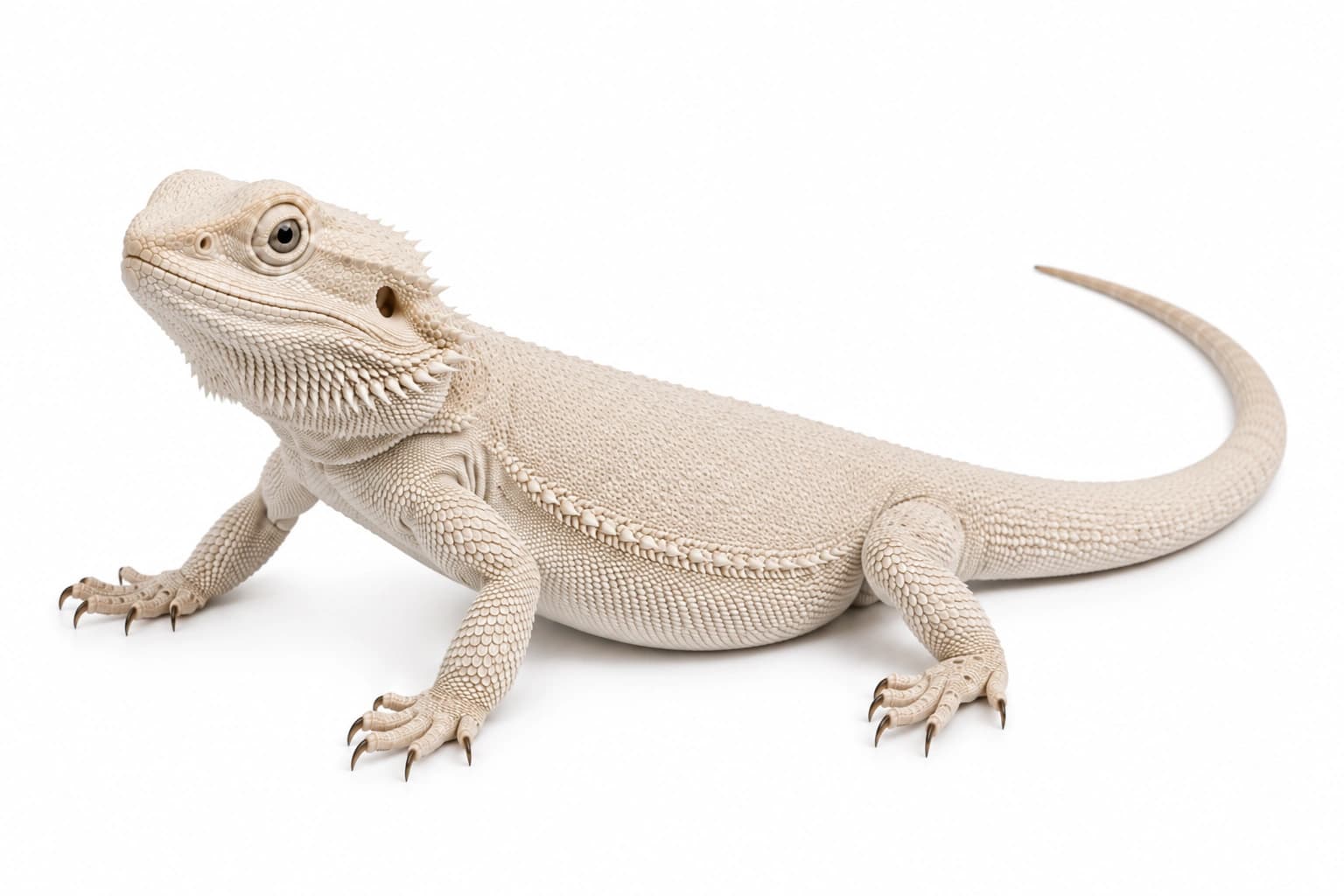
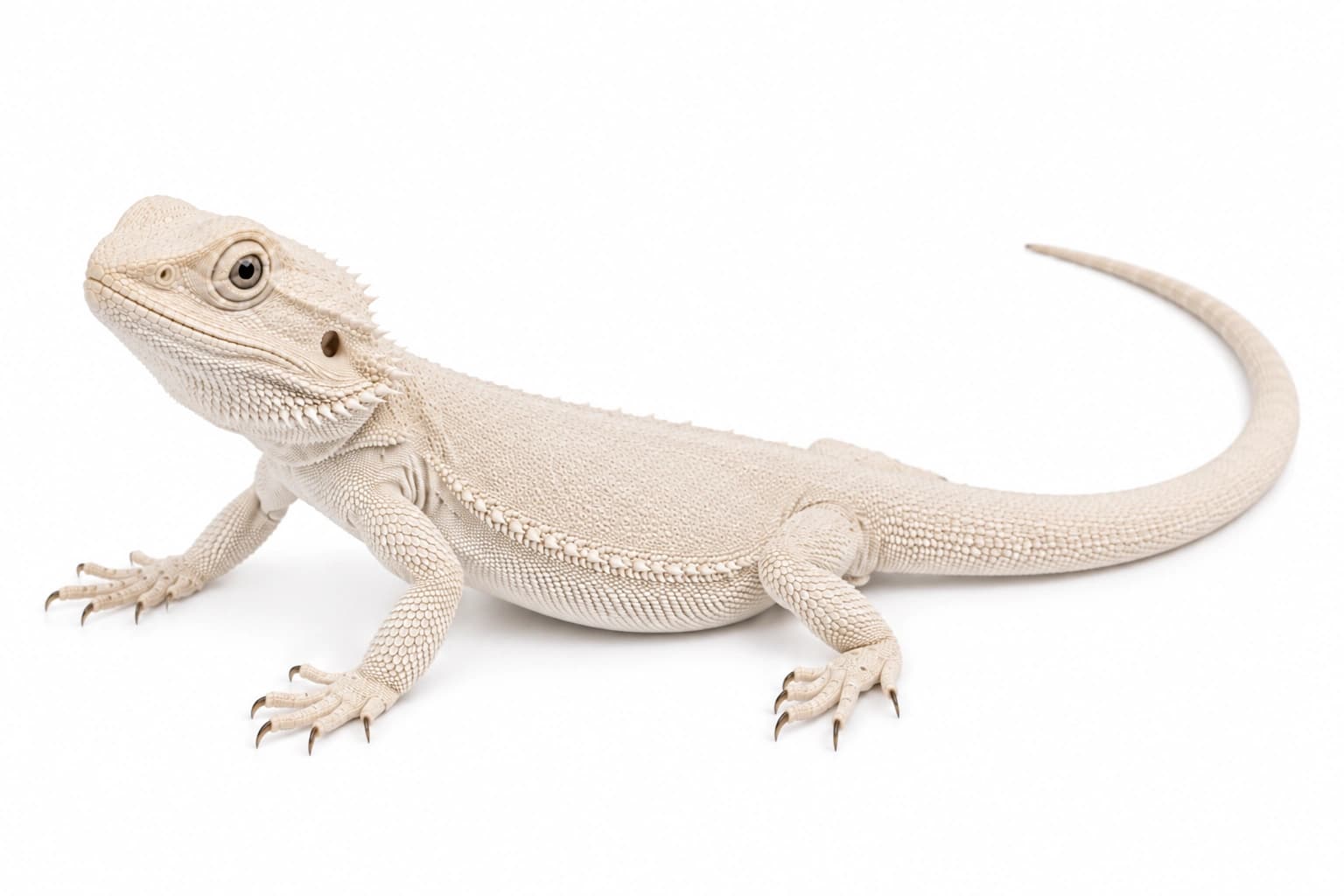
A striking recessive morph recognised by its completely patternless body and clean white, silver or grey appearance.
The Zero Bearded Dragon is a recessive genetic morph of Pogona vitticeps that masks the ordinary body pattern and much of the visible colour expression. Visual Zeros typically appear white, silver, pale grey or charcoal-grey without the bands, spots and dorsal markings associated with Normal Bearded Dragons.
Trait type
Pattern and colour masking
Inheritance
Simple recessive
Pattern
Absent
Typical colour
White, silver or grey
Scale type
Standard unless combined
Similar morph
Witblits
Morph DNA
Zero Morph Profile
trait
Zero
trait Type
Recessive mutation masking ordinary pattern and much of the visible colour expression
inheritance
A visual Zero inherits one recessive Zero allele from each parent
visual Expression
Patternless body with white, silver, pale grey or darker grey pigmentation
hidden Traits
A visually non-Zero dragon may carry one Zero allele and be Het Zero
beginner Friendly
Yes, provided the dragon is healthy and receives complete standard Bearded Dragon husbandry
Morph Overview
What Is a Zero Bearded Dragon?
The Zero Bearded Dragon is one of the most visually distinctive recessive morphs of captive Pogona vitticeps. It is recognised by the absence of the ordinary bands, spots, blotches and dorsal markings seen in patterned Bearded Dragons.
Visual Zero dragons commonly appear white, silver, pale grey, charcoal-grey or a mixture of cool neutral tones. The surface of the body looks clean and uniform because the mutation masks both the standard pattern and much of the visible colour expression.
Zero does not mean that every dragon will be pure white. Expression varies between individuals, bloodlines, age and combinations with other traits.
Some Zeros are extremely pale and icy-looking, while others retain medium or dark grey pigmentation. A dragon can therefore be a genuine visual Zero without being bright white.
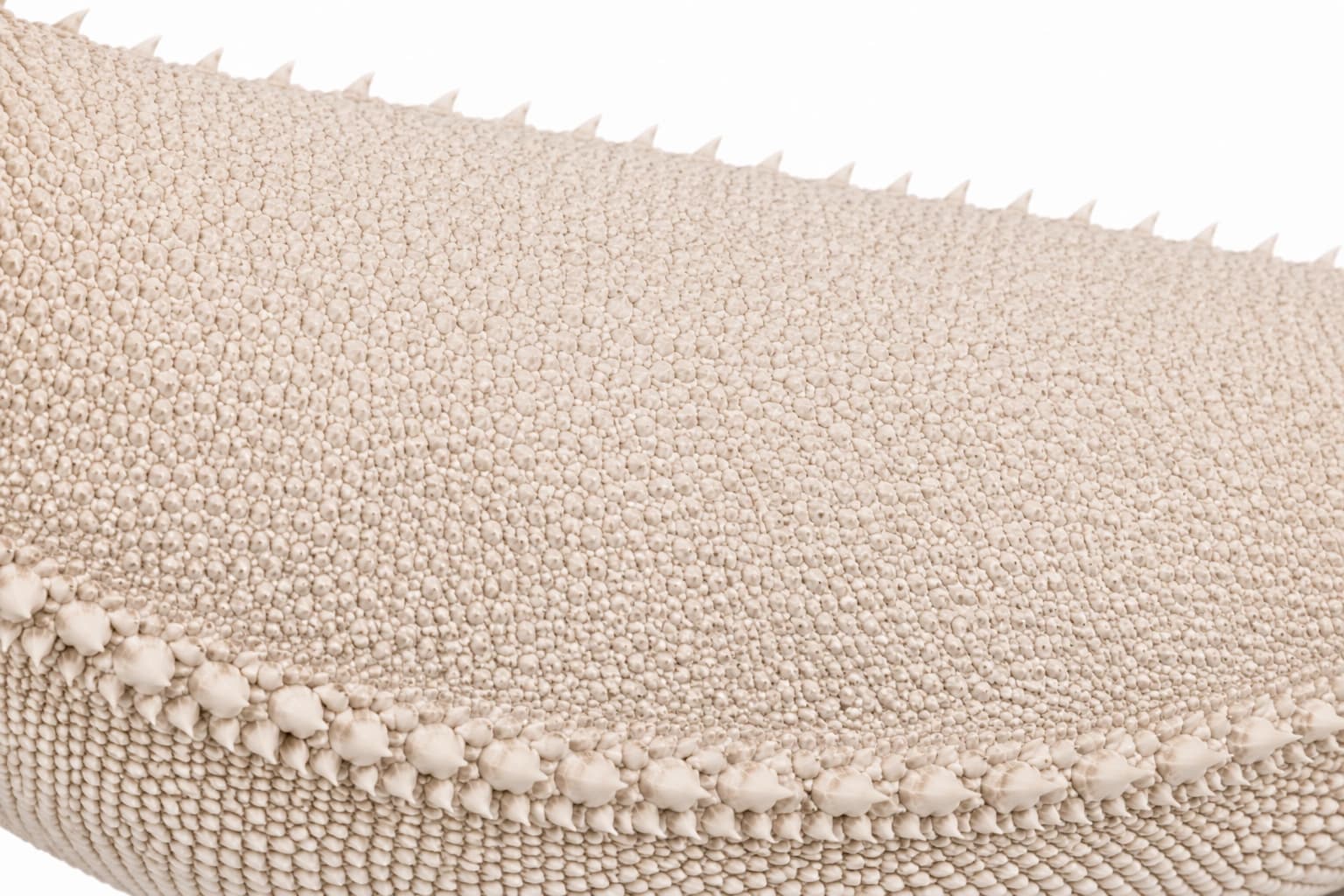
The Zero mutation affects pattern and pigmentation rather than scale structure. A standard Zero retains the rough dorsal scales, side spikes and beard scales expected in Pogona vitticeps.
A smoother back indicates that Leatherback may also be present. Multidirectional scales may indicate Dunner, while clear claws can indicate Hypo.
Zero is frequently confused with Witblits because both morphs are patternless. They are genetically separate recessive traits.
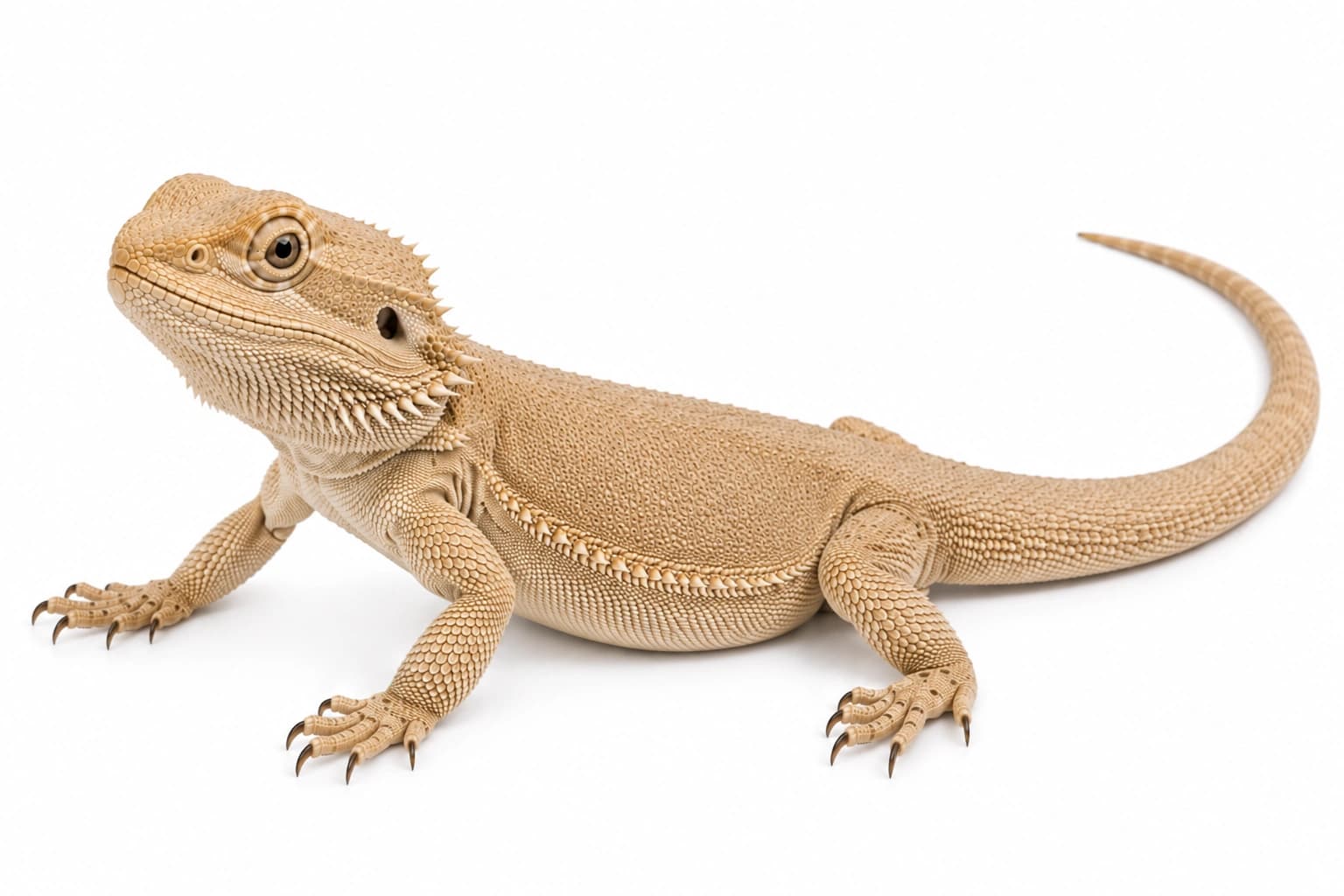
Witblits generally retains warmer cream, beige, tan or muted earthy pigmentation. Zero is more commonly associated with cooler white, silver and grey tones and stronger masking of visible colour.
A dragon can inherit and express both mutations. The combined Zero and Witblits form is commonly called Wero.
Zero should not be confused with albinism. Visual Zero dragons normally retain pigmented eyes and are capable of producing grey or darker pigmentation.
The morph can be combined with Hypo, Translucent, Leatherback, Dunner, Genetic Stripe and selected colour lines. Some combinations become difficult to identify visually because the Zero phenotype masks pattern and colour characteristics produced by other traits.
Head Details
Head, Eyes and Facial Appearance
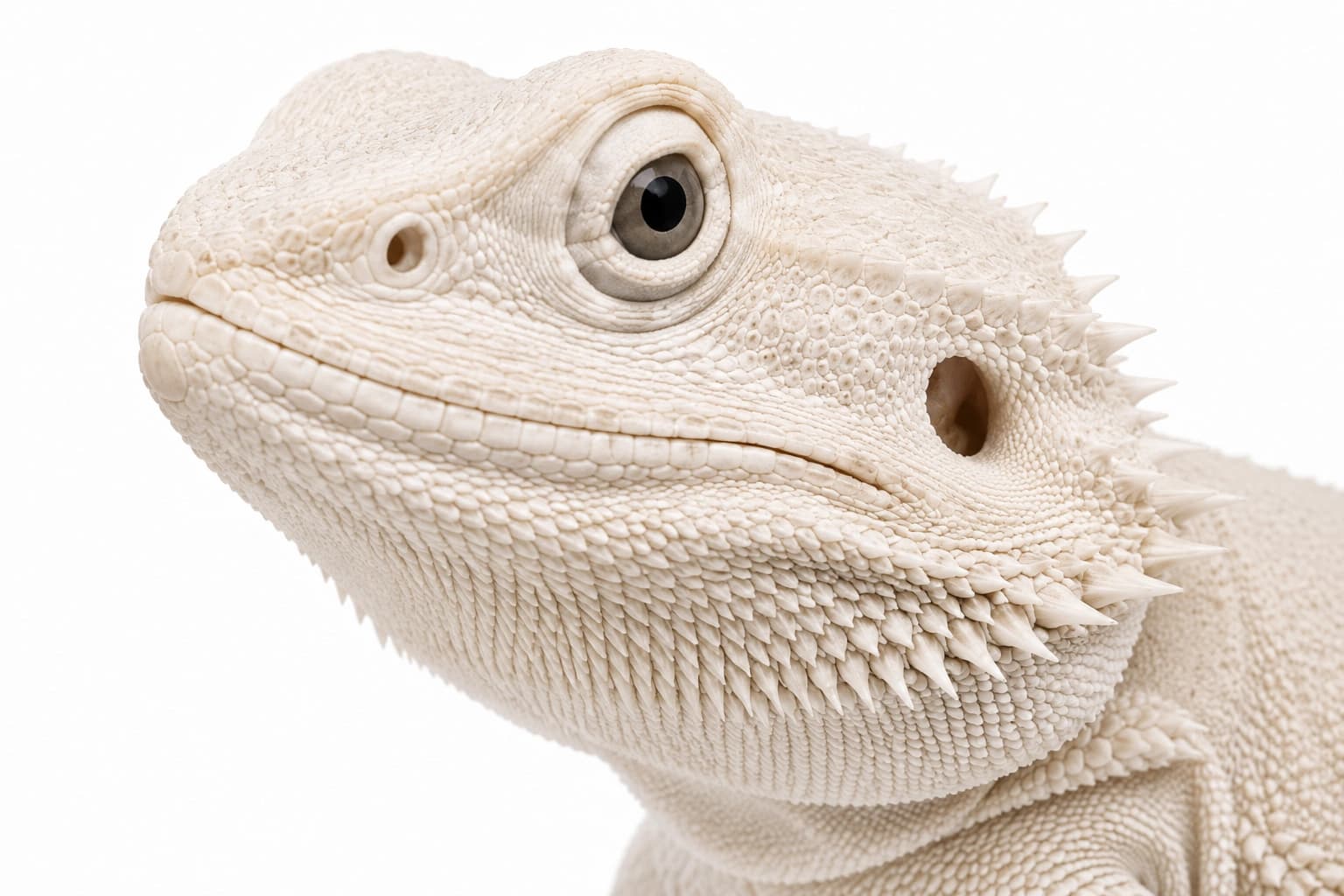
The head of a Zero Bearded Dragon retains the broad triangular form, pronounced brow, facial scales and expandable beard typical of Pogona vitticeps.
The distinguishing characteristic is the absence of ordinary facial pattern. Bands, contrasting cheek markings and patterned head scales are masked, producing a clean and uniform appearance.
Head colour normally follows the cool neutral pigmentation of the body. It may be white, pale grey, silver, medium grey or charcoal depending on the individual.
The eyes normally retain a visible iris and pupil. Zero alone does not create the consistently solid-looking dark eyes associated with many visual Translucent dragons.
Zero is not albinism. Red or pink eyes are not expected from the Zero mutation.
Facial scales and beard spikes remain structurally normal unless another scale trait is also expressed.
The beard can still darken during stress, territorial behaviour, courtship or other social displays. Patternless genetics do not prevent normal physiological beard darkening.
Characteristic Feature
A Completely Patternless Body
The defining feature of the Zero morph is the absence of the ordinary body pattern.
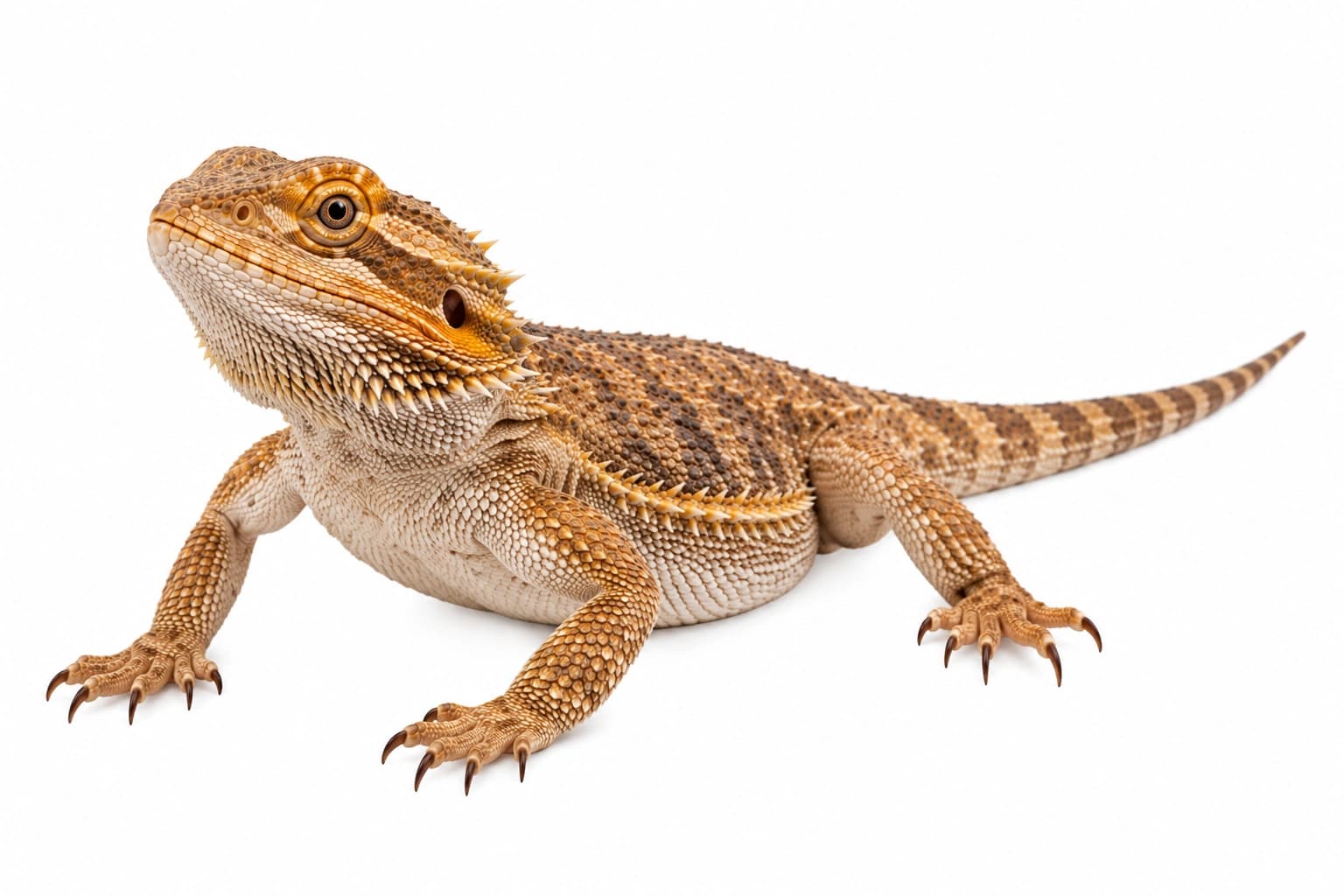
A Normal Bearded Dragon typically displays bands, spots, blotches, tail rings and contrasting markings across the head, body and limbs.
A visual Zero has a clean, uniform surface without these recognisable pattern elements.
The feature should be visible across the entire animal. The back, sides, limbs, head and tail should all lack the standard organised markings.
Temporary stress marks should not be confused with permanent body pattern. A Zero may develop darker shading, a dark beard or temporary tonal variation without ceasing to be patternless.
The body is commonly white, silver or grey, but exact colour is not the only identifying feature. Pattern absence and reliable lineage are more important than whether the animal is extremely pale.
Zero should be distinguished from Witblits. Both are patternless, but Witblits more commonly retains warm cream, tan, beige or muted earthy pigmentation.
A pale patternless animal cannot always be confidently classified from one photograph. Breeder records and known parentage are valuable when separating Zero, Witblits and combined Wero animals.
Identification Guide
How to Identify a Zero Bearded Dragon
To identify a Zero Bearded Dragon, begin by assessing the pattern across the entire body.
A visual Zero should lack the ordinary dorsal bands, side markings, tail rings and patterned head elements associated with Normal Bearded Dragons.
Inspect the dragon under bright, neutral lighting. Artificial colour casts and photographic editing can make warm pigmentation appear grey or make a lightly patterned animal look patternless.
Next, assess the overall colour. White, silver and grey are strongly associated with Zero, but not every individual is bright white. Medium-grey and charcoal Zeros also occur.
Inspect the eyes separately. Zero alone normally retains a visible iris and pupil. Consistently solid-looking dark eyes may indicate that Translucent is also present.
Inspect the claws separately. Zero does not automatically produce clear claws. Pale or transparent nails suggest that Hypo may also be expressed.
Inspect the scales separately. Standard Zero dragons retain ordinary dorsal scalation. A smoother back suggests Leatherback, while multidirectional scales suggest Dunner.
Compare the animal with Witblits. Witblits is also patternless but generally retains warmer cream, beige, tan or earthy pigmentation.
Colour distinction alone is not infallible. Pale Witblits and warmer-toned Zeros may overlap visually, making documented lineage especially important.
A visually patterned dragon may carry one Zero allele but cannot be identified as Het Zero from appearance. Carrier status must be supported by reliable parentage, genetic testing where available or documented breeding outcomes.
Zero identification should be based on the complete absence of pattern, characteristic cool pigmentation and reliable lineage rather than one isolated feature.
Juvenile Development
What Does a Juvenile Zero Bearded Dragon Look Like?
Juvenile Zero Bearded Dragons are patternless from hatching. They do not display the ordinary dorsal bands, side markings and tail rings commonly seen in young Normal dragons.
Hatchlings may be white, silver, pale grey, medium grey or surprisingly dark charcoal. A dark juvenile can still be a genuine visual Zero if the body is consistently patternless and its genetics are supported by reliable lineage.
Colour can change significantly during growth. Some juveniles gradually become lighter through repeated shedding cycles, while others retain darker silver or charcoal pigmentation into adulthood.
The head, body, limbs and tail should have a clean, uniform appearance. Temporary stress shading or physiological darkening may still occur, but organised permanent pattern should remain absent.
Young Zeros retain ordinary body structure and scale development unless another morph is also present. A standard Zero has normal dorsal scales, side spikes and beard scales.
A juvenile Zero Leatherback has reduced dorsal scalation, while a juvenile Zero Dunner may show multidirectional scales despite the absence of normal colour pattern.
The claws may remain dark unless Hypo is also present. Likewise, the eyes usually retain a visible iris unless Translucent is expressed.
Because Zero and Witblits are both patternless, reliable breeder records are particularly important when identifying young pale dragons.
Appearance
Zero Bearded Dragon Appearance
Zero Bearded Dragons have a clean, uniform and completely patternless appearance.
The ordinary horizontal body bands, tail rings, dorsal blotches and side markings are absent or strongly masked. The head, body, limbs and tail flow together without the obvious patterned divisions seen in a Normal dragon.
Colour generally falls within a cool neutral range. Pale individuals may appear white, ivory-grey, silver or frost-grey. Darker individuals may appear slate, charcoal or smoky grey.
The same animal can look lighter or darker at different times. Temperature, stress, basking, shedding, social behaviour and lighting conditions can temporarily influence visible pigmentation.
A Zero approaching a shed may become especially pale or dull. After shedding, the surface colour may appear cleaner and more strongly defined.
Zero does not automatically create clear claws. A visual Zero without Hypo may retain normal dark pigmentation within the nails.
Zero also does not automatically create black eyes. Very dark or solid-looking eyes may indicate that Translucent is also present.
Standard-scaled Zeros retain rough dorsal scalation and ordinary side spikes. A Zero Leatherback has a smoother back because it expresses two independent traits.
The patternless body can make scale texture especially easy to see because there are no markings distracting from the physical structure.
Juvenile and adult expression may differ. Some young Zeros hatch relatively dark and become lighter with age, while others remain silver or grey throughout life.
A photograph should therefore be interpreted alongside age, lighting, lineage and the animal's wider genetics.
Adult Development
Adult Zero Bearded Dragon
Adult Zero Bearded Dragons retain the completely patternless appearance established during juvenile development.
The mature body may be white, silver, frost-grey, slate or charcoal. Colour intensity varies considerably between individuals and bloodlines.
Some adults become substantially lighter than they appeared as hatchlings. Others remain medium or dark grey throughout life.
A darker adult Zero should not be considered less genuine than a white individual. The defining genetic expression is the masking of pattern and much of the ordinary colour rather than one mandatory shade.
The head, back, sides, limbs and tail normally remain visually uniform without standard bands, spots or tail rings.
Adults can still show temporary colour changes. Basking, cooler temperatures, stress, breeding behaviour and shedding may make the animal look darker or lighter.
The beard can become dark during social or physiological responses. This does not represent the return of a permanent pattern.
Adult Zeros retain standard body proportions and scalation unless additional traits are present. Zero Leatherbacks have smoother backs, while Zero Dunners have altered scale direction.
Clear claws indicate Hypo expression rather than Zero alone. Very dark or solid-looking eyes may indicate Translucent.
The clean, uniform adult appearance can make injuries, retained shed and changes in body condition particularly noticeable. These should be evaluated as husbandry or medical concerns rather than normal morph development.
Genetics
Zero Genetics and Inheritance
Zero is generally treated as a simple recessive genetic mutation.
A visual Zero must inherit one Zero allele from each parent. With two copies present, the animal expresses the characteristic patternless and strongly colour-masked phenotype.
A dragon carrying only one copy is heterozygous Zero, commonly written as Het Zero.
Het Zero dragons usually appear visually non-Zero. They can retain normal body pattern, colour and scale structure and cannot be reliably identified as carriers from appearance alone.
Carrier status should be supported by documented parentage, appropriate genetic testing where available or carefully recorded breeding outcomes.
When a visual Zero is paired with a confirmed non-carrier Normal dragon, every offspring is expected to inherit one Zero allele.
The resulting offspring are expected to be 100% Het Zero but visually non-Zero.
When a visual Zero is paired with a Het Zero, the expected outcome is approximately:
• 50% visual Zero
• 50% Het Zero
When two Het Zero dragons are paired, the expected outcome is approximately:
• 25% visual Zero
• 50% Het Zero
• 25% non-carriers
Visually non-Zero offspring from a Het Zero × Het Zero pairing are commonly described as 66% Possible Het Zero.
This does not mean that each animal carries two-thirds of a gene. It means that among the three possible non-visual genetic outcomes, two are carriers and one is a non-carrier.
Genetic percentages describe the probability for each egg rather than a guaranteed clutch ratio.
Zero and Witblits are separate recessive mutations. A dragon can inherit and visually express both traits.
The combined visual Zero and visual Witblits form is commonly called Wero.
Zero can also occur with Hypo, Translucent, Leatherback, Dunner and other independently inherited traits. Each gene must be calculated separately.
Inheritance
Simple recessive mutation
Visual Zero
Carries two Zero alleles and expresses the patternless phenotype
Het Zero
Carries one Zero allele but normally appears visually non-Zero
Zero × Normal
Expected to produce 100% Het Zero when the Normal parent is a confirmed non-carrier
Zero × Het Zero
Expected to produce approximately 50% visual Zero and 50% Het Zero
Het Zero × Het Zero
Expected to produce approximately 25% visual Zero, 50% Het Zero and 25% non-carriers
Care Guide
Caring for a Zero Bearded Dragon
A healthy Zero Bearded Dragon generally requires the same complete husbandry as another healthy Pogona vitticeps.
The Zero mutation affects pattern and visible pigmentation rather than body structure, digestion or basic environmental requirements.
A suitable enclosure must provide enough space for movement, climbing, basking, hiding and behavioural thermoregulation.
The dragon needs access to a bright basking zone and a cooler shaded area. This allows it to regulate body temperature by moving through the enclosure.
A suitable linear UVB system is essential. Appropriate UVB exposure supports vitamin D3 synthesis, calcium metabolism, skeletal health and normal muscular function.
Zero dragons do not normally require weaker UVB because of their pale appearance. Zero is not albinism, and healthy visual Zeros retain pigmented eyes.
The UVB source should overlap with the basking zone while allowing access to shade and lower-exposure areas.
Heating and UVB must work together. Temperatures should be measured with reliable equipment rather than estimated by touch.
Diet should be appropriate for the dragon's age, body condition and health.
Juveniles generally consume a greater proportion of appropriately sized live invertebrates, while healthy adults usually eat a larger proportion of varied leafy greens and safe vegetables.
Live food should be well nourished, appropriately sized and supplemented according to the animal's needs.
Fresh water should be available, the enclosure should remain hygienic and the dragon should be monitored for changes in weight, appetite, activity, mobility, breathing, urates and faeces.
The patternless body may make skin discolouration, injuries, retained shed and changes in body condition especially noticeable.
Temporary darkening can occur during stress, basking, cooler conditions, social behaviour or shedding. Sudden localised colour changes, swelling or damaged skin should not automatically be attributed to the morph.
Persistent abnormalities should be evaluated by a veterinarian experienced in reptile medicine.
UVB
Provide an appropriate linear UVB system overlapping the basking zone, together with access to shade.
Heating
Create a bright basking area and a cooler end so the dragon can thermoregulate naturally.
Light sensitivity
Zero is not albinism. Healthy Zeros do not normally require weaker UVB solely because of their pale appearance.
Diet
Offer an age-appropriate balance of nutritious live food, leafy greens and safe vegetables.
Supplementation
Use appropriate calcium and vitamin supplementation alongside correct UVB exposure and diet.
Skin monitoring
Use the uniform patternless body to monitor retained shed, injuries and unusual localised discolouration.
Health monitoring
Regularly track weight, appetite, activity, mobility, shedding and waste production.
Veterinary care
Consult a reptile-experienced veterinarian when illness, injury or abnormal behaviour is suspected.
Breeding
Zero Breeding and Genetic Outcomes
Breeding Zero Bearded Dragons requires accurate records and a clear understanding of simple recessive inheritance.
A visual Zero carries two copies of the recessive allele and passes one Zero allele to every offspring.
When a visual Zero is paired with a confirmed non-carrier Normal dragon, all offspring are expected to be Het Zero. They usually display ordinary pattern and cannot be separated visually into carriers and non-carriers because every offspring is expected to carry the allele.
When a visual Zero is paired with a confirmed Het Zero, approximately half of the offspring are expected to be visual Zero and half Het Zero.
When two Het Zero dragons are paired, approximately one quarter of the offspring are expected to be visual Zero.
The remaining visually non-Zero offspring cannot be individually separated into carriers and non-carriers by appearance. They are commonly recorded as 66% Possible Het Zero.
Two visual Zeros are genetically expected to produce 100% visual Zero offspring.
A simple genetic result does not mean that any two animals should automatically be paired. Breeding decisions must consider lineage, genetic diversity, health, body structure, temperament and previous reproductive history.
Repeatedly breeding closely related animals can concentrate harmful inherited characteristics regardless of morph. Responsible programmes should use documented, unrelated or appropriately outcrossed bloodlines whenever possible.
Zero and Witblits must be tracked separately. Breeding a visual Zero to a visual Witblits does not automatically produce visual Zero, visual Witblits or Wero offspring when neither parent carries the other recessive trait.
Instead, the first-generation offspring are expected to carry one allele for each separate mutation while appearing visually non-Zero and non-Witblits.
Producing Wero requires offspring to inherit two Zero alleles and two Witblits alleles.
Additional traits such as Hypo, Translucent and Leatherback must also be calculated independently.
Breeders should avoid making unsupported claims about possible het genetics. A dragon should not be advertised as carrying a recessive trait without reliable evidence from its parentage, testing or documented breeding history.
Zero × Zero
Expected to produce 100% visual Zero offspring. Health, lineage and genetic diversity must still be evaluated before breeding.
Zero × Normal non-carrier
Expected to produce 100% Het Zero offspring and no visual Zeros.
Zero × Het Zero
Expected to produce approximately 50% visual Zero and 50% Het Zero offspring.
Het Zero × Het Zero
Expected to produce approximately 25% visual Zero, 50% Het Zero and 25% non-carriers.
Zero × Witblits
When neither parent carries the other mutation, offspring are expected to be visually non-Zero and non-Witblits while carrying one allele for each separate recessive trait.
Hypo Zero × Hypo Zero
When both parents are visual for Hypo and Zero, offspring are expected to express both recessive traits, assuming the parentage and genetic labels are correct.
Zero Leatherback × Zero Normal-scaled
Expected to produce visual Zero offspring, with approximately half also expressing Leatherback when the Leatherback parent carries one copy of the incomplete-dominant scale allele.
Responsible Zero Breeding
Zero is a recessive morph, but predictable inheritance does not replace responsible mate selection. Breeders should maintain accurate records, avoid unnecessary close inbreeding and prioritise unrelated or appropriately outcrossed healthy bloodlines. A visual Zero should not be selected for breeding solely because it is unusually white or visually desirable. Body structure, mobility, feeding behaviour, temperament, reproductive health and family history should all be considered. Possible het labels must be used accurately. A visually non-Zero animal cannot be declared Het Zero from appearance alone. Zero and Witblits are separate mutations and must be calculated independently. Patternless appearance by itself is not enough to confirm which gene is present. There is limited peer-reviewed research specifically evaluating health outcomes across captive Zero bloodlines. Claims about morph-specific health should therefore distinguish documented individual or lineage problems from effects scientifically proven to be caused by the Zero mutation itself.
Identification Mistakes
Common Misidentifications
Zero vs Witblits
Both morphs are patternless, but Zero is more commonly white, silver or cool grey. Witblits usually retains warmer cream, beige, tan or muted earthy pigmentation. They are separate recessive mutations.
View comparison morph →Zero vs Hypo
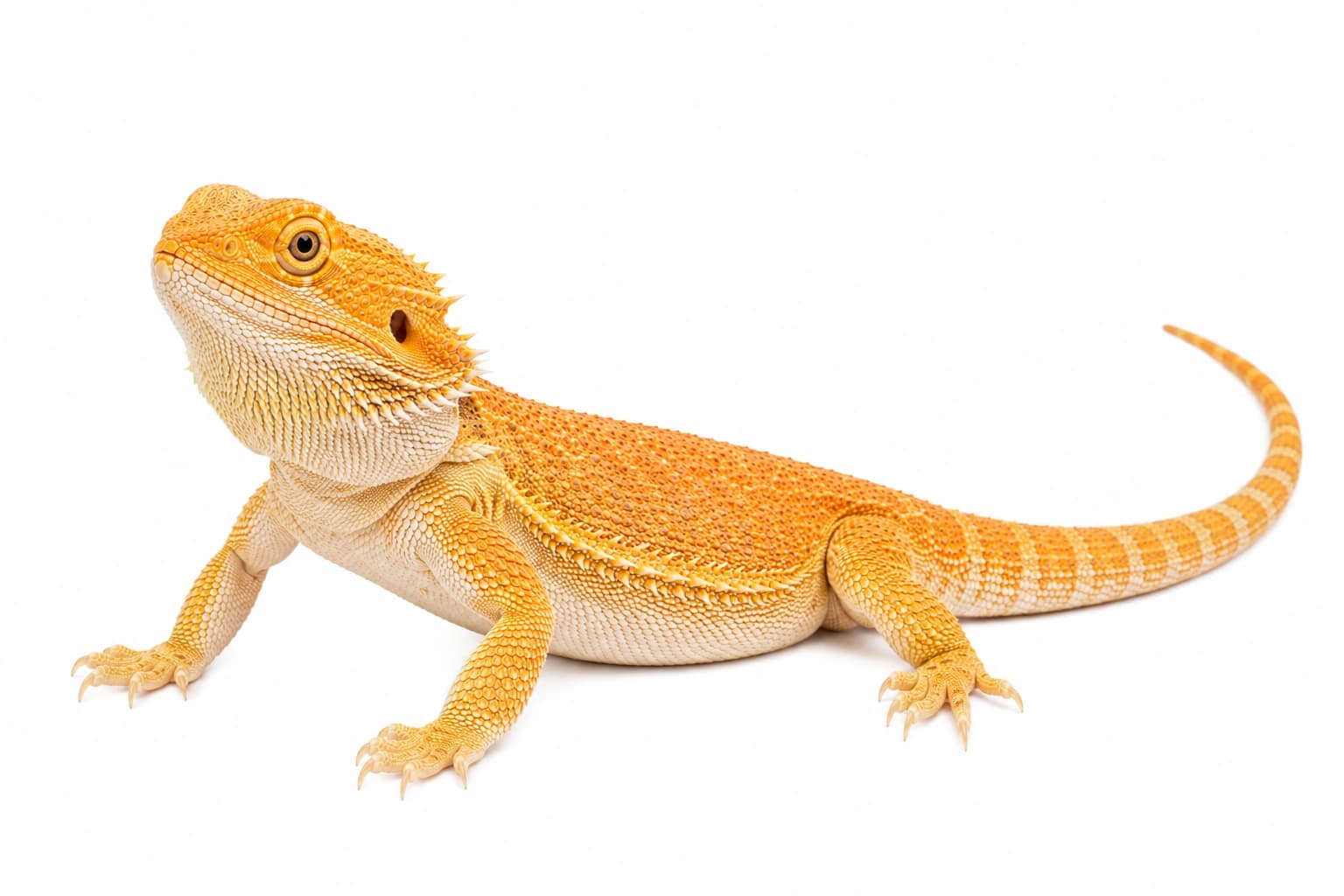
Zero masks ordinary pattern and much of the visible colour. Hypo reduces dark melanin but generally retains body pattern. Clear claws indicate Hypo rather than Zero alone.
View comparison morph →Zero vs Normal
Normal dragons retain dorsal bands, spots, tail rings and ordinary body markings. A visual Zero is consistently patternless across the head, body, limbs and tail.
View comparison morph →Zero vs Translucent
Zero affects pattern and colour expression. Translucent affects visual tissue opacity and is frequently associated with a blue juvenile belly and very dark eyes. The traits can occur together.
View comparison morph →Zero vs Wero
Zero expresses the recessive Zero mutation. Wero is the combined visual expression of both Zero and Witblits and requires two copies of each separate recessive trait.
Zero vs a pale Normal dragon
A pale Normal dragon may be silver, grey or cream but retains visible bands, spots or tail markings. A genuine visual Zero lacks the ordinary organised pattern.
Temporary fading vs Zero
Lighting, shedding, temperature and image exposure can make a patterned dragon appear temporarily pale. Morph identification should use permanent characteristics and reliable lineage.
Morph Comparison
How Zero Compares With Other Morphs
Frequently Asked Questions
Zero Bearded Dragon FAQ
What is a Zero Bearded Dragon?
A Zero Bearded Dragon is a recessive genetic morph that masks ordinary pattern and much of the visible colour, producing a patternless white, silver or grey appearance.
How do you identify a Zero Bearded Dragon?
Look for the complete absence of dorsal bands, body markings and tail rings together with white, silver or grey pigmentation. Reliable lineage is important when separating Zero from Witblits.
Are all Zero Bearded Dragons white?
No. Zeros can be white, silver, pale grey, medium grey or charcoal. Pattern absence is more important than one mandatory shade.
Can a Zero Bearded Dragon be dark grey?
Yes. Some visual Zeros remain slate or charcoal-grey throughout life while retaining a completely patternless body.
Is Zero a patternless morph?
Yes. Visual Zero dragons lack the ordinary bands, spots, blotches and tail rings of patterned Bearded Dragons.
Is Zero a recessive morph?
Yes. A visual Zero must inherit one recessive Zero allele from each parent.
What is a Het Zero Bearded Dragon?
A Het Zero carries one copy of the recessive Zero allele but normally appears visually non-Zero. Carrier status cannot be confirmed from appearance alone.
What does 66% Possible Het Zero mean?
It describes a visually non-Zero offspring from a Het Zero × Het Zero pairing that has a calculated two-in-three chance of carrying one Zero allele.
What is the difference between Zero and Witblits?
Both are patternless, but Zero commonly produces white, silver and cool-grey pigmentation. Witblits generally retains warmer cream, beige, tan or earthy tones. They are separate recessive mutations.
Can a dragon be both Zero and Witblits?
Yes. A dragon expressing both separate recessive mutations is commonly called Wero.
What is a Wero Bearded Dragon?
Wero is the combined visual expression of Zero and Witblits. The dragon must inherit two Zero alleles and two Witblits alleles.
Is Zero the same as Hypo?
No. Zero masks pattern and much colour expression. Hypo reduces dark melanin and is identified most reliably through clear claws.
Is a Zero Bearded Dragon albino?
No. Zero dragons retain pigmented eyes and can display grey or charcoal pigmentation. Zero is not true albinism.
Do Zero Bearded Dragons have red or pink eyes?
Zero alone does not produce red or pink eyes. A visible iris and pupil are normally expected.
Do Zero Bearded Dragons have black eyes?
Zero alone does not require solid-black eyes. Extremely dark eyes may indicate that Translucent is also present.
Do Zero Bearded Dragons have clear claws?
Not because of Zero alone. Clear or pale claws indicate that Hypo may also be expressed.
Can Zero be combined with Leatherback?
Yes. A Zero Leatherback has the patternless Zero appearance together with reduced dorsal scales and a smoother back.
Can Zero be combined with Translucent?
Yes. The two recessive traits can occur together. A Zero Translucent may be patternless while also displaying Translucent eye and tissue-opacity characteristics.
Can Zero be combined with Dunner?
Yes. A Zero Dunner can have a patternless body together with multidirectional scales and other Dunner structural characteristics.
Do Zero Bearded Dragons need special care?
Healthy Zeros generally require the same complete husbandry as other healthy Bearded Dragons, including correct UVB, heating, diet, supplementation and enclosure space.
Do Zero Bearded Dragons need weaker UVB?
No. Zero is not albinism. Healthy Zeros normally require appropriate linear UVB exposure together with access to shade.
Are Zero Bearded Dragons healthy?
A responsibly bred Zero can be healthy. Health depends on lineage, genetic diversity, body structure, nutrition, husbandry and veterinary care rather than appearance alone.
What happens when two Zero Bearded Dragons breed?
Two correctly identified visual Zero parents are genetically expected to produce 100% visual Zero offspring.
What happens when Zero is bred to Normal?
A visual Zero paired with a confirmed non-carrier Normal dragon is expected to produce 100% Het Zero offspring and no visual Zeros.
Can appearance prove that a dragon is Het Zero?
No. Het Zero dragons normally appear visually non-Zero. Carrier status requires reliable lineage, appropriate testing or documented breeding outcomes.
Continue Exploring
Related Morphs
Continue Learning
Bearded Dragon Care Guides
Explore our practical guides covering enclosure setup, UVB lighting, heating, feeding, humidity, enrichment and everyday Bearded Dragon care.
Explore Care Guides →Scientific References
This article was prepared using established zoological, husbandry and scientific references.