
Genetic Morphs
Translucent
Bearded Dragon
A distinctive recessive morph known for reduced skin opacity, unusual colour depth and a bluish translucent-looking underside in many juveniles.
The Translucent Bearded Dragon is a recessive genetic morph of Pogona vitticeps associated with reduced visual opacity of the skin and scales. Young Translucent dragons frequently show a blue, grey or lavender-toned belly, while the eyes may become extremely dark or solid-looking. These features can become less obvious as the animal matures.
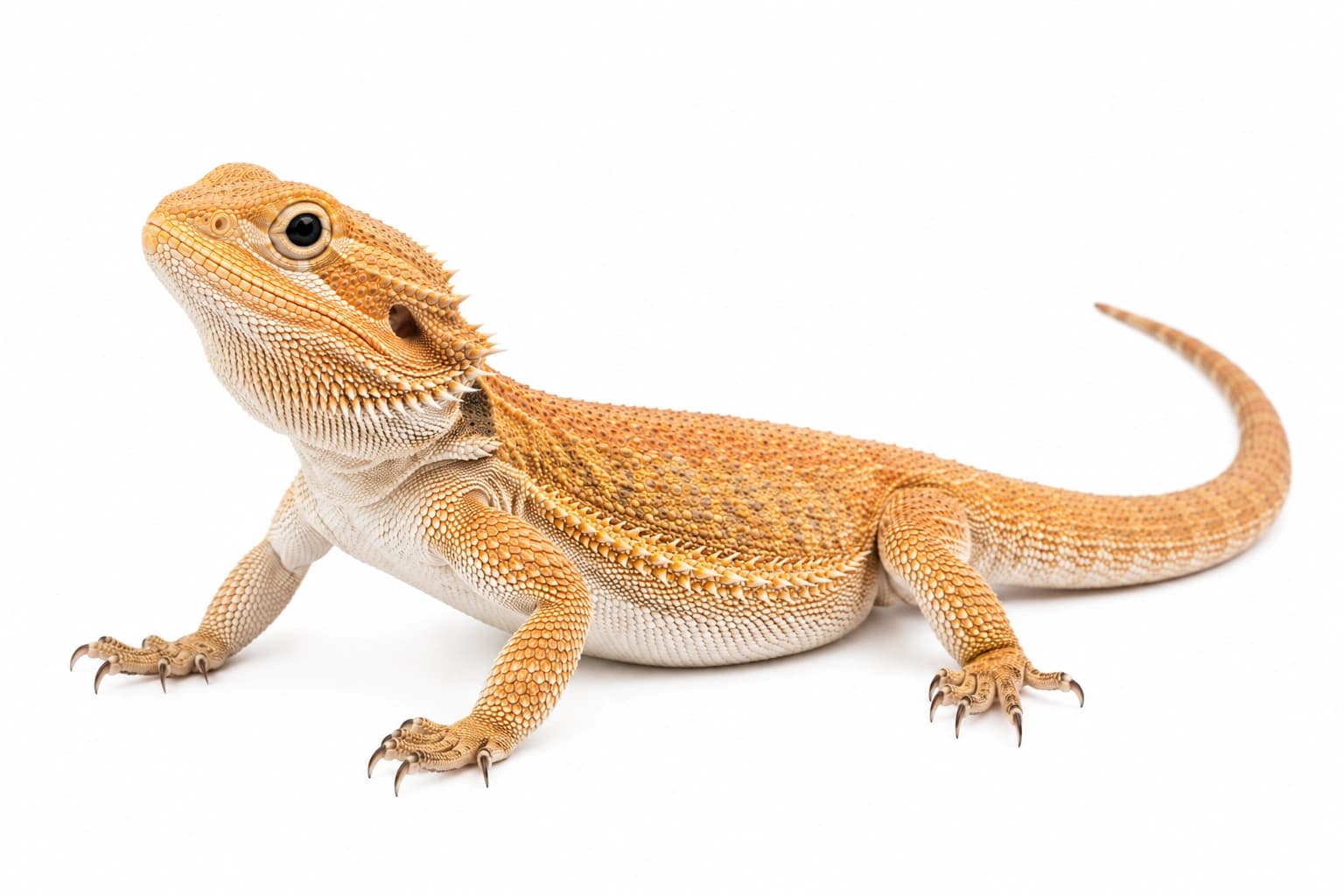
Trait type
Pigment and tissue opacity
Inheritance
Simple recessive
Juvenile belly
Often blue-grey or lavender
Eyes
May be very dark or solid-looking
Scale type
Standard unless combined
Adult expression
Often subtler than in juveniles
Morph DNA
Translucent Morph Profile
trait
Translucent
trait Type
Recessive alteration affecting the visual opacity and depth of skin pigmentation
inheritance
A visual Translucent dragon inherits the recessive allele from both parents
visual Expression
Bluish juvenile underside, glossy colour depth, translucent-looking scales and sometimes very dark eyes
hidden Traits
A visually non-Translucent dragon may carry one Translucent allele and be het Translucent
beginner Friendly
Yes, provided the animal is healthy and receives complete standard Bearded Dragon husbandry
Morph Overview
What Is a Translucent Bearded Dragon?
The Translucent Bearded Dragon, commonly shortened to Trans, is one of the established recessive genetic morphs of captive Pogona vitticeps. It is named for the unusual visual transparency or reduced opacity seen in parts of the skin and scales, particularly during the early stages of life.
Hatchling and juvenile Translucent dragons may display a blue, blue-grey, lavender or slightly purple tone across the underside of the body. This effect is caused by underlying tissue colour showing more visibly through the skin. The belly can appear almost gummy, glassy or semi-transparent when compared with the more opaque cream underside of a Normal dragon.
The Translucent trait may also produce unusual depth in the body colour. Reds, oranges, yellows, greys and darker pigments can appear richer, deeper or slightly wet-looking because the skin reflects and transmits light differently.
Very dark or apparently solid-black eyes are strongly associated with the morph and are one of its best-known features. However, eye appearance can vary. Some visual Translucent dragons develop completely dark eyes, while others retain a more visible iris or show eye darkening that changes with age.
For this reason, black eyes should not be treated as the only requirement for identifying the morph. The juvenile underside, skin appearance, scale translucency, overall pigmentation and documented lineage should all be considered together.
The Translucent mutation affects pigmentation and visual tissue opacity rather than body shape. It does not automatically change the scale structure, claws, skeletal anatomy or natural proportions of the dragon.
A Translucent dragon may have standard scales or may be combined with independently inherited traits such as Hypo, Leatherback, Dunner, Zero, Witblits and Genetic Stripe. It may also occur within selectively bred red, orange, yellow, Citrus or Blue Bar colour lines.
Head Details
Head, Eyes and Facial Features
The head of a Translucent Bearded Dragon retains the broad triangular shape, pronounced brow, beard scales and jaw structure typical of Pogona vitticeps.
The most widely recognised facial characteristic is very dark eye pigmentation. Some visual Translucent dragons develop eyes that appear almost completely black, with little or no visible separation between the iris and pupil.
Eye expression is variable, however. A Translucent dragon may have fully dark eyes, partially dark eyes or eyes in which the iris remains visible. Lighting, pupil dilation, age and photographic exposure can also influence how dark the eyes appear.
Young animals may show blue, grey or lavender shading around the eyelids and above the eyes. Thin facial scales and beard scales can sometimes appear more transparent than those of a Normal dragon.
The beard may have a glossy or slightly glass-like appearance, but it can still darken during stress, courtship, territorial displays or basking behaviour.
Solid-looking black eyes alone should not be used as definitive proof of the Translucent morph. Eye appearance must be considered alongside juvenile belly colour, skin opacity and reliable genetic lineage.
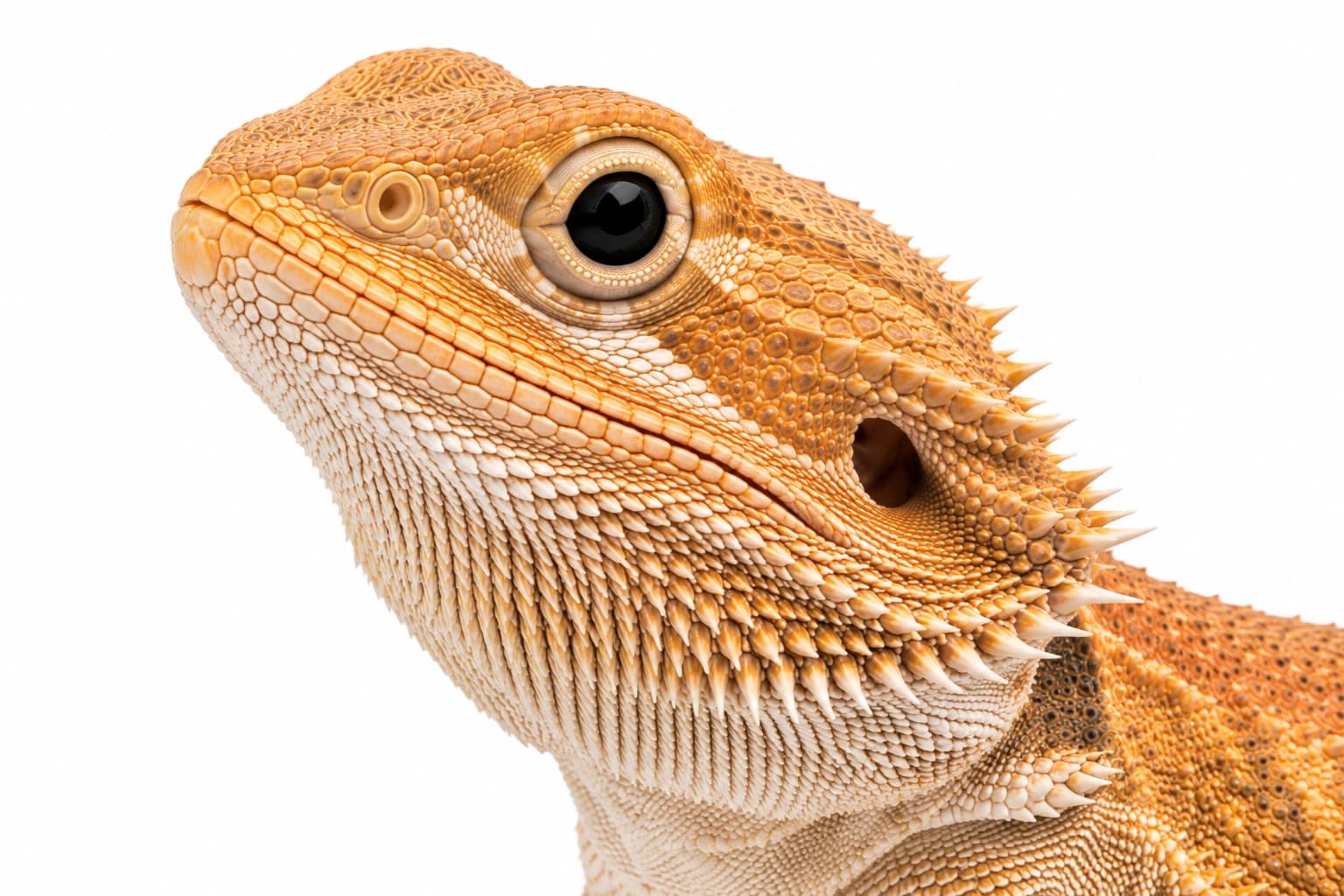
Characteristic Feature
Blue Juvenile Belly and Reduced Skin Opacity
The most characteristic early-life feature of the Translucent morph is a blue, blue-grey, slate or lavender-toned underside.
In hatchlings, the skin covering the abdomen can be less visually opaque than in a Normal dragon. This allows the colour of underlying tissues and blood vessels to influence the visible colour of the belly.
The effect does not mean that the abdomen is fully transparent or that internal organs should be clearly visible. A healthy Translucent juvenile generally has a soft blue or grey cast rather than literal glass-clear skin.
The blue belly is usually strongest in young hatchlings and juveniles. As the dragon grows, the skin and scales thicken, and the underside commonly becomes more opaque, cream or off-white.
Some adult Translucent dragons retain a slight blue-grey undertone, while others lose nearly all obvious belly translucency. This age-related reduction makes documented lineage especially important when identifying adults.
A bluish belly should also be distinguished from temporary dark stress markings, cool body temperature, bruising, poor circulation or other health concerns. Normal Translucent colour should be symmetrical and consistent with the animal's overall appearance rather than appearing as a sudden isolated discolouration.
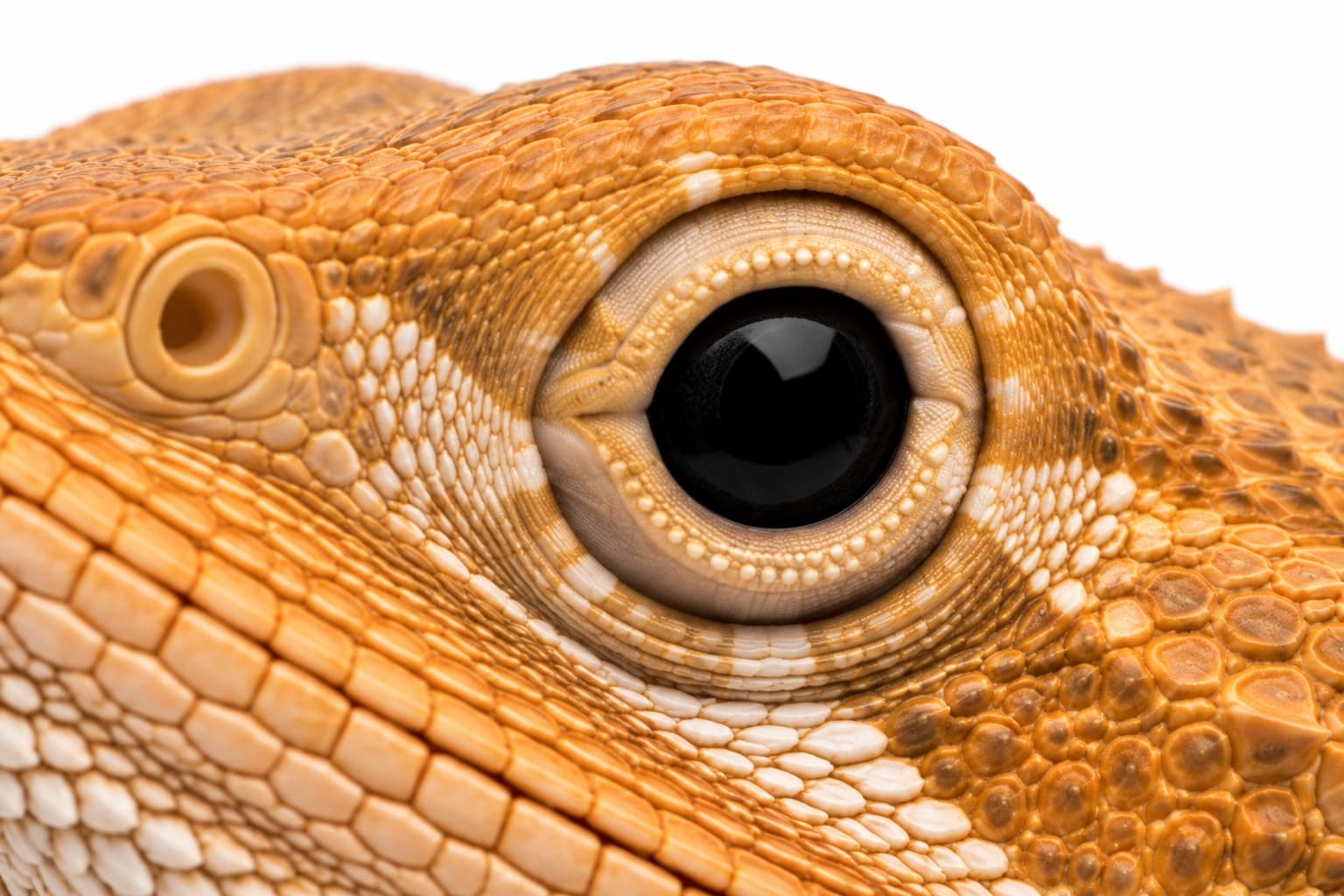
Identification Guide
How to Identify a Translucent Bearded Dragon
Identifying a Translucent Bearded Dragon is easiest during the hatchling and juvenile stages. Begin by examining the underside under bright, neutral lighting. Young visual Translucent dragons frequently display a blue, grey, slate or lavender cast across the belly.
Next, inspect the skin and scales for unusual visual depth. The body may look glossy, gummy, wet or slightly transparent, especially around the abdomen, beard, eyelids and thinner areas of the limbs.
Examine the eyes, but do not use them as the only test. Extremely dark or apparently solid-black eyes support Translucent identification, but not every visual Translucent dragon displays identical eye pigmentation throughout life.
Pupil dilation can also make the eyes of a non-Translucent dragon appear almost black in photographs or dim lighting. Eye assessment should therefore be performed in suitable light and combined with other features.
Assess the claws independently. Translucent does not automatically produce clear claws. Clear claws indicate that Hypo may also be present. A Translucent dragon without Hypo can retain normal dark claw pigmentation.
Inspect the dorsal scales independently as well. Translucent does not create a smooth back. Reduced dorsal scalation indicates Leatherback, while disorganised scale direction may indicate Dunner.
Adult identification can be more difficult because the juvenile blue belly often fades. For mature dragons, reliable breeder records and documented parentage are particularly valuable.
A visually Normal animal carrying one Translucent allele is het Translucent. Het Translucent dragons cannot be identified reliably from appearance alone.
Juvenile Development
What Does a Juvenile Translucent Bearded Dragon Look Like?
Juvenile Translucent Bearded Dragons usually display the morph more clearly than adults. The underside is often blue-grey, slate, lavender or slightly purple because the skin is visually less opaque and allows more of the underlying tissue colour to influence the surface appearance.
The abdomen may look soft, gummy or semi-translucent rather than fully cream or white. This effect is usually most noticeable in hatchlings and very young juveniles.
Some young Translucent dragons also show blue or grey tones around the eyelids, beard, limbs and other areas where the skin is thinner.
The eyes may appear very dark or completely black. However, eye appearance varies between individuals and may change as the dragon matures.
Natural juvenile pattern remains visible. Bands across the back and tail can look deep, glossy or unusually saturated because the Translucent mutation changes the visual depth of the skin rather than removing the pattern.
The blue belly often becomes less obvious with age. As the skin and scales thicken, the underside may gradually turn cream, white or pale grey.
For this reason, clear juvenile photographs and reliable breeder records can be extremely useful when confirming the morph of an adult dragon.
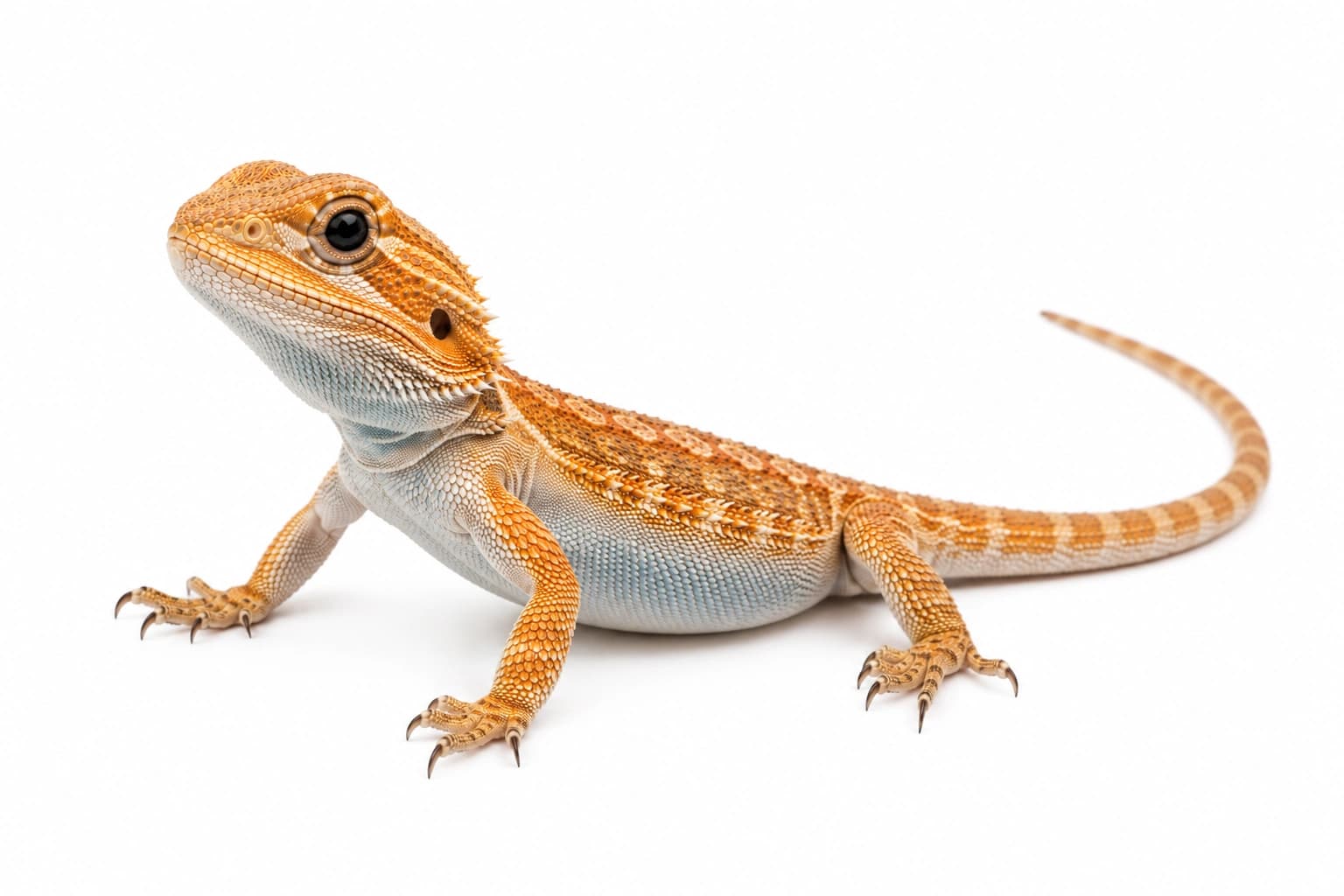
Appearance
Translucent Bearded Dragon Appearance
Translucent Bearded Dragons frequently have a distinctive glossy, deep or glass-like appearance. Their pigmentation may look as though it sits beneath the surface of the skin rather than entirely on top of it.
In young dragons, the underside is often the most obvious identifying area. The belly may appear blue, slate-grey, lavender or translucent-white. In some hatchlings, darker shadows from underlying tissues may be visible through the skin.
The beard scales, eyelids, facial scales and thinner areas around the limbs may also appear slightly translucent. Some individuals show blue or grey tones above or around the eyes, particularly when young.
Body colour varies considerably. Translucent does not create one fixed colour. A Translucent dragon may be tan, yellow, orange, red, grey, cream or multicoloured depending on its wider ancestry.
Natural dorsal pattern is normally retained unless another genetic or polygenic trait changes it. Bands, spots, tiger markings and tail pattern can all remain visible.
The dark areas of the pattern may appear deeper or more saturated, while warm colour can appear unusually rich. This visual depth is different from Hypo, which primarily reduces dark melanin and often creates a cleaner, lighter appearance.
The scale structure remains standard unless the dragon also carries a structural morph. A standard-scaled Translucent should retain rough dorsal scales, lateral spikes and typical beard scalation.
As the dragon matures, the skin usually becomes thicker and more opaque. The blue juvenile belly may fade, become creamier or disappear almost completely. Adult Translucent dragons can therefore be more difficult to identify from appearance alone.
Adult Development
Adult Translucent Bearded Dragon
Adult Translucent Bearded Dragons often look less obviously translucent than juveniles. The skin becomes thicker and more opaque, reducing the blue or lavender appearance that may have been clearly visible during the first months of life.
Some adults retain a slight grey, blue or lavender undertone across the belly, beard or thinner areas of skin. Others develop a nearly normal cream underside while retaining subtle glossy depth in the body colour.
The eyes may remain extremely dark or solid-looking, but this is not guaranteed. Some adults retain a visible iris even though they are genetically and visually Translucent.
Body colour can appear unusually rich, deep or wet-looking. Reds may look darker and more saturated, while orange, yellow and brown areas can have a glossy appearance.
Pattern normally remains visible unless the dragon is combined with another pattern-altering trait such as Zero, Witblits or Genetic Stripe.
A mature Translucent dragon can therefore be difficult to identify from a single photograph. Age, lighting, pupil dilation, colour line and image exposure can all affect the visible expression.
Reliable lineage, juvenile photographs and breeding records are especially valuable when confirming adult Translucent animals.
Genetics
Translucent Genetics and Inheritance
Translucent is generally treated within the Bearded Dragon hobby as a simple recessive genetic trait.
A dragon must inherit one Translucent allele from each parent to visually express the morph. These animals are described as visual Translucent or visual Trans.
A dragon carrying only one copy is heterozygous Translucent, commonly written as Het Trans. Het Translucent dragons usually appear visually non-Translucent and cannot be reliably identified by appearance alone.
When a visual Translucent dragon is paired with a confirmed non-carrier Normal dragon, all offspring are expected to inherit one Translucent allele and become 100% Het Translucent.
Pairing two visual Translucent dragons is expected to produce 100% visual Translucent offspring.
Pairing a visual Translucent dragon with a Het Translucent dragon is expected to produce approximately:
• 50% visual Translucent
• 50% Het Translucent
Pairing two Het Translucent dragons is expected to produce approximately:
• 25% visual Translucent
• 50% Het Translucent
• 25% non-carriers
These percentages describe the probability for each egg rather than a guaranteed clutch result.
Translucent can be combined with many independent traits, including Hypo, Leatherback, Dunner, Zero, Witblits and Genetic Stripe. Each gene must be tracked separately.
A Hypo Translucent dragon, for example, expresses both recessive mutations. It may show clear claws from Hypo together with dark eyes, glossy colour depth and juvenile belly translucency from Translucent.
Inheritance
Simple recessive mutation.
Visual Translucent
Carries two Translucent alleles and expresses the morph.
Het Translucent
Carries one Translucent allele but normally appears visually non-Translucent.
Translucent × Normal
Produces 100% Het Translucent offspring when the Normal parent is not carrying the trait.
Translucent × Het Translucent
Expected outcome: 50% visual Translucent and 50% Het Translucent.
Het × Het
Expected outcome: 25% visual, 50% Het and 25% non-carriers.
Care Guide
Caring for a Translucent Bearded Dragon
Translucent Bearded Dragons require the same high standard of husbandry as all healthy Pogona vitticeps. The Translucent mutation alters appearance rather than creating fundamentally different environmental requirements.
A spacious enclosure should provide appropriate opportunities for basking, climbing, hiding and behavioural thermoregulation. A bright basking zone should be combined with cooler shaded areas to allow the dragon to regulate body temperature naturally.
A high-quality linear UVB lamp remains essential for healthy calcium metabolism, vitamin D3 synthesis and normal skeletal development. Current evidence does not support reducing UVB simply because a dragon is Translucent.
Surface temperatures should always be measured accurately, and lighting should create a natural day-night cycle.
Diet should be appropriate for the dragon's age and condition, consisting of nutritious gut-loaded insects, leafy greens and safe vegetables, together with appropriate calcium and vitamin supplementation.
Fresh water, good hygiene and routine health monitoring remain essential.
Because some juveniles display unusually translucent skin and a blue belly, new keepers occasionally mistake this normal genetic appearance for illness. Healthy juvenile belly translucency is symmetrical, develops naturally and gradually becomes less obvious as the dragon matures.
UVB
Provide a high-quality linear UVB source with appropriate exposure and shaded areas.
Heating
Maintain a correct basking zone together with a cooler end of the enclosure.
Lighting
Translucent dragons do not normally require weaker UVB simply because of the morph.
Diet
Provide a varied diet appropriate for the dragon's age together with proper supplementation.
Juvenile appearance
Blue belly colour is a recognised feature of many young Translucent dragons and is not automatically a health concern.
Monitoring
Observe appetite, body condition, weight, shedding, activity and faeces regularly.
Breeding
Translucent Breeding and Genetic Outcomes
Translucent behaves as a simple recessive mutation. Visual animals inherit one Translucent allele from each parent, while heterozygous animals carry only one copy and usually appear visually Normal.
Visual × Visual pairings are expected to produce entirely visual Translucent offspring.
Visual × Normal non-carriers produce 100% Het Translucent offspring.
Visual × Het pairings produce approximately 50% visual Translucent and 50% Het Translucent offspring.
Het × Het pairings are expected to produce approximately 25% visual Translucent, 50% Het Translucent and 25% non-carriers.
These percentages describe genetic probability for each egg rather than guaranteed clutch ratios.
Translucent combines readily with many independent morphs including Hypo, Leatherback, Dunner, Zero, Witblits, Tiger and Genetic Stripe.
Responsible breeding should always prioritise health, temperament, body structure and genetic diversity above appearance alone.
Translucent × Translucent
Genetically expected to produce 100% visual Translucent offspring. However, this pairing is widely discouraged by many experienced breeders due to historical associations with developmental defects, neurological abnormalities and reduced hatchling survival in some bloodlines. Visual × Het Translucent pairings are generally preferred.
Translucent × Normal (non-carrier)
Expected 100% Het Translucent offspring. No visual Translucent hatchlings are expected.
Translucent × Het Translucent
Expected approximately 50% visual Translucent and 50% Het Translucent offspring. This is widely considered the preferred pairing when producing visual Translucent dragons, as it avoids Visual × Visual Translucent breeding while still producing visual offspring.
Het Translucent × Het Translucent
Expected approximately 25% visual Translucent, 50% Het Translucent and 25% non-carriers. This pairing avoids breeding two visual Translucent dragons together, although only one quarter of the offspring are expected to be visual.
Hypo Translucent × Hypo Translucent
Genetically expected to produce offspring expressing both recessive traits. However, because both parents are Visual Translucent, this pairing is generally discouraged by many experienced breeders due to the same welfare concerns associated with Visual × Visual Translucent pairings.
Important Breeding Recommendation
Although Visual Translucent × Visual Translucent pairings are genetically capable of producing 100% visual Translucent offspring, many experienced Bearded Dragon breeders avoid this combination. Historically, some Translucent bloodlines have been associated with increased rates of developmental abnormalities, neurological problems, poor hatchling survival and reduced overall vigour. While these issues are believed to be influenced by bloodline quality and early selective breeding rather than the Translucent gene alone, responsible breeders generally avoid Visual × Visual pairings whenever possible. Instead, many breeders recommend pairing a Visual Translucent with a Het Translucent. This approach still produces visual Translucent offspring while helping to maintain healthier bloodlines and greater genetic diversity. As with every Bearded Dragon morph, breeding decisions should always prioritise health, structure, temperament and long-term welfare over appearance alone. Note: The concerns described above are based on long-term observations within the captive breeding community. There is currently limited peer-reviewed scientific research specifically investigating the health effects of Visual × Visual Translucent pairings in Pogona vitticeps.
Identification Mistakes
Common Misidentifications
Translucent vs Hypo
Hypo is identified primarily through clear claws. Translucent is recognised by reduced skin opacity, juvenile belly translucency and frequently dark eyes.
View comparison morph →Translucent vs Normal
Young Translucent dragons often have a blue-grey belly and glossy appearance, while Normal dragons have an opaque cream underside.
View comparison morph →Translucent vs Leatherback
Leatherback changes dorsal scale structure. Translucent changes skin opacity and pigmentation depth.
View comparison morph →Blue belly vs illness
Healthy juvenile belly translucency is symmetrical and genetic. Sudden bruising, swelling or abnormal colour changes should always be assessed separately.
Morph Comparison
How Translucent Compares With Other Morphs
Frequently Asked Questions
Translucent Bearded Dragon FAQ
What is a Translucent Bearded Dragon?
A recessive morph associated with reduced skin opacity, blue juvenile belly colour and frequently dark eyes.
Do all Translucent dragons have black eyes?
No. Very dark eyes are common but expression varies between individuals and with age.
Why is the belly blue?
Young Translucent dragons have less visually opaque skin, allowing underlying tissue colour to influence the appearance.
Does the blue belly remain forever?
Usually not. It commonly fades as the skin thickens during growth.
Can a Translucent also be Hypo?
Yes. The two recessive traits are inherited independently and frequently occur together.
Do Translucent dragons need different care?
No. Husbandry is the same as for other healthy Bearded Dragons.
Is the blue belly a disease?
No. In healthy juveniles it is a recognised characteristic of the Translucent morph.
Can you identify a Het Translucent by appearance?
No. Heterozygous animals normally appear visually non-Translucent.
Continue Exploring
Related Morphs
Continue Learning
Bearded Dragon Care Guides
Explore our practical guides covering enclosure setup, UVB lighting, heating, feeding, humidity, enrichment and everyday Bearded Dragon care.
Explore Care Guides →Scientific References
This article was prepared using established zoological, husbandry and scientific references.