Colour & Polygenic Traits
Orange
Bearded Dragon
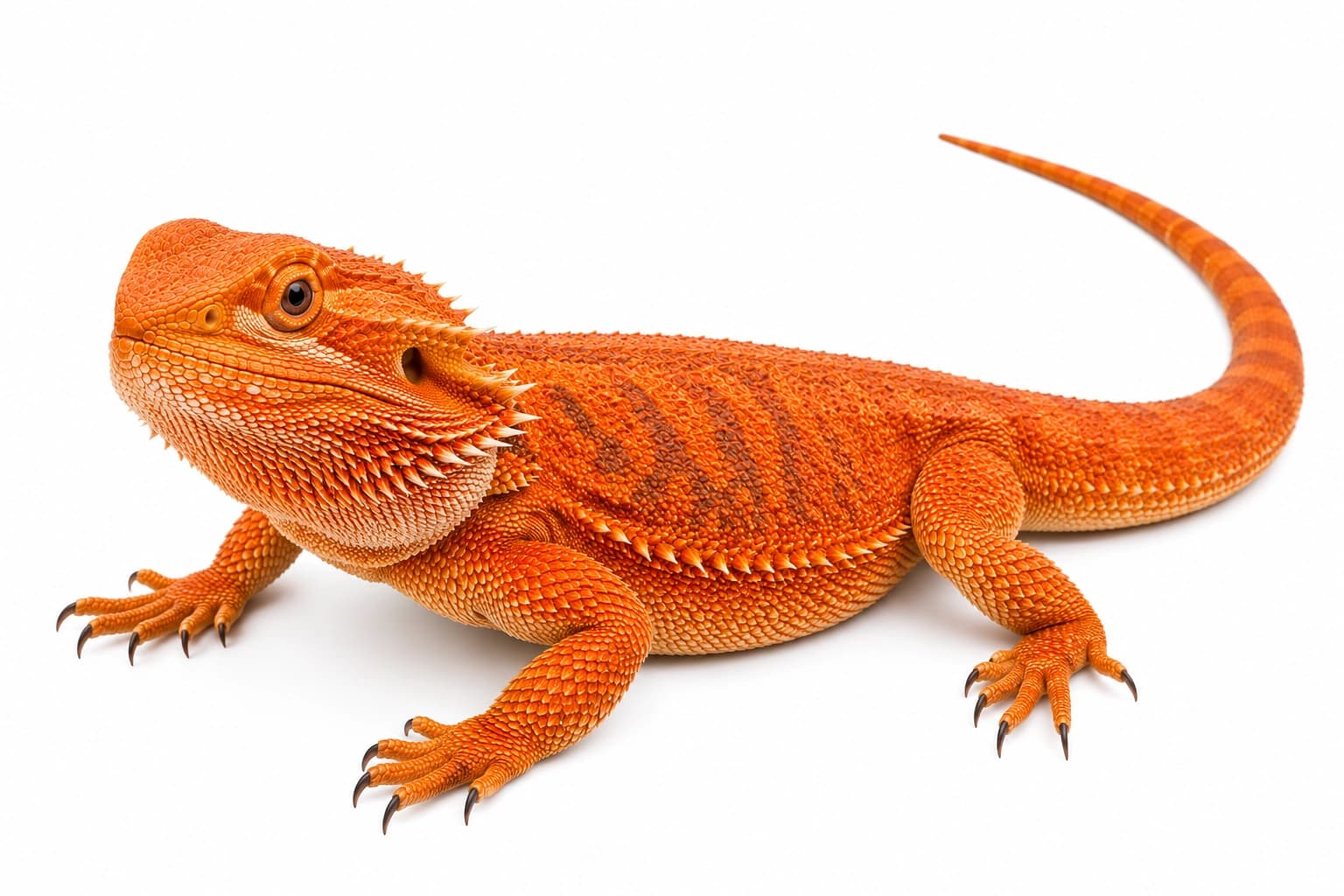
A selectively developed colour line recognised by vivid tangerine, amber, apricot and pumpkin-orange pigmentation.
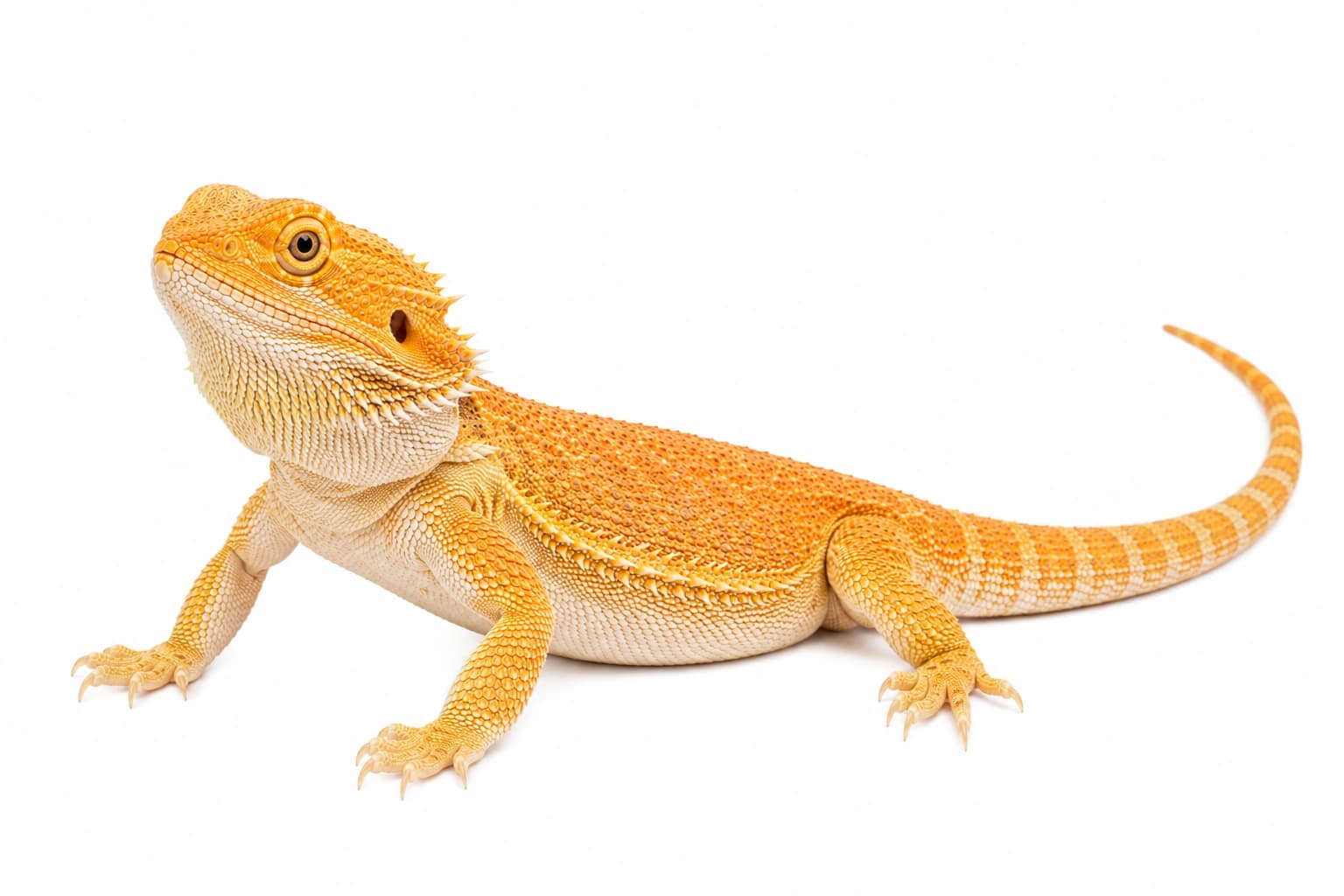
The Orange Bearded Dragon is a selectively bred polygenic colour line of Pogona vitticeps. Orange describes animals developed for strong tangerine, amber, apricot or pumpkin pigmentation rather than one simple dominant or recessive mutation.
Trait type
Polygenic colour line
Inheritance
Selectively line-bred
Primary colour
Tangerine and orange
Pattern
Variable and usually retained
Scale type
Depends on other genetics
Breeding outcome
Variable
Morph DNA
Orange Morph Profile
trait
Orange colour expression
trait Type
A selectively bred polygenic colour line influenced by multiple inherited factors
inheritance
Orange tendency can pass through a lineage, but it does not follow a simple Mendelian percentage
visual Expression
Apricot, amber, tangerine, pumpkin or deeper orange pigmentation across the head and body
hidden Traits
There is no established Het Orange carrier category comparable with Het Hypo or Het Zero
beginner Friendly
Yes. Orange colour alone does not normally create specialised husbandry requirements
Morph Overview
What Is a Orange Bearded Dragon?
The Orange Bearded Dragon is a selectively developed colour line known for strong apricot, amber, tangerine and pumpkin-orange pigmentation.
Orange is not one established simple dominant or recessive mutation.
The colour is polygenic, meaning that visible expression is influenced by multiple inherited factors and generations of selective breeding.
Breeders develop Orange lines by selecting healthy dragons with desirable orange pigmentation and pairing them with other suitable animals.
Repeated selection can increase the frequency, saturation and distribution of orange colour within a lineage.
The outcome remains variable.
Two strongly coloured Orange parents can produce offspring ranging from yellow-orange and apricot to vivid tangerine, deep pumpkin and comparatively muted tan.
Clutchmates may develop different shades even when they share the same parents and enclosure conditions.
There is no Het Orange category comparable with Het Hypo, Het Translucent, Het Zero or Het Witblits.
A dragon cannot be identified as carrying one hidden recessive Orange gene because no such simple inheritance model has been established.
Orange describes visible colour expression and documented selective ancestry rather than one molecularly confirmed allele.
Tangerine and Sunburst are names commonly associated with orange colour lines or particular breeding projects.
These terms may be used differently by different breeders and should not automatically be treated as genetically separate mutations.
Orange can occur alongside established morphs.
A Hypo Orange expresses clear claws and reduced dark melanin together with selected orange colour.
An Orange Leatherback has reduced dorsal scales, while Orange Translucent and Orange Dunner combinations express their respective independent traits.
Orange overlaps visually with Citrus, Yellow and Red colour lines.
Citrus generally emphasises lemon-yellow and gold. Orange emphasises tangerine, amber and pumpkin tones. Red lines are selected for stronger crimson, scarlet or deep red pigmentation.
These boundaries are descriptive rather than controlled by three clearly separated single genes.
Beardie App treats Orange as a polygenic colour-line classification and avoids claims involving guaranteed percentages or hidden Orange carriers.
Head Details
Head, Eyes and Facial Colour
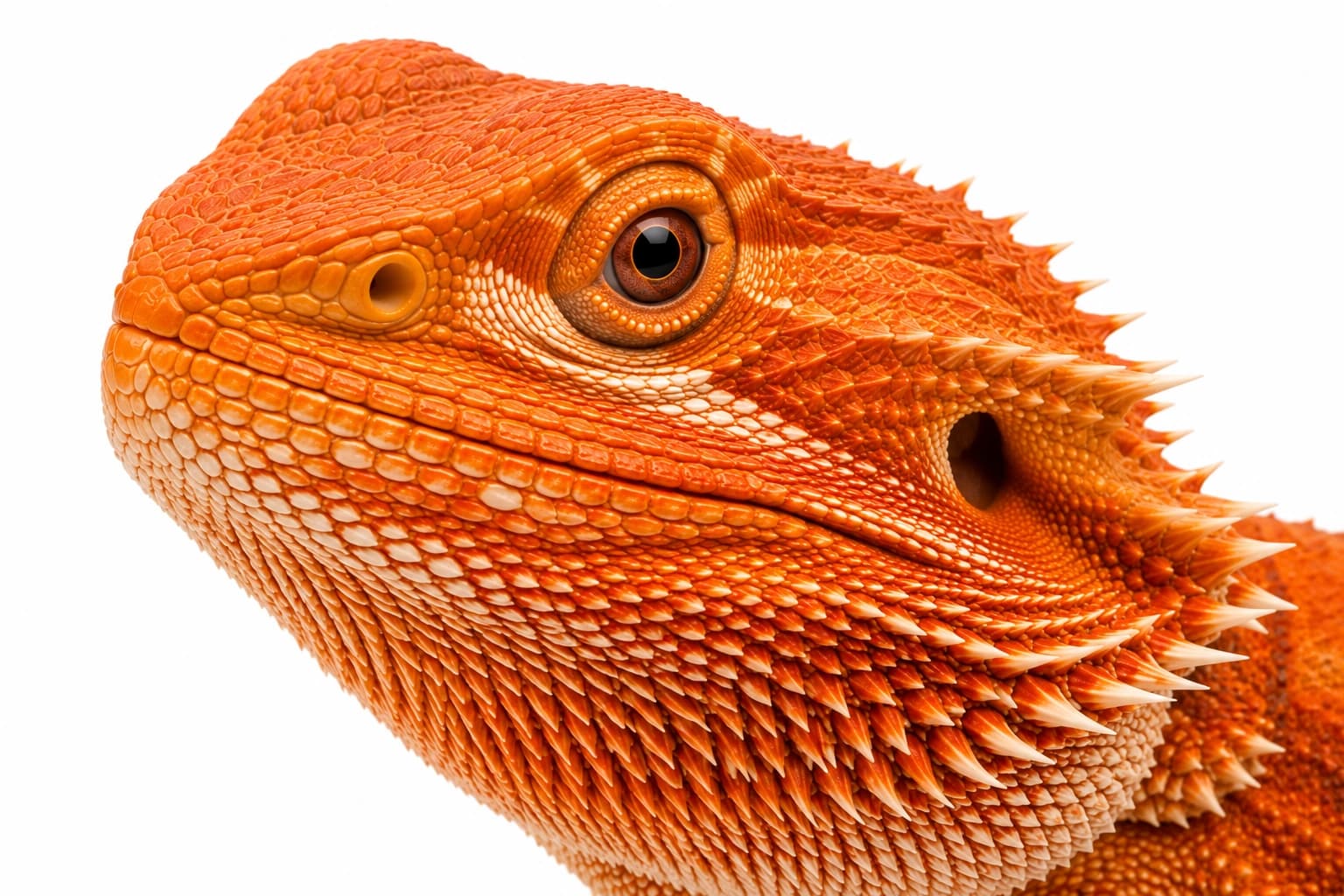
The head of an Orange Bearded Dragon frequently displays some of the strongest colour on the animal.
Apricot, amber, tangerine and pumpkin tones can cover the brow, snout, cheeks, jaw and beard.
Some individuals retain dark facial markings, while strongly selected lines may have cleaner and more continuous orange pigmentation.
The eyes retain ordinary structure and pigmentation unless another morph is present.
Orange alone does not produce solid-black eyes, red eyes or another diagnostic eye type.
Very dark eyes may indicate Translucent, while the claws must be assessed separately for Hypo.
Facial and beard scales depend on independently inherited structural traits.
An Orange Leatherback retains reduced dorsal scalation, while a standard Orange dragon has ordinary facial and body scales.
The beard can still become dark during stress, courtship and territorial behaviour.
Temporary beard darkening does not remove the dragon's underlying Orange colour-line classification.
Characteristic Feature
Tangerine, Amber and Pumpkin Pigmentation
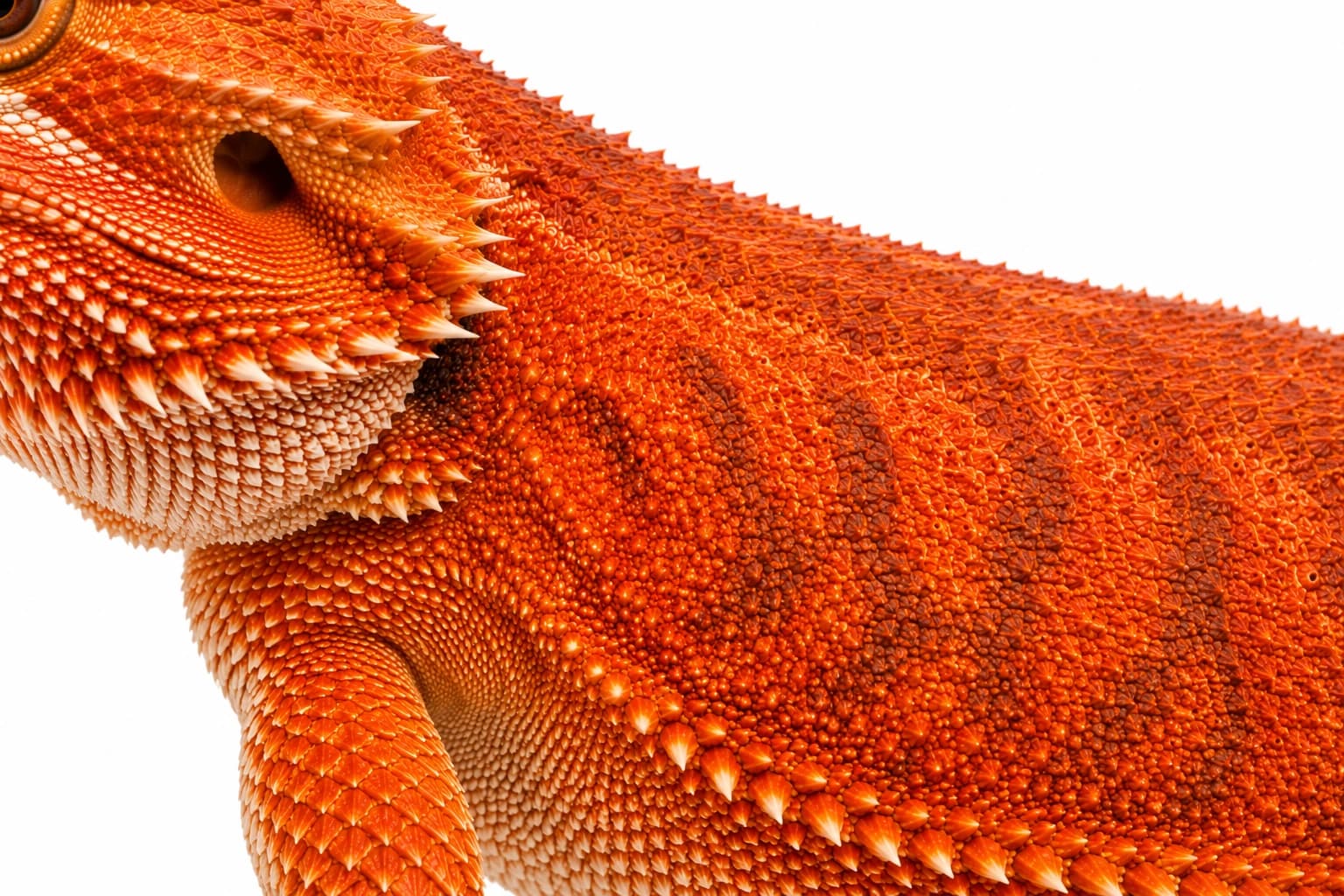
The defining characteristic of Orange is strong orange pigmentation developed through selective breeding.
Colour commonly appears apricot, amber, tangerine, pumpkin, burnt orange or orange-red.
The pigmentation should cover a meaningful portion of the dragon rather than one isolated marking.
Expression is frequently strongest on the head, shoulders, sides and limbs.
The exact shade and distribution vary because Orange is polygenic.
There is no clear-claw, eye or scale marker that proves Orange in the way that clear claws support Hypo identification.
Colour must be evaluated under neutral lighting.
Warm basking lamps, photographic filters, white-balance changes and increased saturation can make tan or yellow dragons appear intensely orange.
The animal should ideally be assessed in natural or colour-neutral light across multiple photographs.
Lineage provides important context. Documented Orange parents and consistent colour development across related animals support the label more strongly than one sales image.
The characteristic should also be distinguished from temporary staining caused by food, substrate or enclosure materials.
Identification Guide
How to Identify a Orange Bearded Dragon
Identifying an Orange Bearded Dragon requires evaluation of visible colour, development and breeding history rather than one diagnostic mutation marker.
Begin by observing the animal under neutral lighting.
An Orange dragon should display meaningful apricot, amber, tangerine, pumpkin or deeper orange pigmentation across the head and body.
Do not identify Orange from one heavily edited photograph.
Warm lamps, camera white balance and increased saturation can make yellow, tan or brown pigmentation appear orange.
Compare photographs from different ages and shedding stages.
Orange pigmentation frequently develops or strengthens during juvenile growth.
Examine the entire animal rather than one bright area. A small orange marking does not necessarily justify an Orange colour-line label.
Assess the balance between yellow, orange and red.
Citrus is generally dominated by lemon-yellow and gold. Orange emphasises tangerine, amber and pumpkin. Red lines emphasise scarlet, crimson or deeper red tones.
These boundaries overlap and are not controlled by three simple independent alleles.
Inspect established genetic traits separately.
Clear claws indicate Hypo, a smoother back indicates Leatherback and very dark eyes may indicate Translucent.
Those traits may change how clean or vivid the Orange colour appears, but they do not create it.
There is no reliable visual method for identifying a hidden Orange carrier.
Identification should use visible colour, development, parental appearance and documented lineage without claiming simple Mendelian inheritance.
Juvenile Development
What Does a Juvenile Orange Bearded Dragon Look Like?
Juvenile Orange Bearded Dragons may display orange pigmentation from hatching, but final adult colour cannot be predicted reliably from one early photograph.
Some hatchlings are visibly apricot, amber or tangerine, while others begin with softer yellow-orange, peach, tan or muted brown tones.
Colour frequently develops through repeated shedding cycles.
The head, shoulders, sides and limbs may become progressively brighter or deeper during juvenile growth.
Clutchmates can develop very differently even when they share the same parents.
One juvenile may become vivid tangerine, another may develop pumpkin-orange pigmentation and another may retain a more muted yellow-brown appearance.
This variation reflects the polygenic nature of Orange colour.
Juvenile pattern is normally visible. Bands, dorsal markings and tail rings may appear darker and more strongly contrasted than they will in adulthood.
The colour may look duller before a shed and cleaner immediately after shedding.
Temperature, stress, hydration, lighting and photographic settings also influence how orange a juvenile appears.
Young dragons should not be sold with guaranteed adult-colour claims based solely on hatchling brightness.
A responsible description should record current visible colour, parental appearance and known lineage without promising an exact adult result.
Scale structure, eye pigmentation and claws must be identified separately because Orange colour does not determine these characteristics.
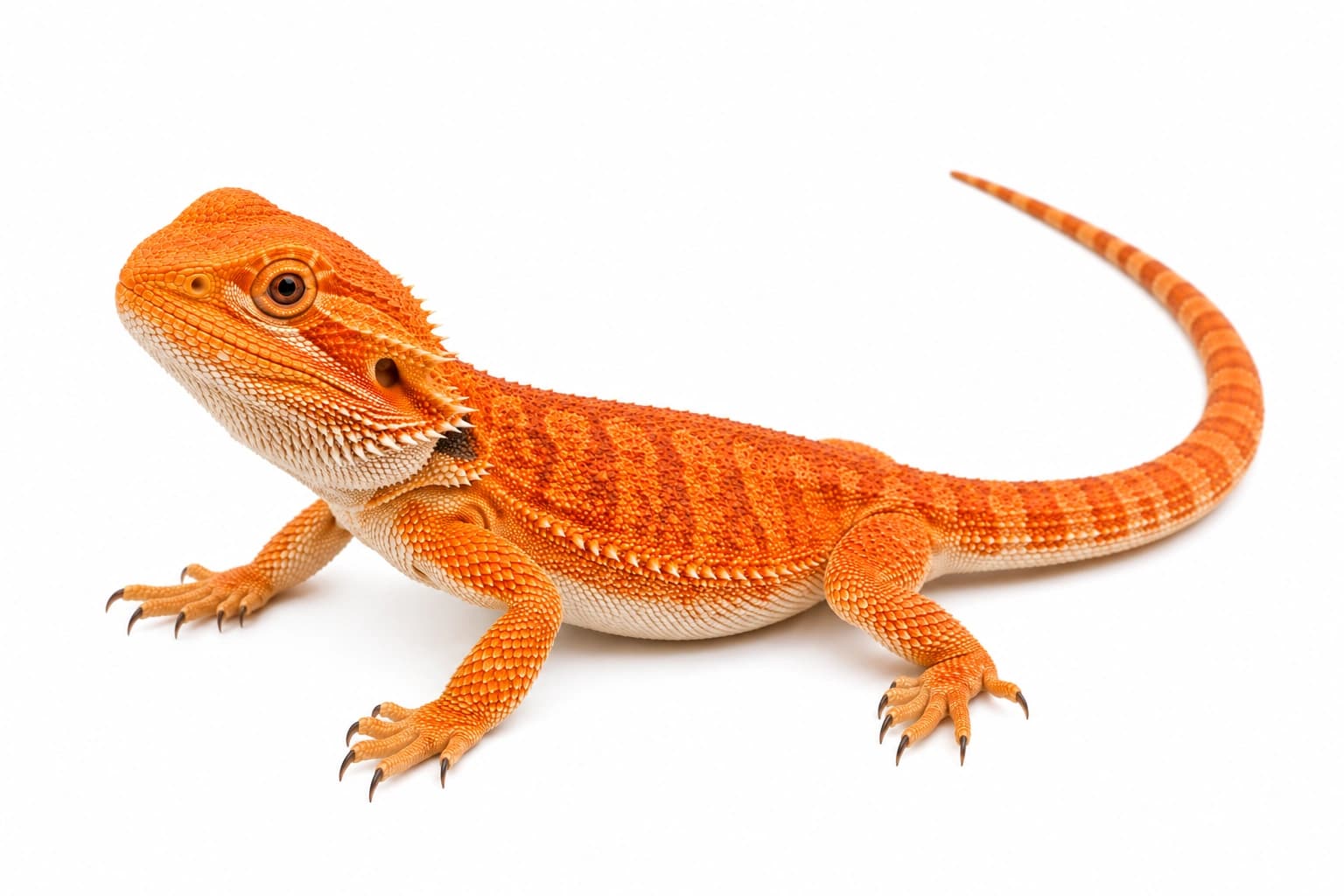
Appearance
Orange Bearded Dragon Appearance
Orange Bearded Dragons are recognised by dominant orange pigmentation across the head, body, limbs and tail.
Colour can range from pale peach and apricot to amber, tangerine, pumpkin, burnt orange or orange-red.
Some individuals display nearly uniform orange colour, while others retain yellow, brown, grey, red or darker pattern elements.
Natural dorsal bands, side markings and tail rings usually remain visible unless another genetic trait removes or changes them.
Orange does not produce one mandatory pattern.
Some lines retain strong contrasting bands, while others have been selected for cleaner and more continuous pigmentation.
The head is commonly one of the brightest areas. Orange may cover the snout, cheeks, brow, beard and sides of the jaw.
The shoulders, sides and limbs can show different levels of saturation.
The underside is commonly lighter and may appear cream, peach, yellow-orange or pale amber.
Colour changes with development and physiological condition.
Juveniles may gain stronger orange pigmentation through repeated sheds. Adults often appear brightest when warm, fully shed and unstressed.
Cool temperatures, stress, shedding and lighting can temporarily mute, darken or alter the visible shade.
Orange does not determine scale structure.
A standard Orange dragon retains ordinary dorsal scales, while an Orange Leatherback has a smoother back because it independently expresses Leatherback genetics.
Orange also does not automatically produce clear claws. Clear or pale claws indicate Hypo.
The label should describe meaningful orange coverage rather than one small orange patch on an otherwise tan or brown dragon.
Adult Development
Adult Orange Bearded Dragon
Adult Orange Bearded Dragons commonly display apricot, amber, tangerine, pumpkin, burnt-orange or orange-red pigmentation.
The strongest colour may cover the head, shoulders, back, sides and limbs, although distribution varies between individuals.
Some adults develop nearly uniform orange colour, while others retain yellow highlights, darker bands, brown markings or red areas.
Pattern normally remains visible unless another genetic trait removes or alters it.
The final appearance depends on multiple inherited factors, selective breeding history and individual development.
An adult from a strongly selected Orange line may display substantially deeper pigmentation than an animal with broader or less consistently selected ancestry.
Environmental and physiological conditions continue to affect visible colour.
A warm, calm and fully shed dragon may appear brighter than the same animal when cool, stressed or approaching a shed.
The beard can darken during communication, courtship and stress. Temporary darkening does not change the underlying colour-line description.
Adult Orange dragons retain ordinary body structure unless separate morphs are present.
A Hypo Orange may appear especially clean because reduced melanin softens dark markings.
An Orange Leatherback may show colour more continuously because smaller dorsal scales interrupt the pigmentation less.
These combinations should be recorded as separate traits rather than treated as one Orange gene.
Genetics
Orange Genetics and Inheritance
Orange is best understood as a selectively bred polygenic colour trait rather than one simple dominant or recessive mutation.
Polygenic means that visible expression is influenced by multiple inherited factors.
Each factor may contribute to shade, saturation, colour distribution and development.
Because several genetic influences are involved, Orange does not produce the predictable percentages associated with Hypo, Zero, Witblits or other simple recessive traits.
There is no established visual Orange, Het Orange and non-carrier system.
A dragon should not be described as 100% Het Orange, 66% Het Orange or Possible Het Orange.
Those terms are designed for defined recessive mutations and do not accurately describe a line-bred colour.
Breeders develop Orange lines through selective breeding.
Healthy animals with desirable tangerine, amber or pumpkin pigmentation are paired, and suitable offspring may be retained for future generations.
Over time, consistent selection can increase the frequency and quality of orange expression within a family.
This process does not make every offspring identical.
Two strongly coloured Orange parents may produce a range of yellow-orange, apricot, amber, tangerine, pumpkin, orange-red and less intensely coloured offspring.
The inheritance of established genetic morphs must be calculated separately.
An Orange dragon can be visual Hypo, Het Hypo, Translucent, Leatherback, Dunner, Zero or another independently inherited trait.
For example, pairing a visual Hypo Orange with another visual Hypo follows the ordinary recessive Hypo calculation.
The amount and distribution of orange colour inherited by the offspring remain polygenic and cannot be assigned the same exact percentage.
Lineage terms should describe documented ancestry without guaranteeing expression.
An offspring from Orange parents may inherit colour potential but should be described according to its actual appearance and breeding history rather than treated as the carrier of one hidden Orange allele.
Trait type
Selectively bred polygenic colour line
Inheritance
Influenced by multiple inherited factors rather than one simple allele
Het Orange
Not an established or appropriate recessive carrier category
Breeding percentages
Exact orange-colour outcomes cannot be calculated using a simple Punnett square
Line selection
Repeated selection can increase orange intensity across generations
Other morphs
Hypo, Translucent, Leatherback and other established traits must be calculated separately
Care Guide
Caring for a Orange Bearded Dragon
Orange Bearded Dragons require the same fundamental husbandry as other healthy Pogona vitticeps.
Orange pigmentation does not create special temperature, UVB, humidity, dietary or enclosure requirements. The quality of care should be determined by the animal’s species, age, size, health and individual needs rather than the intensity of its colour.
A suitable enclosure must provide enough usable space for movement, climbing, basking, hiding and natural thermoregulation. The dragon should be able to move freely between a bright, warm basking area and a cooler shaded region.
A high-quality linear UVB lamp is essential. UVB exposure supports natural vitamin D3 production, calcium metabolism, skeletal health and normal muscular function. The UVB source should overlap appropriately with the basking zone while still allowing the animal to retreat into shade.
Temperatures must be measured with suitable equipment rather than estimated by touch. A reliable infrared thermometer can be used to monitor basking surfaces, while digital probe thermometers help measure ambient temperatures across the enclosure.
Diet should be adjusted to the age and condition of the dragon. Growing juveniles generally require more frequent access to appropriately sized live insects, while healthy adults usually consume a greater proportion of varied leafy greens and safe vegetables.
Feeder insects should be appropriately sized, correctly gut-loaded and supplemented according to a balanced calcium and vitamin schedule.
Orange colour can appear different depending on temperature, lighting, stress, shedding and time of day. A dragon may look darker while warming up and brighter after reaching an appropriate body temperature.
Skin approaching a shed commonly becomes pale or dull. Freshly shed areas may appear cleaner and more saturated. These temporary changes do not mean that the animal’s genetic colour line has changed.
Artificially warm lighting can exaggerate orange pigmentation. Colour development should therefore be assessed under neutral lighting and across multiple photographs rather than from one highly edited image.
Persistent darkening, loss of appetite, reduced activity, weakness, breathing changes, abnormal stools or unexpected weight loss should not be dismissed as normal colour-line variation. Veterinary assessment from a reptile-experienced professional may be required.
UVB
Provide a suitable linear UVB source that overlaps with the basking area and creates a safe UV gradient.
Heating
Maintain a bright basking zone and a cooler area so the dragon can regulate its body temperature naturally.
Diet
Offer an age-appropriate combination of nutritious live insects, leafy greens and safe vegetables.
Supplementation
Use an appropriate calcium and vitamin schedule alongside correct UVB exposure and a balanced diet.
Colour assessment
Evaluate permanent colour under neutral lighting and remember that temperature, shedding and stress can temporarily alter pigmentation.
Health monitoring
Monitor weight, appetite, activity, mobility, shedding and waste production rather than judging health from colour alone.
Breeding
Orange Breeding and Genetic Outcomes
Breeding Orange Bearded Dragons is a selective colour project rather than a simple single-gene pairing.
The objective should be to preserve or improve healthy orange expression while maintaining strong body structure, genetic diversity, temperament and reproductive health.
Pairing two strongly coloured Orange dragons may increase the likelihood of orange offspring, but it does not guarantee one shade or level of saturation.
A single clutch can contain pale peach, yellow-orange, amber, tangerine, pumpkin, orange-red and comparatively muted offspring.
Breeders should evaluate the appearance of both parents, grandparents, siblings and previous offspring whenever reliable records are available.
A dragon's wider family can provide more useful colour information than one isolated photograph.
Colour must never take priority over health.
Animals with poor structure, abnormal movement, weak growth, recurring illness or other significant concerns should not be bred simply because they display desirable pigmentation.
Repeated close line breeding may intensify selected colour while also concentrating harmful inherited characteristics.
Responsible programmes should maintain accurate records and use strategic outcrossing to support genetic diversity.
Orange, Tangerine and Sunburst terminology may be used differently between breeders.
Descriptions should explain the visible colour and documented lineage rather than imply three precisely separated genes.
Established genetic morphs within a pairing must be calculated independently.
A Hypo Orange × Hypo Orange pairing can produce predictable Hypo outcomes when both parents are genetically confirmed.
The intensity and distribution of orange in those offspring remain variable.
Breeders should photograph animals under neutral lighting and avoid filters or saturation changes that exaggerate colour.
Honest representation protects keepers and preserves trust in colour-line terminology.
Orange × Orange
May increase the likelihood of orange offspring, but shade, intensity and distribution remain variable and cannot be assigned a guaranteed percentage.
Orange × Normal colour
May produce orange, peach, tan, brown or intermediate colour. Results depend on the wider polygenic background of both parents.
Orange × Citrus
May produce yellow, gold, yellow-orange, apricot, amber and tangerine offspring. Exact colour outcomes cannot be guaranteed.
Orange × Red
May produce orange, orange-red, red-orange, red and intermediate pigmentation according to the wider line-bred genetics.
Hypo Orange × Hypo Orange
Confirmed Hypo genetics can be calculated using the recessive model, while orange colour intensity remains polygenic and variable.
Orange Leatherback × Normal-scaled Orange
Leatherback inheritance can be calculated separately. Orange expression remains variable across Leatherback and Normal-scaled offspring.
Polygenic Orange Is Not a Simple Gene
Orange should not be marketed using recessive carrier terminology. There is no established Het Orange, 66% Possible Het Orange or guaranteed visual Orange percentage. Two strongly coloured parents can produce offspring with a broad range of colour expression. Breeders should describe current appearance, known lineage and confirmed independent genetics without guaranteeing an exact adult shade. Selective breeding must prioritise health, body structure and genetic diversity over maximum colour intensity. Repeatedly breeding close relatives solely to deepen orange colour can concentrate unwanted health and structural problems. Tangerine and Sunburst should be presented as colour-line or project terminology unless a breeder can document a specific lineage. Photographs should use honest, neutral lighting without filters or excessive saturation. A colour-line label is most useful when it communicates visible appearance and documented ancestry rather than functioning as an unsupported marketing claim.
Identification Mistakes
Common Misidentifications
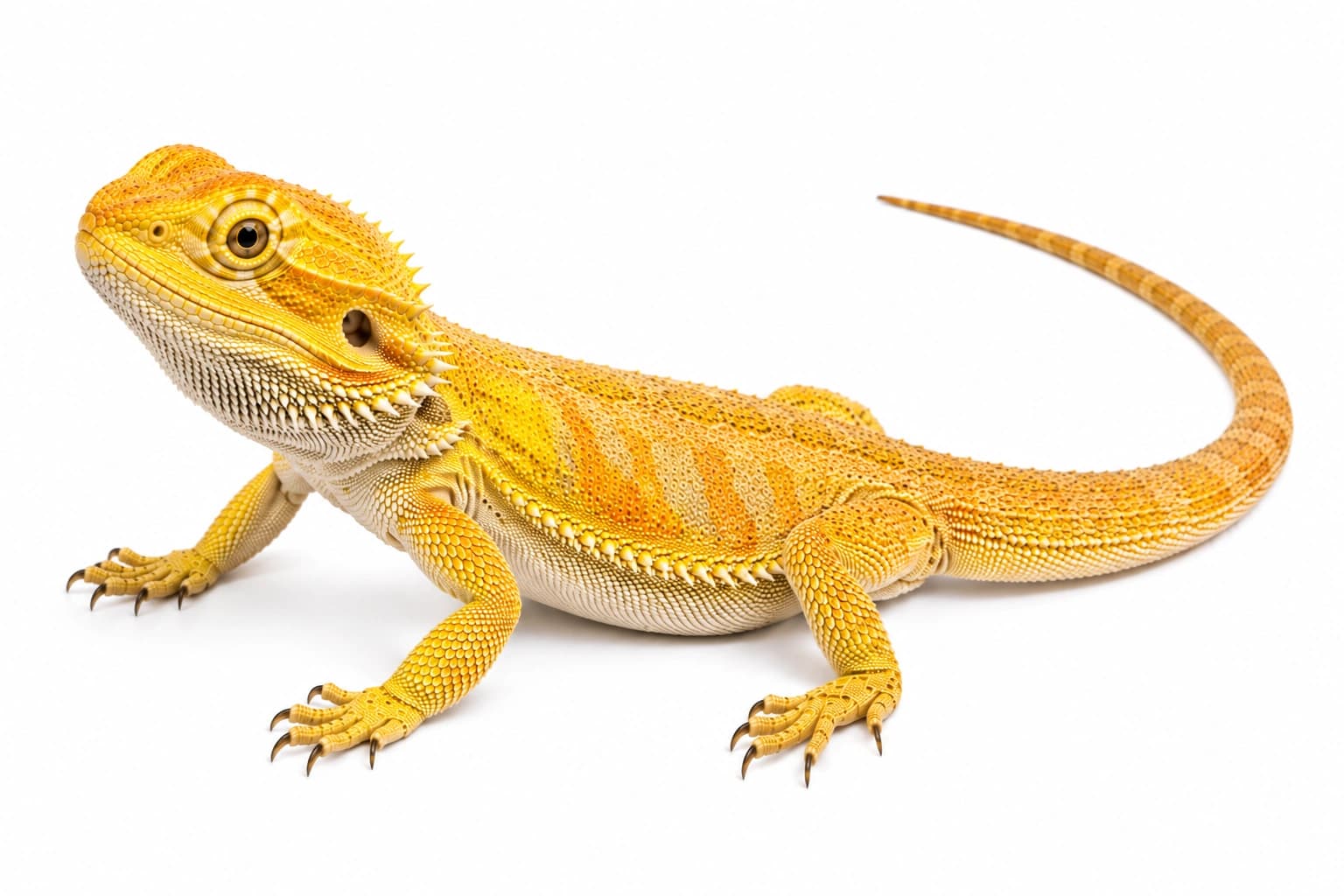
Orange vs Citrus
Orange lines are selected primarily for tangerine, amber, apricot and pumpkin pigmentation. Citrus dragons generally emphasise brighter lemon-yellow, golden or yellow-orange tones. The descriptions can overlap, so lineage and the dominant overall colour should be considered.
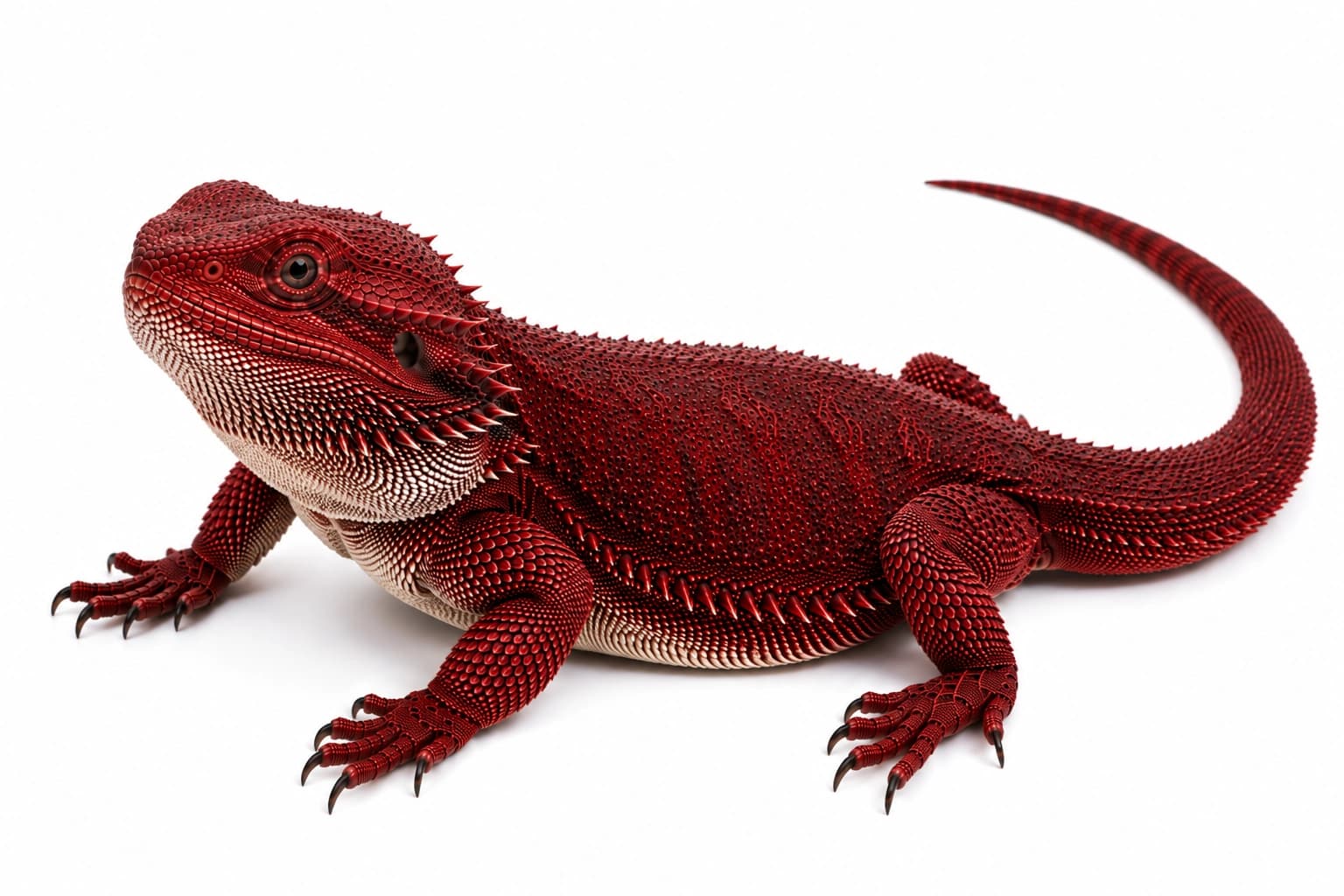
View comparison morph →Orange vs Red Monster
Orange dragons usually display tangerine, amber or pumpkin tones. Red Monster lines are associated with deeper red, crimson, burgundy or dark cherry expression across a larger proportion of the head and body. A strongly coloured Orange dragon should not automatically be labelled Red Monster.
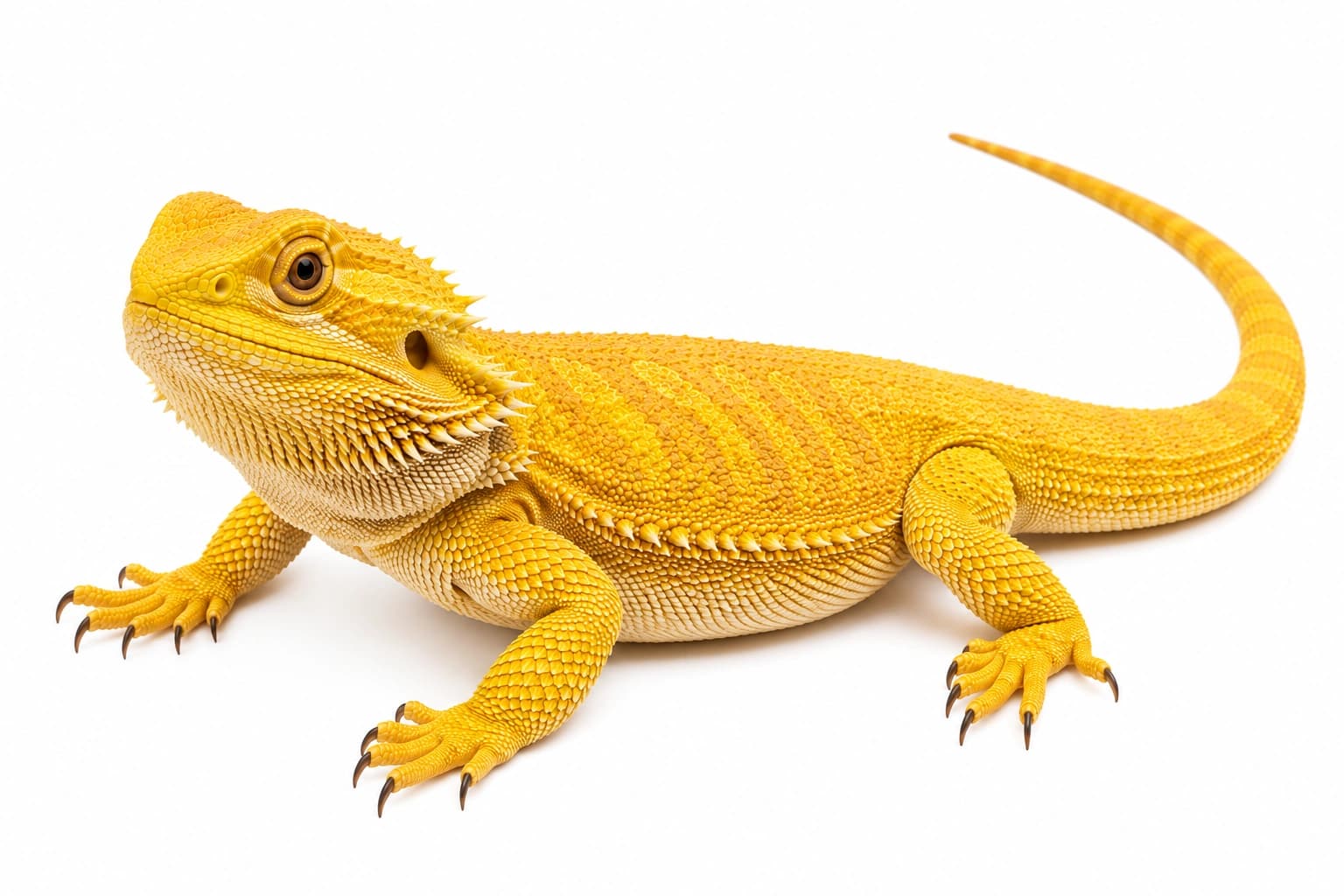
View comparison morph →Orange vs Yellow
Yellow dragons are selected for golden, sunflower or honey-yellow pigmentation, while Orange lines show a stronger tangerine or amber component. Individual animals may fall between these descriptions because both are polygenic colour categories.
View comparison morph →Orange vs Hypo
Orange describes selectively developed body colour, while Hypo is a recessive reduction-of-melanin morph identified primarily by clear claws. An Orange dragon may be Hypo, non-Hypo or carry Hypo without visually expressing it.
View comparison morph →Orange colour vs warm lighting
Warm lamps, increased saturation, camera white balance and edited photographs can make an ordinary brown or tan dragon appear significantly more orange. Identification should use neutral lighting and several unedited images.
Orange colour vs temporary physiological change
Temperature, stress, shedding and social signalling can temporarily change the darkness or intensity of a Bearded Dragon’s colour. Permanent colour-line classification should not be based on one temporary appearance.
Morph Comparison
How Orange Compares With Other Morphs
Frequently Asked Questions
Orange Bearded Dragon FAQ
What is an Orange Bearded Dragon?
An Orange Bearded Dragon belongs to a selectively bred colour line developed for strong tangerine, amber, apricot or pumpkin-orange pigmentation. Orange is a polygenic colour description rather than one simple genetic mutation.
Is Orange a genetic Bearded Dragon morph?
Orange pigmentation is influenced by genetics, but it is not normally inherited as one simple dominant or recessive mutation. It is better described as a selectively bred polygenic colour trait.
Is Orange dominant or recessive?
Orange does not follow a recognised simple dominant or recessive inheritance model. Multiple genes and selective breeding influence the final colour expression.
Can a Bearded Dragon be Het Orange?
No established Het Orange category exists in the way that Het Hypo or Het Translucent does. Orange is polygenic and cannot be reduced to a hidden single-gene carrier label.
How do you identify an Orange Bearded Dragon?
Look for orange as the dominant overall colour across the head and body. Assessment should use neutral lighting, several photographs, adult development and reliable lineage rather than one saturated image.
Are all orange-looking Bearded Dragons Orange-line animals?
Not necessarily. Normal variation, warm lighting, camera settings and temporary physiological colour changes can make a dragon appear orange. A recognised colour-line label should ideally be supported by lineage.
What colours can an Orange Bearded Dragon display?
Expression may include pale apricot, amber, tangerine, burnt orange, copper and deep pumpkin tones. The precise shade varies between individuals and bloodlines.
Do Orange Bearded Dragons become brighter with age?
Some individuals become brighter or deeper in colour through repeated sheds and maturation, while others become softer or less saturated. Adult intensity cannot be guaranteed from juvenile colour alone.
Why does my Orange Bearded Dragon sometimes look darker?
Temperature, lighting, stress, shedding, time of day and social signalling can temporarily change the darkness or intensity of a Bearded Dragon’s pigmentation.
What is the difference between Orange and Citrus?
Orange lines emphasise tangerine, amber and pumpkin tones. Citrus lines generally emphasise lemon-yellow, golden or yellow-orange pigmentation, although the categories can overlap.
What is the difference between Orange and Yellow?
Orange animals show a stronger tangerine or amber component, while Yellow lines are selected primarily for golden, sunflower or honey-yellow pigmentation.
What is the difference between Orange and Red Monster?
Orange dragons usually display tangerine or pumpkin pigmentation. Red Monster lines are associated with deeper and more extensive red, crimson, burgundy or dark cherry expression supported by established lineage.
Is an Orange Bearded Dragon the same as Hypo?
No. Orange describes selectively developed colour, while Hypo is a recessive pigment-reduction mutation identified primarily by clear claws. The two traits can occur together.
Can an Orange Bearded Dragon have dark claws?
Yes. Orange colour does not determine claw pigmentation. An Orange dragon without visual Hypo may retain normally dark-pigmented claws.
Can an Orange Bearded Dragon have clear claws?
Yes, when the dragon also visually expresses the separate Hypo trait. Clear claws are evidence of Hypo rather than evidence of Orange colour.
Can Orange be combined with Leatherback?
Yes. Leatherback changes dorsal scale structure and may make colour appear cleaner because smaller scales interrupt the surface less. It remains genetically separate from Orange pigmentation.
Can Orange be combined with Translucent?
Yes. Orange colour and Translucent are independent characteristics and can occur in the same animal when the appropriate genetics are inherited.
Can Orange be combined with Dunner?
Yes. Dunner affects scale direction and pattern organisation, while Orange describes selectively intensified pigmentation.
Do two Orange parents always produce Orange offspring?
They may increase the probability of strong orange expression, but the precise colour and intensity of every offspring cannot be guaranteed because Orange is polygenic.
Do Orange Bearded Dragons require special care?
No special husbandry is required because of orange pigmentation. They need correct UVB, heating, nutrition, supplementation, enclosure space and health monitoring like other healthy Pogona vitticeps.
Are Orange Bearded Dragons healthy?
Orange colour alone is not normally associated with a specific health problem. Health depends on responsible breeding, genetic diversity, husbandry, nutrition and veterinary care.
Does diet make a Bearded Dragon genetically Orange?
No. Diet supports general health and normal pigmentation but cannot create an inherited Orange colour line. Genetic background remains the primary basis of selectively developed colour.
Can photographs accurately show Orange colour?
Photographs can help, but lighting, white balance, exposure and editing can significantly alter apparent colour. Neutral lighting and multiple unedited photographs provide a more reliable assessment.
Is Tangerine the same as Orange?
Tangerine is commonly used for a particularly bright orange expression and may be used as a line or marketing description. Terminology varies between breeders, so lineage and actual appearance remain important.
Can an Orange dragon also be Red Monster?
Colour descriptions may overlap, but Red Monster should refer to established lineage and characteristic deep-red expression rather than being applied to every strongly coloured orange or red dragon.
Continue Exploring
Related Morphs
Continue Learning
Bearded Dragon Care Guides
Explore our practical guides covering enclosure setup, UVB lighting, heating, feeding, humidity, enrichment and everyday Bearded Dragon care.
Explore Care Guides →Scientific References
This article was prepared using established zoological, husbandry and scientific references.