Colour & Polygenic Traits
Yellow
Bearded Dragon
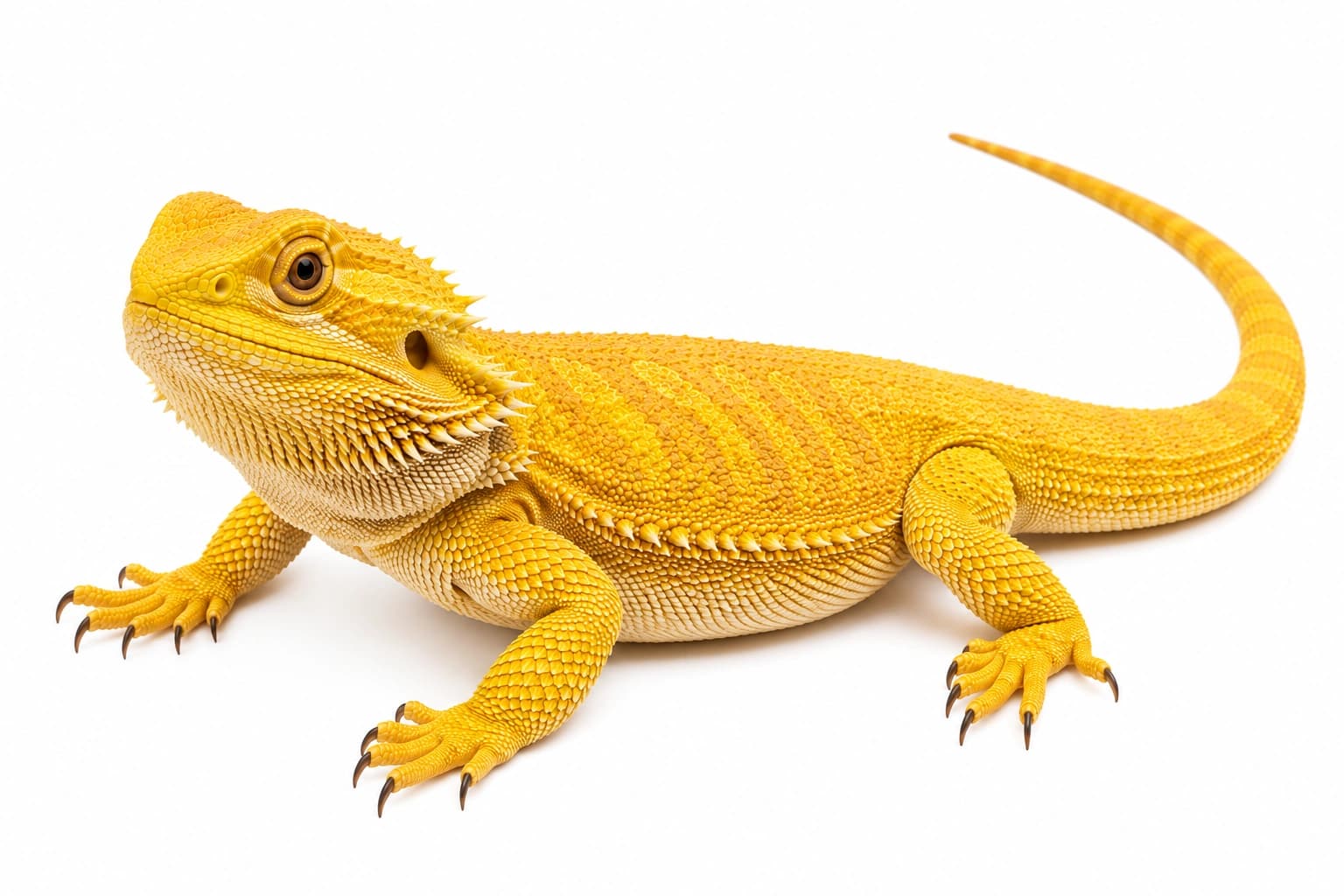
A selectively developed colour line recognised for warm golden, sunflower and honey-yellow pigmentation.
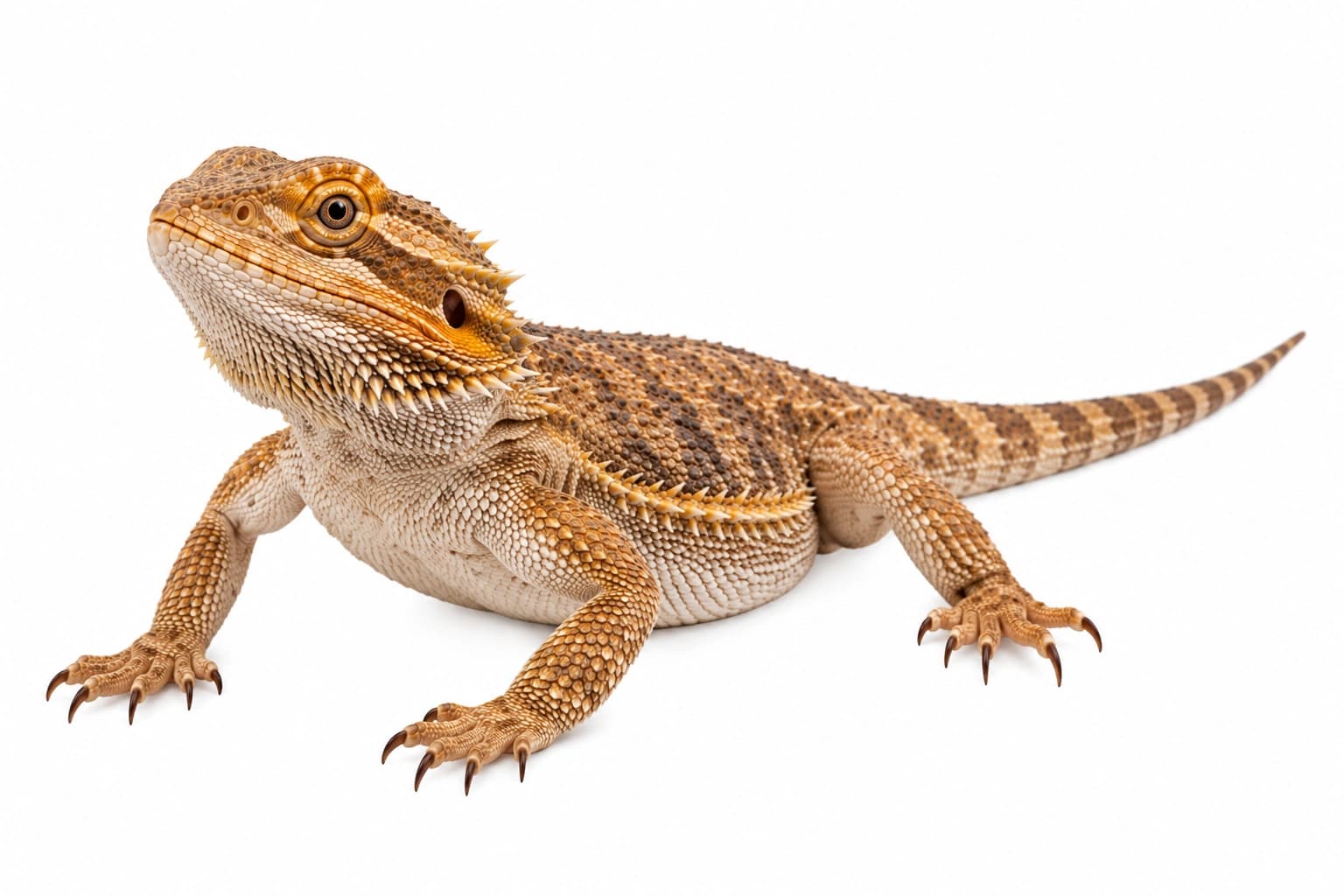
Yellow Bearded Dragons are selectively bred Pogona vitticeps displaying pronounced golden, sunflower, honey or warm yellow pigmentation. Yellow is a polygenic colour description rather than a single dominant or recessive mutation, so its intensity and distribution vary between individuals and bloodlines.
Trait type
Polygenic colour line
Primary colour
Golden or sunflower yellow
Inheritance
Not simple Mendelian
Het form
No recognised Het Yellow
Pattern
Variable
Care requirements
Standard
Morph DNA
Yellow Morph Profile
trait
Yellow colour expression
trait Type
A selectively developed polygenic colour characteristic influenced by multiple genes
inheritance
Colour is influenced by the combined genetics and lineage of both parents rather than one simple allele
visual Expression
Golden, sunflower, honey or warm yellow pigmentation across part or most of the head and body
hidden Traits
There is no recognised hidden Het Yellow form, although visually modest animals may still come from strongly coloured lines
beginner Friendly
Yes. Yellow pigmentation does not normally create specialised husbandry requirements
Morph Overview
What Is a Yellow Bearded Dragon?
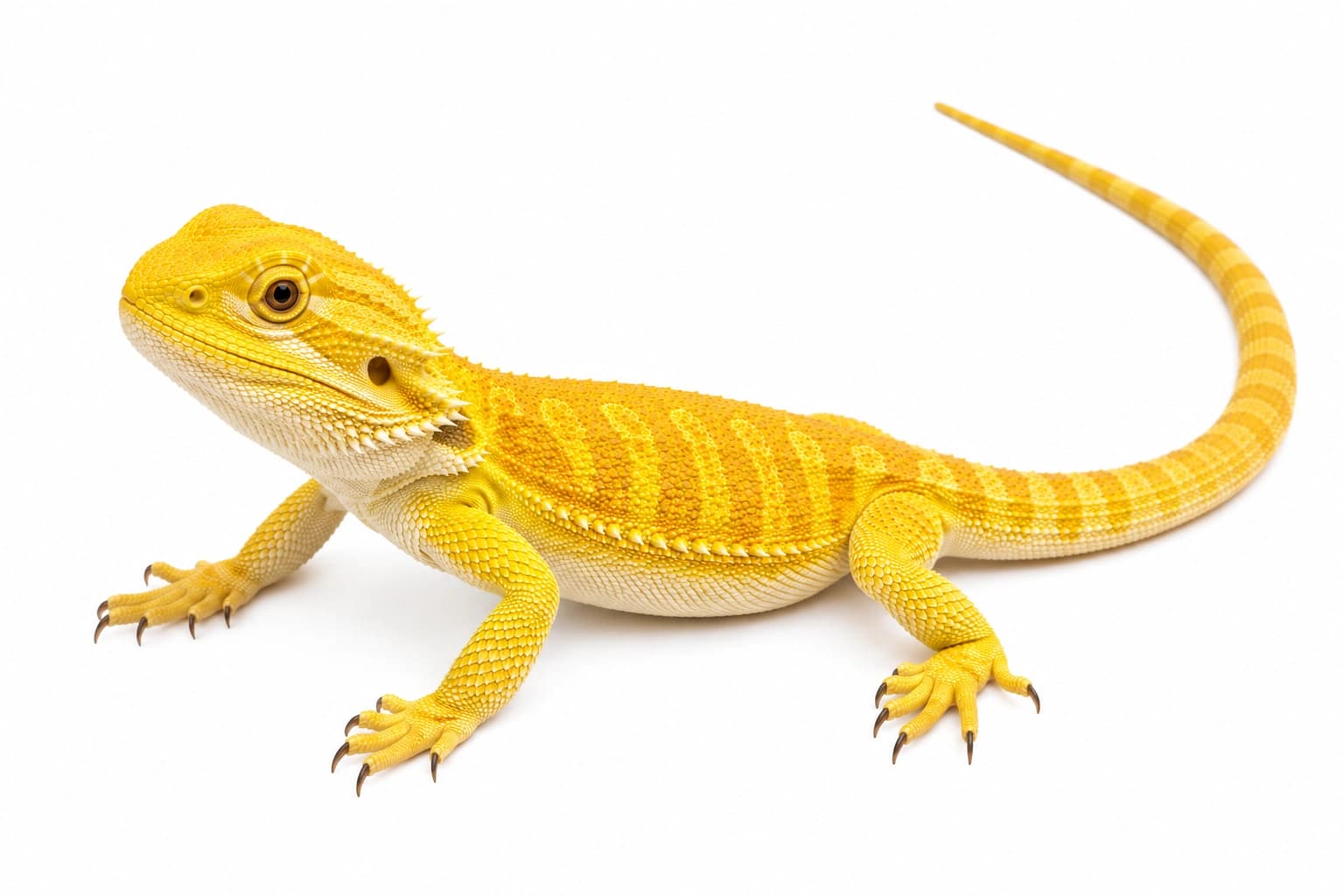
Yellow Bearded Dragons are selectively bred central Bearded Dragons developed for strong yellow pigmentation.
Their colour may range from pale cream-yellow and warm honey to vivid sunflower, gold or mustard-yellow. Some individuals display yellow across most of the head, back, limbs and tail, while others show concentrated colour around the face, shoulders or sides.
Yellow is not one simple mutation.
Unlike Hypo, Translucent, Zero or Witblits, the Yellow description is not normally connected to a single recessive allele. It is a polygenic colour trait influenced by multiple genes and strengthened through selective breeding over successive generations.
This distinction is important because Yellow offspring cannot be predicted using a simple Punnett square.
Pairing two strongly coloured Yellow dragons may improve the probability of producing yellow offspring, but it does not guarantee that every hatchling will develop the same shade, coverage or adult intensity.
Some offspring may become vivid gold or sunflower yellow. Others may remain lighter, more patterned or closer to tan, brown, Citrus or Orange expression.
Lineage therefore matters.
A dragon from an established Yellow line may develop stronger pigmentation after repeated sheds even when its early juvenile colour is relatively modest. Conversely, a bright juvenile may lose contrast or develop warmer orange tones as it matures.
Yellow is also a broad descriptive category.
Breeders may use related terms such as Golden, Sunflower, Lemon, Citrus or Hypo Yellow. These labels are not always applied consistently across the Bearded Dragon community.
For this encyclopedia, Yellow describes animals in which warm yellow or golden pigmentation is the dominant overall colour.
Citrus is treated separately as a recognised selectively developed yellow-to-yellow-orange colour-line description. Because both categories are polygenic, visual overlap is expected and reliable lineage is useful when applying a more specific label.
Yellow colour can occur alongside established genetic morphs.
A dragon may simultaneously be Yellow and Hypo, Yellow and Leatherback, Yellow and Translucent, or Yellow and Dunner. Each separate trait should be identified independently.
For example, clear claws indicate visual Hypo rather than Yellow. Reduced dorsal scales indicate Leatherback rather than Yellow. Multidirectional scales indicate Dunner rather than Yellow.
Yellow pigmentation alone does not change the eyes, claws or scale structure.
Head Details
Head, Eyes and Facial Colour
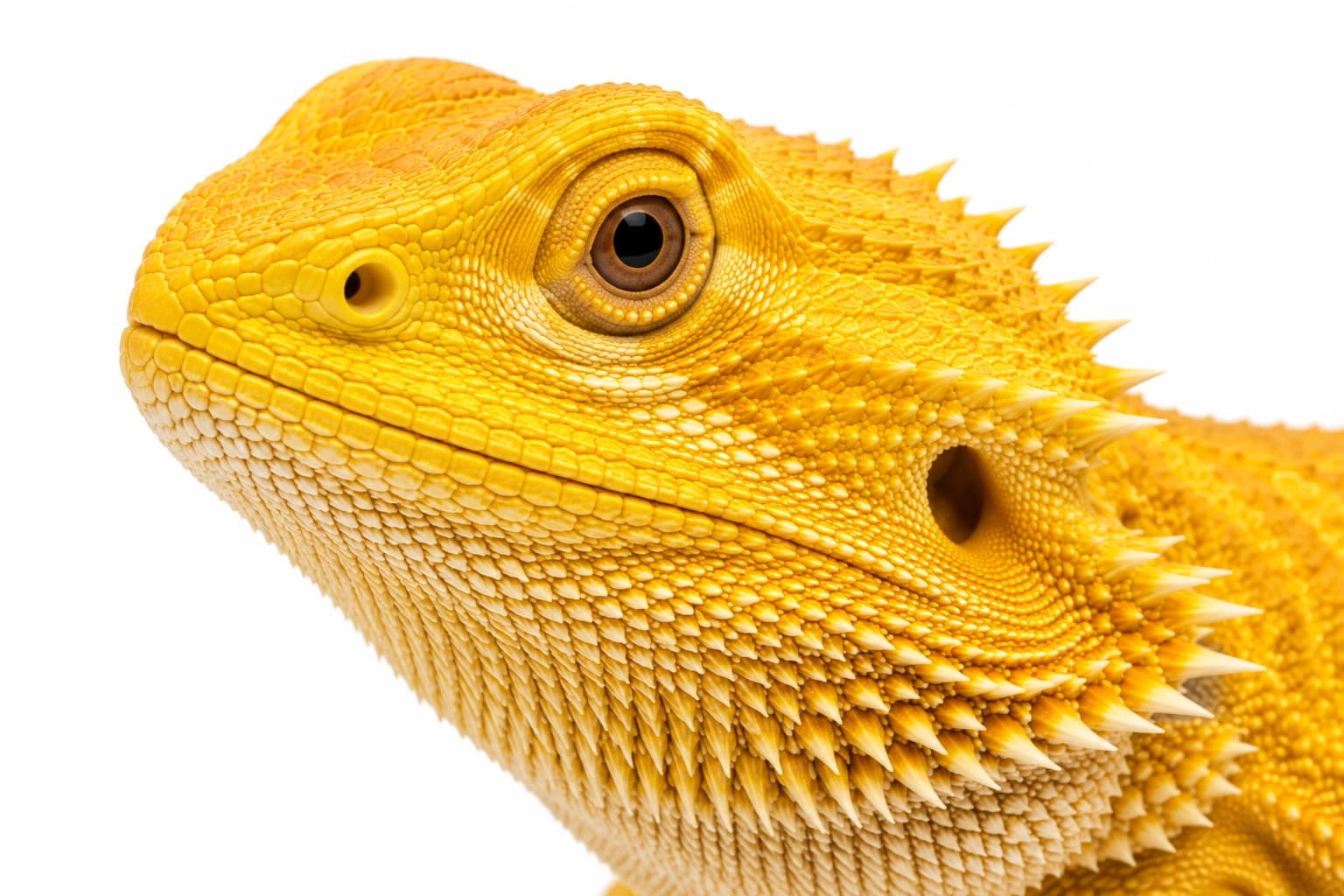
The head of a Yellow Bearded Dragon commonly displays some of the animal’s strongest golden pigmentation.
Colour may cover the snout, brow, cheeks, beard and outer jaw scales. Some dragons show an almost completely yellow head, while others retain brown, grey, orange or cream markings between the brighter areas.
The facial scales retain their standard structure unless the dragon also expresses a separate scale morph.
A Yellow Leatherback may have reduced dorsal scalation, but the head and side spikes generally remain visible. A Yellow Dunner may show irregular facial scale direction and outward-pointing beard spikes.
Yellow does not create a specific eye type.
The eyes normally retain a visible iris and pupil unless another trait affects their appearance. Very dark or solid-looking eyes may be connected with Translucent expression or individual variation rather than Yellow colour.
Yellow also does not produce clear claws.
A Yellow dragon may have normally dark-pigmented claws. Clear or pale claws suggest that the animal additionally expresses Hypo.
Facial colour should be viewed under neutral lighting. Warm basking lamps can make cream, tan and light brown areas look more golden than they appear naturally.
Characteristic Feature
Golden and Sunflower-Yellow Pigmentation
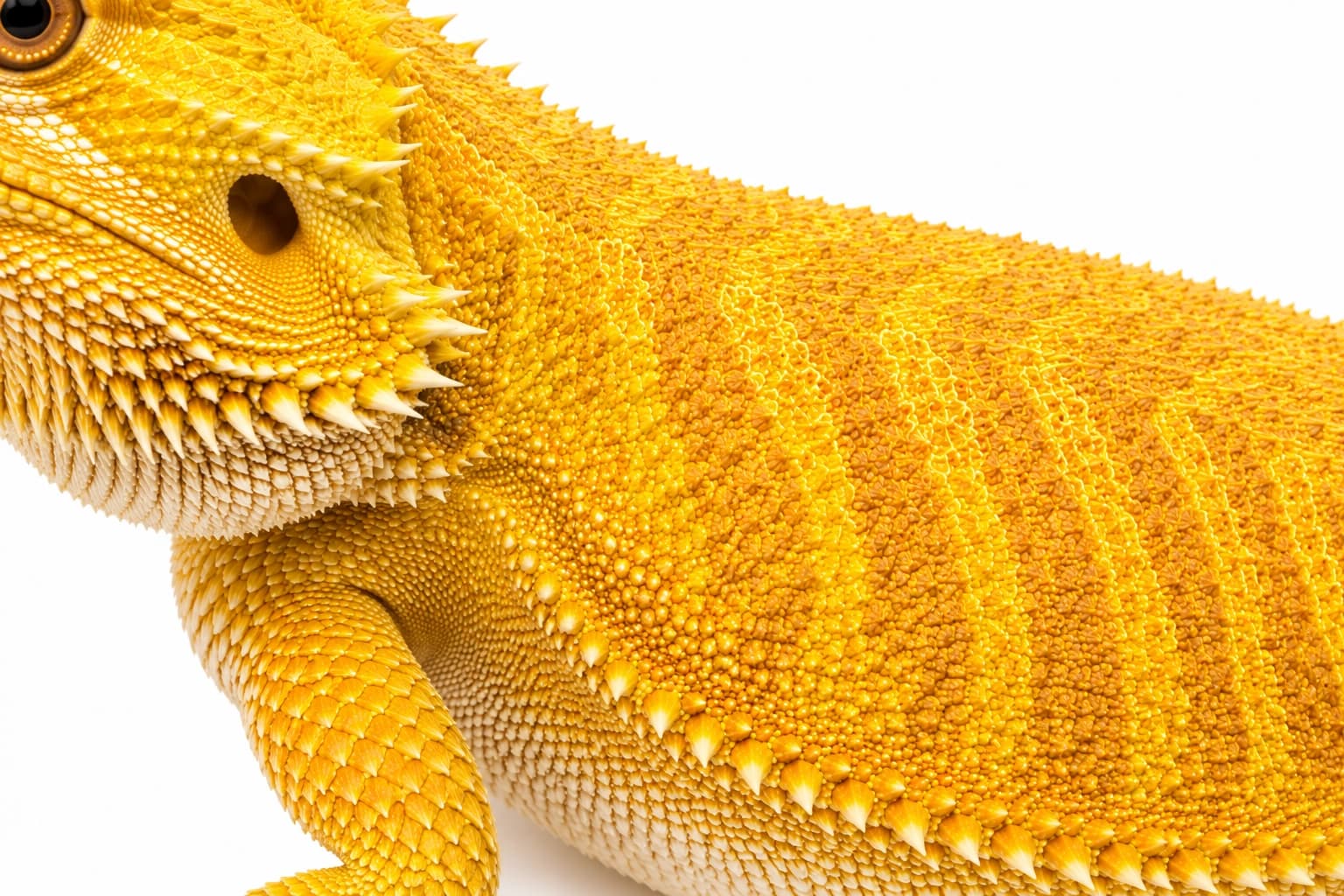
The characteristic feature of a Yellow Bearded Dragon is consistent golden, sunflower, honey or warm yellow pigmentation.
The colour should be a meaningful part of the animal’s overall appearance rather than a small temporary patch produced by lighting, temperature or an approaching shed.
High-expression animals may show yellow across much of the head, back, sides, limbs and tail. More moderate individuals may display concentrated golden colour around the head and shoulders while retaining visible natural patterning.
Yellow expression is graded rather than binary.
A dragon is not genetically divided into a simple Yellow or non-Yellow category in the same way that a recessive morph may be visual or non-visual. Individuals exist across a wide range of colour intensity.
This variability is typical of polygenic selective breeding.
Breeders strengthen colour by repeatedly selecting parents with desirable pigmentation, coverage, contrast and adult development. Each generation may still contain considerable variation.
The feature must also be separated from temporary colour change.
A cold or stressed dragon may darken, while a warm, relaxed dragon may appear brighter. Freshly shed skin may show stronger colour than areas still approaching a shed.
Yellow colour should therefore be evaluated over time and under consistent conditions.
Identification Guide
How to Identify a Yellow Bearded Dragon
To identify a Yellow Bearded Dragon, begin by assessing the animal’s dominant overall colour under neutral lighting.
Look for warm golden, sunflower, honey or mustard-yellow pigmentation across the head and body. The colour should remain visible in several body regions rather than appearing only as a small highlight.
Do not identify Yellow from one photograph taken beneath a warm basking lamp.
Artificial lighting, camera white balance, exposure and editing can significantly change the apparent colour. Whenever possible, compare several unedited photographs taken in neutral daylight or balanced white lighting.
Examine the dragon during more than one physiological state.
Bearded Dragons may temporarily darken while cold, stressed or socially stimulated. Skin approaching a shed often becomes dull or grey. Freshly shed areas may appear significantly brighter.
Consider age.
Juvenile colour can change through repeated sheds. Some Yellow dragons become more saturated as they mature, while others develop stronger orange, tan or brown undertones.
Examine the entire phenotype.
Yellow does not define the claws, eyes, scales or pattern. These features should be used to identify additional traits separately.
Clear claws indicate visual Hypo. Dark or solid-looking eyes may support Translucent identification. Reduced dorsal scales indicate Leatherback. Irregular multidirectional scales indicate Dunner.
Distinguish Yellow from Citrus.
Both descriptions can include golden and yellow pigmentation. Citrus often emphasises lemon-yellow or bright yellow-orange expression associated with particular selectively bred lines, while Yellow functions as a broader colour category.
Distinguish Yellow from Orange.
Orange lines show a stronger tangerine, amber, apricot or pumpkin component. Yellow animals are dominated by golden or sunflower pigmentation, although intermediate individuals occur.
Reliable lineage is valuable because colour terminology is not perfectly standardised across breeders.
The most responsible identification combines repeated visual assessment, adult development, neutral photographs and documented ancestry.
Juvenile Development
What Does a Juvenile Yellow Bearded Dragon Look Like?
Juvenile Yellow Bearded Dragons may display golden or warm yellow pigmentation from an early age, but their final adult colour cannot be predicted with certainty.
Some hatchlings emerge with obvious yellow across the head, shoulders, back and limbs. Others begin with a softer tan, cream or muted gold appearance and develop stronger pigmentation through repeated shedding cycles.
Juvenile pattern is often more prominent than adult pattern.
Dark transverse bands may be visible across the back and tail, while contrasting markings can appear around the head, limbs and sides. These markings may soften, blend or remain visible as the animal matures.
A young dragon with strong yellow colour is not automatically Hypo.
Visual Hypo should be identified through clear or pale claws and reduced melanin rather than through brightness alone. A non-Hypo Yellow juvenile may retain dark pigment within the claws.
The eyes should also be assessed separately.
Yellow does not create solid black eyes or juvenile skin translucency. Those characteristics may indicate the independent Translucent morph when supported by other evidence.
Juvenile colour can temporarily become dull before a shed. The skin may look pale, grey or washed out before the old layer separates. Freshly shed areas often reveal cleaner and more saturated pigmentation.
Temperature and lighting can also alter the apparent colour.
A cool juvenile may look darker, while a warm and relaxed animal can appear brighter. Warm artificial lamps may exaggerate yellow or orange tones in photographs.
Development varies between bloodlines.
Some established Yellow lines are selected for early colour intensity, while others develop more gradually. Parental appearance and lineage can provide useful expectations, but they cannot guarantee the exact adult result.
Growth, nutrition and correct husbandry support normal pigmentation and development, but diet cannot transform an unrelated dragon into a genetically established Yellow-line animal.
Juveniles should be evaluated repeatedly throughout growth rather than permanently classified from one early photograph.
Appearance
Yellow Bearded Dragon Appearance
The defining visual characteristic of a Yellow Bearded Dragon is the presence of pronounced warm yellow pigmentation.
Colour may appear as pale butter yellow, honey, sunflower, gold, mustard or yellow-orange. Expression differs considerably between animals because Yellow is polygenic rather than controlled by one simple mutation.
Some dragons display nearly continuous yellow colour across the head and body. Others retain darker bands, side markings, dorsal patterns or grey and brown areas between the yellow scales.
Pattern visibility depends on the individual’s wider genetics.
A normally scaled Yellow dragon may show strong dark bands and contrasting markings. A Yellow Leatherback may appear cleaner or more saturated because reduced dorsal scales interrupt the visible colour less.
A Yellow Hypo may appear particularly bright because reduced melanin decreases dark pigmentation. However, Yellow colour does not prove that the dragon is Hypo. The claws must still be examined for the clear or pale appearance associated with visual Hypo.
The head may be one of the brightest regions. Golden pigmentation can cover the snout, cheeks, brow, beard and jaw margins.
The body may display yellow across the shoulders, back, flanks and limbs. Some individuals show a lighter underside and stronger dorsal colour.
The tail may retain darker transverse bands, especially in juveniles. These bands may soften as the dragon matures but do not always disappear.
Colour is not completely static.
Bearded Dragons can temporarily lighten or darken in response to temperature, lighting, stress, social behaviour, time of day and shedding.
A Yellow dragon may look darker while warming up and brighter once it has reached an appropriate body temperature. Areas approaching a shed frequently become dull, grey or pale before revealing cleaner colour underneath.
Photography also affects appearance.
Warm lamps, camera white balance and increased saturation can make tan, brown or orange pigmentation appear more yellow. Accurate identification should use neutral lighting and multiple unedited photographs.
Yellow should therefore be assessed from consistent pigmentation, adult development and lineage rather than from one image.
Adult Development
Adult Yellow Bearded Dragon
Adult Yellow Bearded Dragons may display colour ranging from soft honey and muted gold to vivid sunflower, mustard or warm lemon-yellow.
As the dragon matures, the body becomes broader and more muscular, the head becomes more substantial and the beard becomes increasingly prominent.
Colour development varies considerably.
Some adults become brighter after repeated sheds, showing extensive golden pigmentation across the head, shoulders, back, sides, limbs and tail. Others retain a more moderate expression with yellow concentrated around the face and upper body.
Juvenile markings may soften with age, but Yellow colour does not automatically eliminate pattern.
Adults can retain dark bands, side markings, dorsal spots and tail rings. Pattern strength depends on the animal’s wider genetic background and selective lineage.
A Yellow Leatherback may appear particularly vivid because reduced dorsal scales allow colour and pattern to look cleaner. This effect comes from the separate Leatherback trait rather than from a stronger Yellow gene.
A Yellow Hypo may display brighter colour with less dark pigmentation. Clear claws confirm visual Hypo, while the yellow body colour remains polygenic.
An adult may also show transitional shades between Yellow, Citrus and Orange. Polygenic colour categories do not always create perfectly separated visual boundaries.
Permanent colour should be assessed under neutral lighting and across multiple observations.
A cold dragon may temporarily darken to improve heat absorption. Stress, social signalling and time of day can also affect the apparent shade. Areas approaching a shed may become pale or dull before brighter skin is revealed.
Sex, age, health and individual physiology may influence appearance, but colour alone should never be used to determine sex or health.
Adult classification is strongest when visual expression is supported by reliable lineage and photographs showing the dragon under natural or balanced lighting.
Genetics
Yellow Genetics and Inheritance
Yellow Bearded Dragon colour is polygenic.
Polygenic means that the visible trait is influenced by multiple genes rather than one single allele with a simple dominant or recessive inheritance pattern.
For this reason, Yellow cannot be described accurately using the same genetic model as Hypo, Translucent, Zero or Witblits.
There is no established Visual Yellow versus Het Yellow system.
A dragon with modest colour may still originate from a strong Yellow lineage, but it should not be described as Het Yellow. The term heterozygous is useful when discussing particular alleles, especially hidden recessive traits. It does not accurately describe general polygenic colour potential.
Yellow expression exists across a continuous range.
One animal may display pale honey pigmentation, another may be bright sunflower yellow and another may show a mixture of yellow, tan and orange. These differences reflect the combined influence of many genetic factors.
Selective breeding strengthens colour over generations.
Breeders choose parents displaying desirable yellow intensity, coverage, cleanliness, contrast and adult colour retention. Repeating this selection can increase the frequency and quality of Yellow expression within a line.
However, selectively bred parents do not produce genetically identical offspring.
Each hatchling receives a different combination of genes from its parents. As a result, clutchmates can vary significantly in colour, pattern and adult development.
Environmental and physiological factors also influence visible appearance.
Temperature, lighting, stress, shedding and time of day can temporarily change colour intensity. These effects alter visible expression but do not rewrite the dragon’s inherited genetic background.
Yellow colour genetics remain independent from established structural and pigment morphs.
A Yellow dragon can additionally express Hypo, Translucent, Leatherback, Dunner, Zero, Witblits or Genetic Stripe when it inherits the relevant separate traits.
Each component should be recorded independently.
For example, a Yellow Hypo is a dragon with polygenic yellow colour and two copies of the recessive Hypo allele. A Yellow Leatherback combines selected colour with the separate Leatherback scale trait.
Yellow and Citrus terminology can overlap.
Some breeders use Yellow and Citrus almost interchangeably, while others reserve Citrus for particular established lineages or brighter lemon-to-yellow-orange expression. These labels should therefore be supported by lineage and a clear visual description rather than treated as separate single genes.
Trait type
Selectively developed polygenic colour characteristic
Inheritance
Influenced by multiple genes rather than one simple allele
Visual expression
Golden, sunflower, honey or warm yellow pigmentation
Het Yellow
Not a recognised genetic classification
Breeding predictability
Colour tendencies can be selected, but exact results are not guaranteed
Pattern
Inherited and selected separately from overall yellow intensity
Combination morphs
Yellow can occur alongside independently inherited genetic traits
Lineage
Important for documenting selective colour development
Care Guide
Caring for a Yellow Bearded Dragon
Yellow Bearded Dragons require the same fundamental husbandry as other healthy Pogona vitticeps.
Yellow pigmentation does not create separate UVB, heating, humidity, dietary or enclosure requirements. Care should be based on the dragon’s species, age, size, health and individual condition rather than the intensity of its colour.
The enclosure must provide adequate usable space for movement, climbing, basking, hiding and behavioural thermoregulation.
A bright basking area should be positioned at one end of the enclosure, with progressively cooler and more shaded conditions available elsewhere. This allows the dragon to regulate its body temperature naturally.
A suitable linear UVB lamp is essential.
UVB exposure supports vitamin D3 production, calcium metabolism, muscular function and skeletal health. The UVB source should overlap appropriately with the basking zone while allowing the dragon to retreat into areas of lower exposure and shade.
Heating and UVB equipment should be positioned according to the manufacturer’s guidance and the enclosure design. Temperatures should be measured with reliable equipment rather than estimated by touch.
Diet must be appropriate for the dragon’s age and condition.
Growing juveniles generally require more frequent access to appropriately sized live invertebrates, while healthy adults usually consume a larger proportion of varied leafy greens and safe vegetables.
Feeder insects should be correctly sized, well gut-loaded and supplemented according to an appropriate calcium and vitamin schedule.
Food does not create an inherited Yellow colour line.
A balanced diet supports normal growth, skin health and pigmentation, but strongly coloured foods or supplements cannot transform an unrelated dragon into a genetically established Yellow animal.
Yellow colour can appear different depending on temperature, lighting, stress, time of day and shedding.
A dragon may darken while warming up and appear brighter after reaching an appropriate body temperature. Skin approaching a shed often becomes pale, grey or dull before revealing cleaner pigmentation underneath.
Warm basking lamps can exaggerate yellow and orange tones. Colour should therefore be assessed under neutral lighting rather than used as a direct indicator of health.
Persistent darkening, unusual paleness, loss of appetite, weakness, breathing changes, reduced activity, abnormal stools or weight loss should not be dismissed as normal colour variation.
A veterinarian experienced with reptiles should assess persistent or concerning changes.
UVB
Provide a suitable linear UVB source that overlaps with the basking zone and creates access to both appropriate exposure and shade.
Heating
Create a bright basking area and a cooler end so the dragon can regulate its body temperature naturally.
Diet
Offer an age-appropriate balance of nutritious live insects, leafy greens and safe vegetables.
Supplementation
Use a suitable calcium and vitamin schedule alongside correct UVB exposure and a balanced diet.
Colour assessment
Evaluate pigmentation under neutral lighting and remember that temperature, stress and shedding can temporarily change colour.
Health monitoring
Monitor weight, appetite, activity, mobility, shedding and waste production rather than relying on colour as a health indicator.
Breeding
Yellow Breeding and Genetic Outcomes
Breeding Yellow Bearded Dragons is a selective colour-breeding process rather than a simple Mendelian pairing.
There are no reliable dominant or recessive percentages for Yellow colour.
Pairing two visually strong Yellow dragons may increase the likelihood of producing yellow offspring, but it cannot guarantee that every hatchling will develop the same shade, coverage or adult intensity.
The quality of the parental lineage is important.
Breeders should evaluate not only the parents’ current appearance but also their development history, adult colour stability, health, body structure and the appearance of related animals.
A dragon photographed immediately after shedding or beneath warm lighting may appear more intensely coloured than it normally is. Breeding selections should therefore use repeated observations under neutral conditions.
Offspring should be evaluated individually.
Clutchmates may range from pale cream and honey to vivid gold, sunflower yellow, yellow-orange or tan. Some may develop stronger pigmentation over time, while others remain comparatively muted.
Labels should be based on actual expression and lineage rather than assigned automatically to an entire clutch.
The phrase Het Yellow should not be used.
A visually modest offspring from Yellow parents may inherit useful polygenic colour potential, but it is not heterozygous for one established Yellow mutation.
Yellow may be combined with genetic morphs, but their inheritance should be calculated separately.
For example, a Yellow × Yellow pairing involving two Het Hypo parents follows recessive probability for Hypo while remaining unpredictable for the exact Yellow expression.
When combining Yellow with Translucent, Leatherback, Dunner, Zero, Witblits or other traits, breeders must track each known gene independently from the colour-line description.
Colour should never take priority over welfare.
Breeding animals should be healthy, structurally sound, behaviourally suitable and sufficiently unrelated. Genetic diversity, long-term health and accurate records are more important than producing the brightest possible hatchlings.
Breeders should also avoid exaggerating labels.
Yellow, Citrus, Lemon, Golden and related names can overlap. Buyers should receive clear photographs, lineage information and honest explanations of the polygenic nature of the colour.
Yellow × Yellow
May increase the likelihood of yellow or golden offspring, but colour intensity, coverage and adult development remain variable. No fixed percentage can be guaranteed.
Yellow × Normal-coloured line
Offspring may inherit varying amounts of yellow colour potential. Some may show visible yellow expression, while others may appear tan, brown, gold or intermediate.
Yellow × Citrus
May produce a range of yellow, golden, lemon and yellow-orange expression. Results depend on the quality and lineage of both parents rather than a single genetic formula.
Yellow × Orange
May produce offspring ranging from gold and yellow-orange to amber, apricot or tangerine. The precise balance of yellow and orange cannot be predicted for each hatchling.
Yellow × Red line
May produce warm yellow, orange, gold or red-orange offspring. Selective results depend heavily on parental colour, lineage and multi-generational selection.
Yellow Hypo × Yellow Hypo
All offspring are genetically expected to be visual Hypo when both parents are confirmed visual Hypo, but the Yellow colour intensity remains polygenic and variable.
Yellow Het Hypo × Yellow Het Hypo
The Hypo trait follows recessive probability, while Yellow expression remains polygenic. Approximately 25% visual Hypo is expected statistically, but no fixed Yellow-colour percentage exists.
Yellow Leatherback × Normal-scale Yellow
Scale outcomes depend on the Leatherback genetics, while yellow intensity remains variable. Offspring inheriting Leatherback may display colour more cleanly because of reduced dorsal scales.
Yellow Translucent × Yellow Het Translucent
Translucent follows its recessive inheritance model, while Yellow colour remains polygenic. Each genetic component must be calculated and recorded separately.
Yellow Dunner × Yellow
Offspring inheriting Dunner may show multidirectional scales and disrupted patterning. Yellow colour intensity remains independently variable.
Important Colour-Breeding Note
Yellow is a polygenic colour description, not a single-gene morph. Breeders should not advertise dragons as Het Yellow or claim guaranteed Yellow percentages from a pairing. Such terminology incorrectly applies simple Mendelian genetics to a complex selectively bred characteristic. Pairing two bright Yellow dragons can improve the probability of strong colour, but every offspring receives a different combination of genes. Visual results can vary significantly within the same clutch. Lineage names should be used only when they are supported by reliable breeding records. A yellow-looking dragon without documented ancestry should not automatically be assigned to a specific established line. Photographs should represent the animal honestly. Excessive saturation, warm colour filters and selective lighting can misrepresent the true pigmentation of both breeding animals and available offspring. Responsible breeding must prioritise health, structure, temperament, genetic diversity and long-term welfare over colour intensity.
Identification Mistakes
Common Misidentifications
Yellow vs Citrus
Yellow is a broad description for golden, sunflower, honey and warm yellow pigmentation. Citrus commonly describes selectively developed lemon-yellow, gold or yellow-orange lines. The terms overlap, so documented lineage and the breeder’s terminology are important.
View comparison morph →Yellow vs Orange
Yellow dragons are dominated by golden, sunflower or honey-yellow pigmentation. Orange lines show a stronger tangerine, amber, apricot or pumpkin component. Intermediate animals may be difficult to classify precisely.
View comparison morph →Yellow vs Hypo
Yellow describes polygenic body colour, while Hypo is a recessive reduction-of-melanin morph identified primarily by clear claws. A Yellow dragon may be Hypo, non-Hypo or carry Hypo without expressing it.
View comparison morph →Yellow vs Normal
Normal describes the standard reference phenotype and can naturally include some yellow pigmentation. A Yellow-line dragon has been selectively bred for stronger, more extensive and more consistent golden colour.
View comparison morph →Yellow vs approaching shed
Skin approaching a shed may become pale, cream, grey or yellowish. This temporary change should not be confused with permanent Yellow-line pigmentation.
Yellow colour vs warm lighting
Warm lamps, camera white balance and increased image saturation can make tan or light-brown dragons appear strongly yellow. Identification should use neutral, unedited photographs.
Morph Comparison
How Yellow Compares With Other Morphs
Frequently Asked Questions
Yellow Bearded Dragon FAQ
What is a Yellow Bearded Dragon?
A Yellow Bearded Dragon is a selectively bred Pogona vitticeps displaying pronounced golden, sunflower, honey or warm yellow pigmentation. Yellow is a polygenic colour description rather than one simple mutation.
Is Yellow a genetic Bearded Dragon morph?
Yellow colour is influenced by genetics, but it is not normally inherited as one simple dominant or recessive mutation. It is better classified as a selectively developed polygenic colour trait.
Is Yellow dominant or recessive?
Yellow does not follow an established simple dominant or recessive inheritance model. Multiple genes contribute to its visible expression.
Can a Bearded Dragon be Het Yellow?
No recognised Het Yellow classification exists. Het terminology should not be applied to a broad polygenic colour characteristic as though it were one recessive allele.
How do you identify a Yellow Bearded Dragon?
Look for golden, sunflower, honey or warm yellow as the dominant colour across several areas of the head and body. Use neutral lighting, repeated observations and reliable lineage where available.
Are all yellow-looking Bearded Dragons Yellow-line animals?
Not necessarily. Natural variation, warm lighting, camera settings, shedding and temporary physiological colour changes can make a dragon appear yellow.
What shades can a Yellow Bearded Dragon display?
Expression may include pale butter yellow, honey, gold, sunflower, mustard and warm yellow-orange tones.
Do Yellow Bearded Dragons become brighter with age?
Some become brighter through repeated sheds and maturation, while others remain softer or develop stronger orange, tan or brown undertones.
Can a bright yellow juvenile become less colourful?
Yes. Juvenile contrast and colour can change considerably during growth. A bright hatchling is not guaranteed to retain the same shade as an adult.
Why does my Yellow Bearded Dragon sometimes look darker?
Temperature, lighting, stress, shedding, time of day and social behaviour can temporarily darken or lighten a Bearded Dragon.
What is the difference between Yellow and Citrus?
Yellow is a broad golden or sunflower-colour category. Citrus commonly refers to selected lemon-yellow, gold or yellow-orange lines. The terminology often overlaps.
What is the difference between Yellow and Orange?
Yellow dragons show a stronger golden or sunflower component, while Orange lines emphasise tangerine, amber, apricot or pumpkin pigmentation.
Is Yellow the same as Hypo?
No. Yellow describes polygenic colour, while Hypo is a recessive morph that reduces melanin and is identified primarily through clear claws.
Can a Yellow Bearded Dragon have dark claws?
Yes. Yellow colour does not determine claw pigmentation. A Yellow dragon without visual Hypo may retain normally dark claws.
Can a Yellow Bearded Dragon have clear claws?
Yes, if it also visually expresses the separate Hypo trait. Clear claws are evidence of Hypo rather than Yellow colour.
Can Yellow be combined with Leatherback?
Yes. Leatherback changes dorsal scale structure and may make yellow colour appear cleaner, but it remains genetically separate from the colour line.
Can Yellow be combined with Translucent?
Yes. Yellow colour and Translucent are separate characteristics and may occur in the same animal.
Can Yellow be combined with Dunner?
Yes. Dunner affects scale direction and pattern organisation, while Yellow describes selectively intensified pigmentation.
Can Yellow be combined with Zero or Witblits?
The genetics can occur in the same lineage, although the patternless phenotype and colour expression may interact visually. Each established recessive trait must be tracked separately.
Do two Yellow parents always produce Yellow offspring?
No. They may increase the likelihood of yellow expression, but the colour, coverage and adult intensity of individual offspring cannot be guaranteed.
Can Yellow breeding outcomes be calculated with a Punnett square?
Not for Yellow colour itself. Punnett squares can calculate known simple genetic traits in the pairing, but polygenic yellow intensity does not follow one simple allele.
Do Yellow Bearded Dragons require special care?
No special care is required because of their colour. They need appropriate UVB, heating, diet, supplementation, enclosure space and health monitoring.
Are Yellow Bearded Dragons healthy?
Yellow pigmentation alone is not normally associated with a specific health problem. Health depends on responsible breeding, genetic diversity, husbandry and veterinary care.
Can food make a Bearded Dragon permanently yellow?
No. A nutritious diet supports normal health and pigmentation but cannot create an inherited Yellow colour line in an unrelated dragon.
Does shedding affect yellow colour?
Yes. Skin approaching a shed may look dull, pale or grey, while freshly shed areas often appear cleaner and more saturated.
Can photographs accurately show Yellow colour?
Photographs are useful, but warm lighting, white balance, exposure and saturation can significantly change apparent colour. Neutral, unedited images are more reliable.
Is Golden the same as Yellow?
Golden is commonly used as a descriptive term for warm or deeper Yellow expression. Its exact meaning varies between breeders and does not represent a separate established simple gene.
Can a Yellow Bearded Dragon also be Citrus?
The descriptions may overlap. Whether a dragon is called Yellow, Citrus or both depends on its appearance, documented lineage and the terminology used by the breeder.
Continue Exploring
Related Morphs
Continue Learning
Bearded Dragon Care Guides
Explore our practical guides covering enclosure setup, UVB lighting, heating, feeding, humidity, enrichment and everyday Bearded Dragon care.
Explore Care Guides →Scientific References
This article was prepared using established zoological, husbandry and scientific references.