Colour & Polygenic Traits
Red Monster
Bearded Dragon
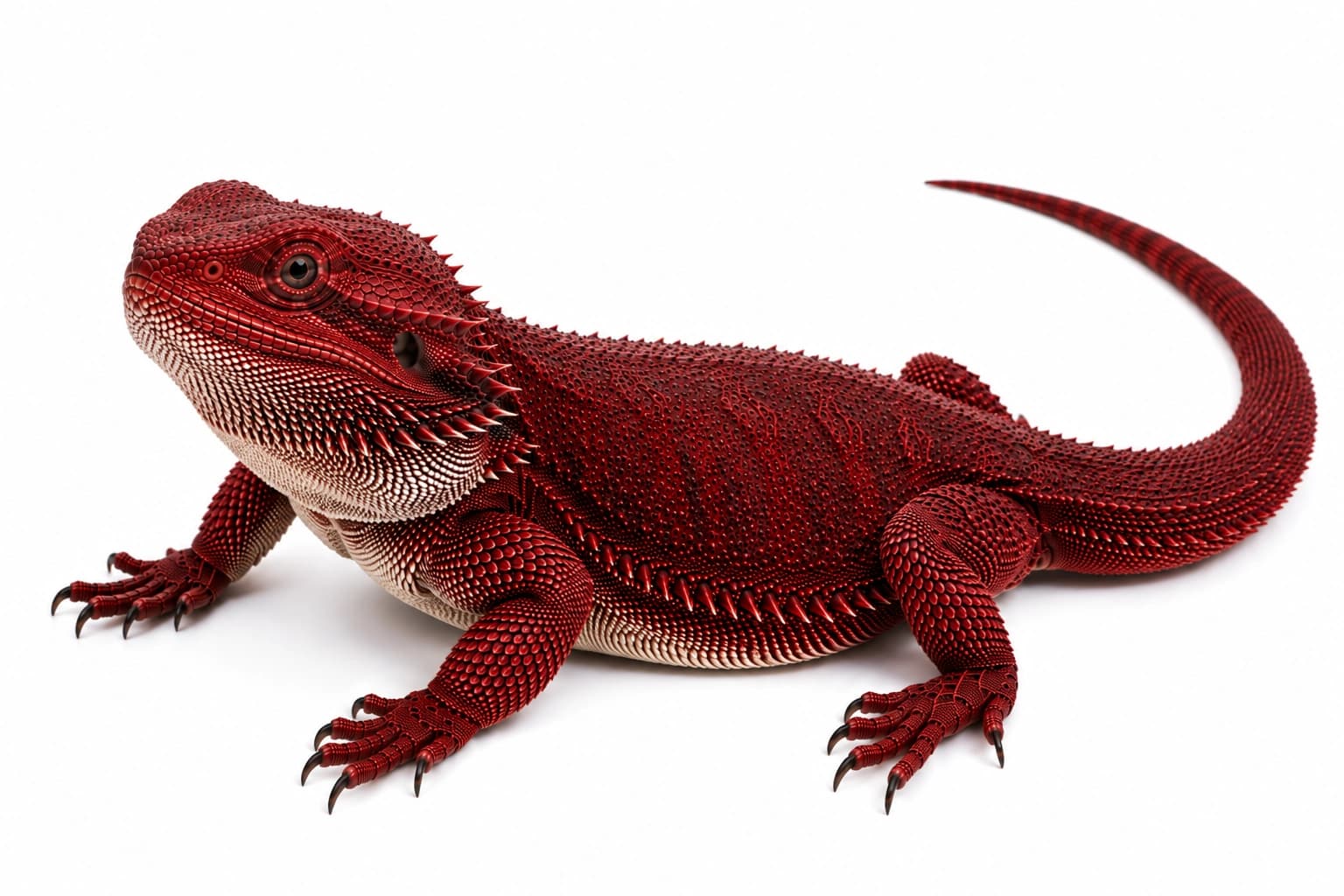
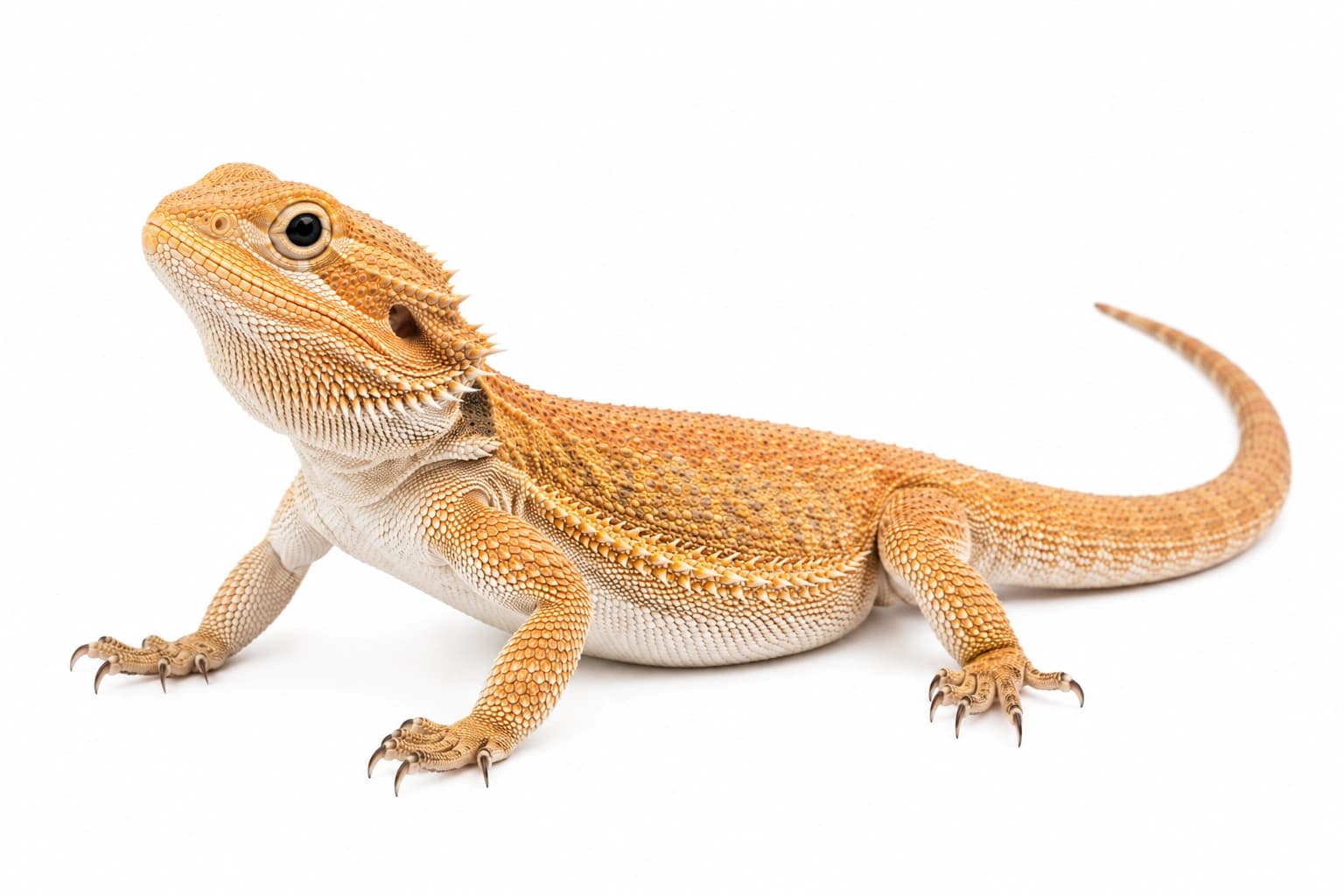
A selectively developed bloodline known for extensive crimson, ruby, cherry and burgundy pigmentation across the head and body.
Red Monster Bearded Dragons belong to selectively developed bloodlines known for extensive, often exceptionally deep red pigmentation. Red Monster is not one simple dominant or recessive mutation, and reliable identification requires documented ancestry rather than colour alone.
Trait type
Selected bloodline
Inheritance
Complex and polygenic
Primary feature
Extensive deep-red colour
Lineage required
Yes
Het form
No Het Red Monster
Breeding priority
Health and diversity
Morph DNA
Red Monster Morph Profile
trait
Red Monster bloodline expression
trait Type
A selectively developed lineage combining multiple colour, pattern and appearance characteristics
inheritance
Complex and polygenic rather than controlled by one identified Red Monster allele
visual Expression
Extensive crimson, ruby, cherry, blood-red or burgundy pigmentation, often covering much of the head and body
hidden Traits
There is no recognised Het Red Monster form; percentage-line claims describe ancestry rather than possession of a recessive allele
beginner Friendly
Care requirements are generally standard, but buyers should investigate lineage, breeder health records and genetic diversity carefully
Morph Overview
What Is a Red Monster Bearded Dragon?
Red Monster refers to a selectively developed Bearded Dragon bloodline associated with exceptionally extensive and intense red pigmentation.
The term does not describe one simple mutation.
Unlike Hypo, Translucent, Zero or Witblits, Red Monster does not follow a recognised single-gene recessive inheritance model.
It is a lineage created through selective breeding for a combination of characteristics, including colour intensity, coverage, pattern, head colour and adult development.
High-expression individuals may display dense crimson, ruby, cherry, blood-red or burgundy pigmentation across much of the head, back, sides, limbs and tail.
Some animals also develop very dark red, wine or almost black-red areas.
Expression remains variable.
Not every dragon with Red Monster ancestry will display the same intensity, shade or coverage. Outcrossed animals may show softer red, orange-red, yellow or patterned appearances.
Red Monster must be distinguished from the broad Red colour category.
Red describes any selectively bred line displaying pronounced red pigmentation. Red Monster refers to particular bloodline ancestry.
A dragon can be exceptionally red without being a Red Monster.
Conversely, an outcrossed or partial-line Red Monster descendant may display less red than an unrelated high-quality Red dragon.
Appearance alone cannot prove ancestry.
Reliable identification requires breeding records showing the parents and earlier generations. Photographs of related adults can provide supporting context but do not replace accurate lineage documentation.
Descriptions such as full Red Monster, 100% Red Monster, half Red Monster or 50% Red Monster generally refer to claimed bloodline ancestry.
They do not describe allele dosage.
A dragon described as 50% Red Monster is not heterozygous for a Red Monster gene. The percentage normally means that part of the documented pedigree came from the named line.
These percentage descriptions must therefore be used carefully.
The percentage of ancestry does not predict an exact percentage of red colour, health, pattern or breeding outcome.
Red Monster can occur alongside established morphs.
A Red Monster may additionally be Hypo, Translucent, Leatherback, Dunner, Genetic Stripe or another independently inherited morph.
Each confirmed trait should be identified and recorded separately.
Clear claws indicate Hypo rather than Red Monster. Reduced dorsal scales indicate Leatherback. Dark eyes or reduced juvenile skin opacity may support Translucent identification.
Red Monster breeding also requires careful welfare consideration.
Strong line selection can reduce genetic diversity when breeders repeatedly pair closely related animals to preserve a particular appearance.
Concerns about some Red Monster bloodlines are widely discussed within the captive-breeding community.
However, there is currently limited peer-reviewed research specifically measuring disease frequency, lifespan or congenital abnormalities across verified Red Monster pedigrees.
The encyclopedia must therefore distinguish documented genetic principles from breeder and keeper observations.
It would be inaccurate to claim that every Red Monster is unhealthy.
It would also be irresponsible to ignore the potential consequences of limited genetic diversity and intensive line breeding.
The quality of the breeder, transparency of records, degree of outcrossing, health of related animals and long-term follow-up are more important than the colour label alone.
Head Details
Head, Eyes and Facial Pigmentation
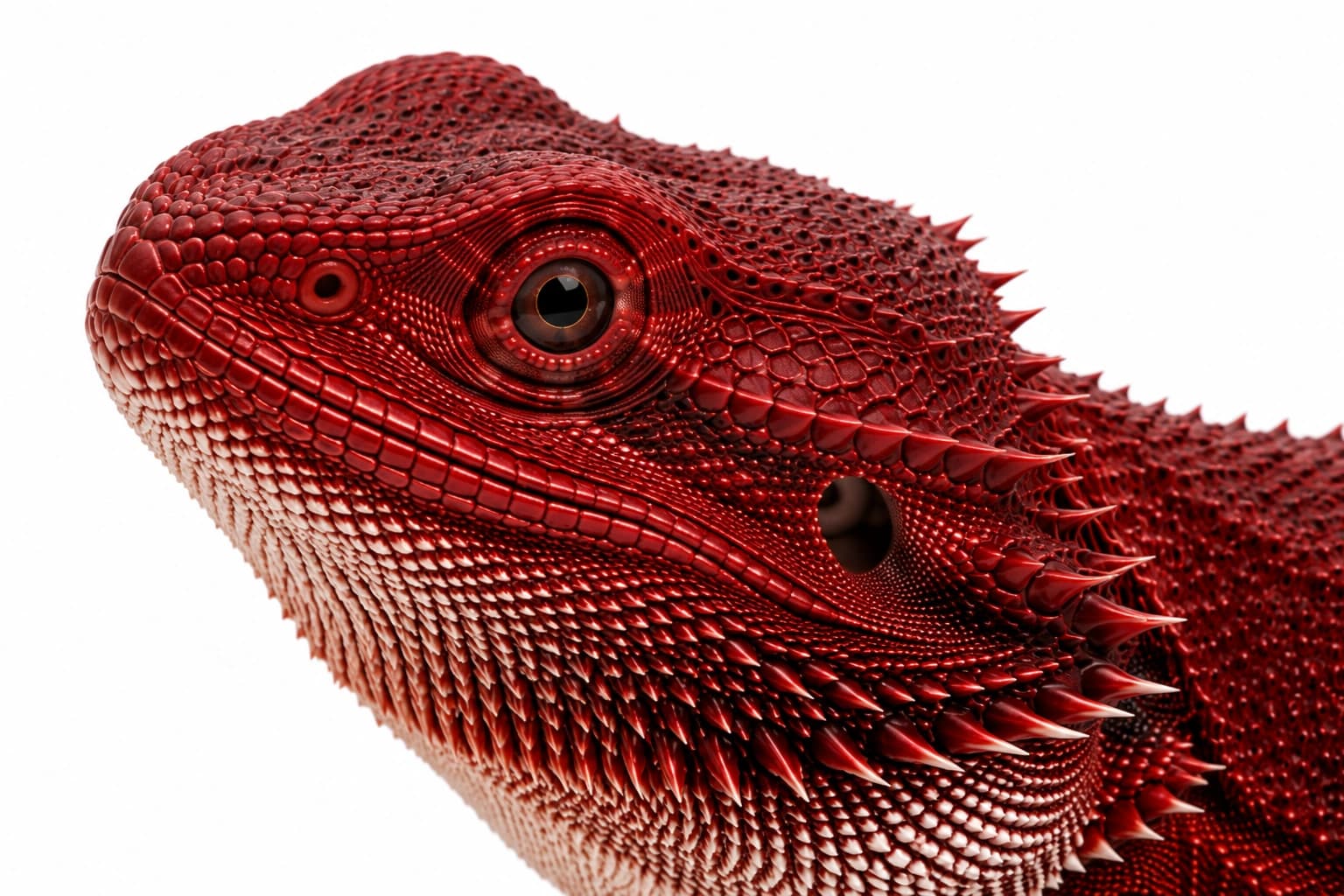
The head is commonly one of the most striking regions of a Red Monster Bearded Dragon.
High-expression animals may display dense crimson, ruby, cherry or burgundy pigmentation across the snout, brow, cheeks, beard and jaw margins.
Some individuals show a nearly continuous red head. Others retain darker markings, orange areas, pale scales or visible facial pattern.
Head colour alone cannot confirm Red Monster ancestry.
Unrelated polygenic Red lines can also produce exceptionally red heads. Lineage remains essential when applying the bloodline name.
The facial scale structure depends on separate genetics.
A normally scaled animal retains standard facial scales and beard spikes. A Dunner combination may show irregular scale direction, while Leatherback affects the dorsal surface rather than creating the red colour.
Red Monster does not create a specific eye type.
The eyes normally retain a visible iris and pupil unless another trait affects their appearance. Very dark or solid-looking eyes may be associated with Translucent expression.
Red Monster also does not automatically produce clear claws.
Clear or pale claws indicate visual Hypo. A Red Monster with dark claws may still be a legitimate member of the bloodline without expressing Hypo.
The head should be assessed under neutral lighting. Warm illumination and image editing can exaggerate crimson and burgundy tones.
Characteristic Feature
Extensive Deep-Red Bloodline Expression
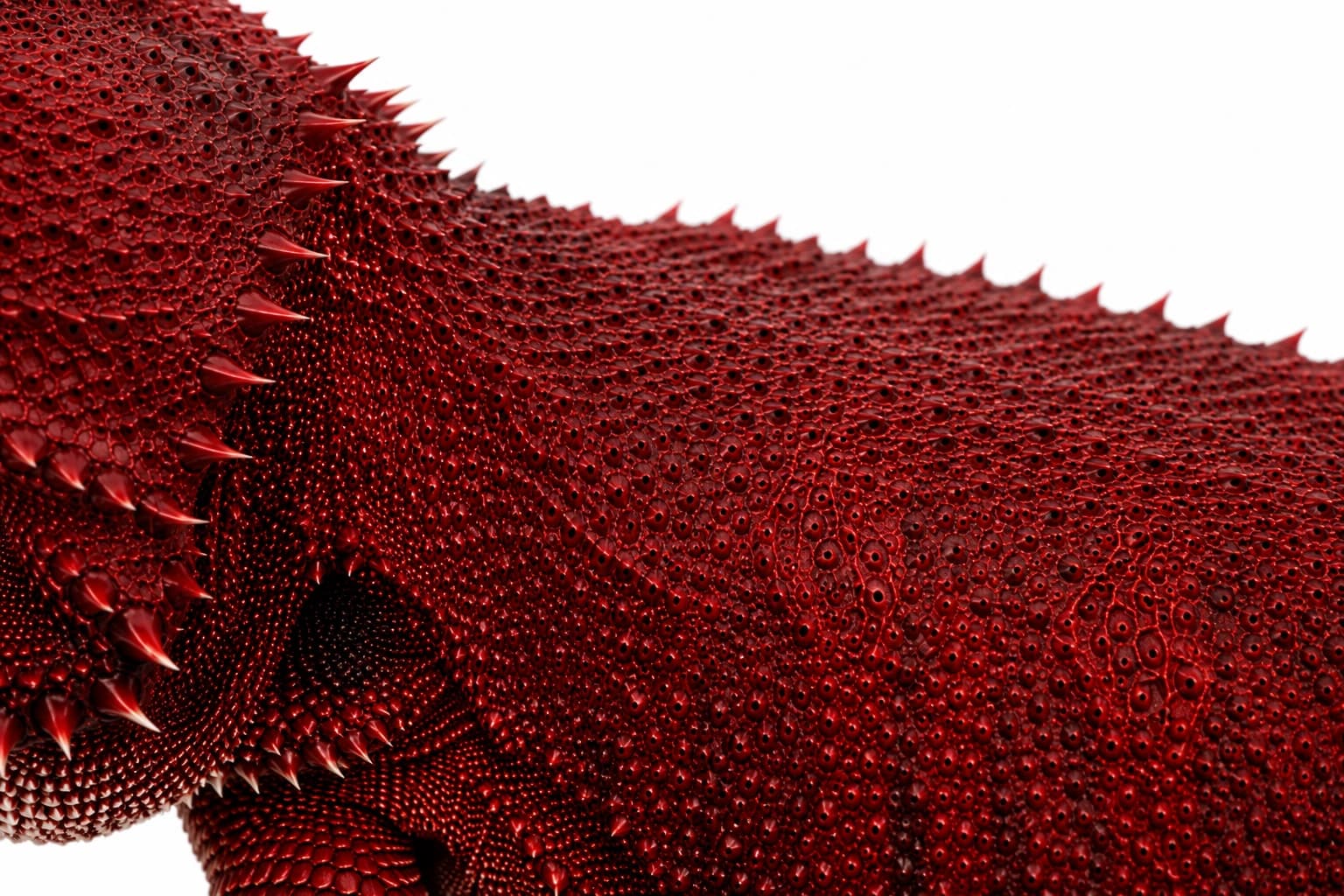
The characteristic visual feature of Red Monster is extensive, often exceptionally deep red pigmentation.
High-expression animals may display crimson, ruby, cherry, blood-red, wine or burgundy colour across most of the visible body.
The colour may be deeper and more extensive than that of many broadly described Red or Orange lines.
However, visual intensity alone does not prove Red Monster identity.
Red Monster is fundamentally a bloodline designation. A dragon should have documented ancestry connecting it to recognised Red Monster breeding stock.
An unrelated dragon can develop equally impressive red pigmentation through independent selective breeding.
For this reason, the defining identification combines two elements:
strong characteristic appearance and reliable pedigree information.
Descriptions such as full, pure, 100%, 75% or 50% Red Monster should be interpreted as ancestry claims rather than measurements of a gene.
A dragon described as half Red Monster does not necessarily display half the red colour of a full-line animal.
Polygenic traits do not divide visually according to simple pedigree percentages.
The extent of red expression can vary considerably even between closely related offspring.
Breeders should therefore describe both the ancestry and the actual phenotype rather than assuming one automatically proves the other.
Identification Guide
How to Identify a Red Monster Bearded Dragon
Red Monster cannot be identified reliably from colour alone.
Begin by examining the dragon’s pedigree.
The breeder should be able to identify the parents and explain how the animal connects to recognised Red Monster breeding stock.
Photographs of the parents, grandparents and mature siblings provide useful supporting evidence.
Vague claims such as imported blood, monster genetics or guaranteed pure line should not replace documented records.
Next, assess the visible phenotype under neutral lighting.
Look for extensive crimson, ruby, cherry, blood-red, wine or burgundy pigmentation across multiple areas of the head and body.
High-expression animals often display particularly dense colour around the head, shoulders and back.
Do not rely on edited sales photographs.
Warm lamps, saturated colour settings, increased contrast and selective image processing can transform orange-red animals into apparently dark crimson dragons.
Compare photographs taken in natural or balanced light and request images from different ages.
Consider adult development.
Juvenile Red Monster descendants can change substantially through repeated sheds. Some deepen in colour, while others remain more orange, patterned or moderate in expression.
Distinguish Red Monster from generic Red.
Red is a broad polygenic colour description. Red Monster is a pedigree-based line. An exceptionally red dragon without documented Red Monster ancestry should be described as Red rather than assigned to the bloodline.
Interpret percentage claims carefully.
A 50% Red Monster description generally indicates that one parent was claimed to be full-line Red Monster. It does not guarantee a specific colour, health outcome or breeding result.
Evaluate other morph traits separately.
Clear claws indicate Hypo. Reduced dorsal scales indicate Leatherback. Multidirectional scales indicate Dunner. Dark eyes and reduced skin opacity may support Translucent.
Finally, investigate the breeder’s health records.
Responsible breeders should be willing to discuss outcrossing, relatedness of the pairing, hatchling survival, growth, congenital abnormalities and the long-term health of previous offspring.
The strongest identification combines documented lineage, consistent adult appearance, transparent breeding records and honest neutral photography.
Juvenile Development
What Does a Juvenile Red Monster Bearded Dragon Look Like?
Juvenile Red Monster Bearded Dragons may display strong red, orange-red, crimson or burgundy pigmentation from an early age.
Some hatchlings show extensive colour across the head, shoulders, back and limbs. Others begin with a more patterned orange, coral or muted red appearance and develop deeper colour through repeated sheds.
The final adult appearance cannot be guaranteed from one juvenile photograph.
A vividly coloured hatchling may retain, deepen or soften its red pigmentation. A more moderate juvenile may develop stronger colour as it matures.
Lineage can provide useful expectations, but Red Monster remains a complex selectively developed bloodline.
Clutchmates may differ considerably in colour intensity, coverage, pattern and adult development.
Juvenile pattern is often more prominent than adult pattern.
Dark dorsal markings, lateral bars and tail bands may contrast strongly with the red base. These markings may soften, remain visible or become less organised as the animal grows.
A strongly red juvenile is not automatically a Red Monster.
Unrelated Red, Orange and Red Tiger lines can produce similarly vivid hatchlings. Documented ancestry is required before applying the Red Monster name.
Labels such as full Red Monster, 100% Red Monster, half Red Monster or 50% Red Monster describe claimed pedigree rather than a visual percentage.
A juvenile described as half Red Monster does not have to display exactly half the colour intensity of a full-line parent.
Other morphs must be identified independently.
Clear claws indicate visual Hypo. Reduced dorsal scales indicate Leatherback. Multidirectional scales indicate Dunner. Dark eyes and reduced juvenile skin opacity may support Translucent.
Colour frequently becomes dull before a shed.
The skin may appear pale, grey or washed out before the old layer separates. Freshly shed areas commonly reveal cleaner pigmentation.
Temperature and lighting also influence appearance.
A cold or stressed juvenile may become darker, while a warm and relaxed dragon may appear brighter. Warm lamps and image editing can exaggerate red colour.
Health and growth must be evaluated separately from appearance.
A juvenile should show appropriate growth, strength, coordination, appetite and body structure. Poor growth or weakness must not be dismissed as a normal characteristic of the bloodline.
Breeders should retain and monitor juveniles long enough to assess development rather than selecting or selling them solely according to early colour.
Appearance
Red Monster Bearded Dragon Appearance
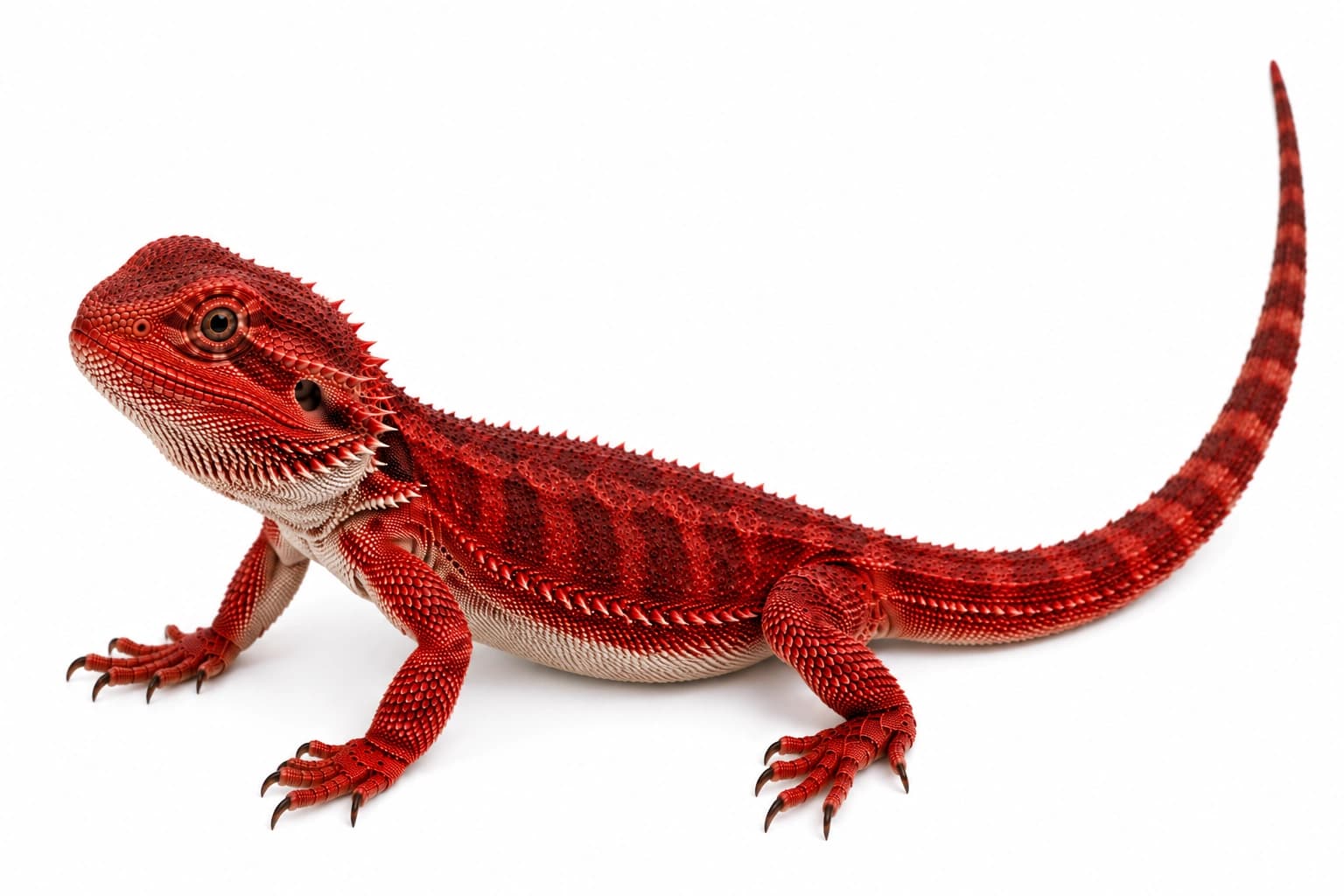
Red Monster Bearded Dragons are valued for extensive deep-red pigmentation.
The visible colour may range from bright scarlet and crimson to ruby, cherry, blood red, wine and dark burgundy.
In high-expression adults, red may cover most of the head, shoulders, back, sides, limbs and tail.
The head is frequently one of the most intensely coloured regions. Dense red may extend across the snout, brow, cheeks, beard and jaw margins.
Some individuals retain visible pattern, including darker dorsal markings, side bars or tail bands. Others have been selected for a cleaner or more uniform red appearance.
Pattern intensity does not prove or disprove Red Monster ancestry.
A heavily patterned animal may still descend from the line, while an unrelated polygenic Red dragon may have very little visible pattern.
Scale structure remains separate from Red Monster lineage.
A normally scaled Red Monster retains the standard rough dorsal scales of Pogona vitticeps.
A Red Monster Leatherback has reduced dorsal scalation because of the independent Leatherback trait. Its smoother back may make the red colour appear more continuous.
A Red Monster Dunner may show multidirectional scales and disrupted markings. A Red Monster Genetic Stripe may display longitudinal dorsal patterning.
Claw pigmentation also depends on separate genetics.
A non-Hypo Red Monster may have dark pigment within the claws. Clear claws indicate visual Hypo.
Eye appearance is not defined by Red Monster.
Very dark or solid-looking eyes may be associated with Translucent expression or individual variation rather than the Red Monster lineage itself.
Red intensity can change temporarily.
A cold dragon may darken and appear more burgundy. A warm and relaxed dragon may become brighter. Stress, shedding, courtship and territorial behaviour can also influence visible colour.
Skin approaching a shed often becomes dull, grey or pale before revealing cleaner pigmentation underneath.
Lighting and photography can significantly alter apparent redness.
Warm lamps, increased saturation, contrast adjustments and selective editing can make an ordinary Red or Orange dragon appear closer to the marketed Red Monster appearance.
Identification must therefore combine neutral photographs with reliable pedigree information.
Adult Development
Adult Red Monster Bearded Dragon
Adult Red Monster Bearded Dragons may display extensive crimson, ruby, cherry, blood-red, wine or burgundy pigmentation.
High-expression adults can develop dense red colour across most of the head, shoulders, back, sides, limbs and tail.
The head is often particularly intense, with red extending across the snout, cheeks, brow, beard and jaw margins.
Adult expression remains variable.
Some animals develop a cleaner and more uniform appearance, while others retain dark bands, tail markings, orange undertones or contrasting pattern.
A dragon with documented Red Monster ancestry does not have to be completely patternless or uniformly red.
Likewise, an unrelated Red dragon may develop equally impressive pigmentation without belonging to the Red Monster line.
Adult colour cannot replace pedigree documentation.
Scale structure depends on separate genetics.
A normally scaled Red Monster retains standard dorsal scales. A Red Monster Leatherback has reduced dorsal scalation, potentially making the colour appear more continuous.
A Red Monster Dunner may show multidirectional scales and disrupted markings. A Red Monster Tiger may retain prominent transverse bands.
Claw and eye characteristics are also independent.
Clear claws indicate visual Hypo. Very dark or solid-looking eyes may be connected with Translucent expression or individual variation.
Colour can change temporarily.
A cold adult may become darker and more burgundy. A warm and relaxed animal may look brighter. Stress, courtship, territorial behaviour and shedding can also affect visible pigmentation.
Adult health should not be judged from colour.
Body condition, movement, posture, appetite, weight, breathing, coordination, skeletal structure and long-term veterinary history provide more useful health information.
The Red Monster label should never be used to excuse poor growth, abnormal structure, neurological signs or chronic illness.
Genetics
Red Monster Genetics and Inheritance
Red Monster is a selectively developed bloodline rather than one identified genetic mutation.
Its appearance is complex and polygenic.
Multiple genetic factors influence red intensity, shade, pattern, coverage, head colour and adult development.
There is no single established Red Monster allele.
For this reason, Red Monster cannot be calculated using a simple dominant or recessive Punnett square.
There is no recognised Het Red Monster classification.
A dragon does not secretly carry one recessive Red Monster gene in the way that a visually Normal animal may carry Hypo, Translucent, Zero or Witblits.
Descriptions such as 100%, 75%, 50% or 25% Red Monster normally refer to the claimed proportion of ancestry originating from the bloodline.
They do not describe allele dosage.
They also do not guarantee an equivalent percentage of red pigmentation, pattern, health or breeding value.
For example, an animal described as 50% Red Monster may inherit strong red expression, moderate colour or very little visible resemblance to the full-line parent.
A full-line animal may also display less red than an unrelated high-quality Red dragon.
Polygenic traits are inherited through complex combinations rather than being divided visually according to pedigree fractions.
Selective breeding can make particular characteristics more common within a line.
Breeders may repeatedly select animals showing extensive deep-red pigmentation, reduced unwanted colour, strong head colour and stable adult expression.
However, repeated line breeding can reduce genetic diversity when closely related animals are used too frequently.
Reduced diversity can increase the probability that harmful recessive variants shared within the line will meet in offspring.
This is a general genetic concern associated with intensive inbreeding and is not proof that every Red Monster is unhealthy.
There is currently limited peer-reviewed research specifically comparing verified Red Monster pedigrees with unrelated Pogona vitticeps populations.
Reports of poor growth, congenital abnormalities, reduced vigour, neurological signs, eye problems or shortened survival in some lines largely come from breeders, keepers and community observations.
These reports deserve attention but should not be presented as a scientifically measured disease rate across every Red Monster line.
Responsible outcrossing can introduce greater genetic diversity.
Outcrossed descendants may display more variable colour or reduced resemblance to high-expression full-line animals, but visual consistency must not take priority over health.
Red Monster genetics remain separate from established morphs.
A Red Monster Hypo combines bloodline ancestry with the recessive Hypo trait. A Red Monster Translucent combines the lineage with Translucent genetics.
Each confirmed morph must be calculated and documented independently.
Trait type
Selectively developed polygenic bloodline
Inheritance
Complex rather than one simple dominant or recessive mutation
Red Monster allele
No single identified Red Monster allele is recognised
Het Red Monster
Not a valid genetic classification
Percentage descriptions
Refer to claimed ancestry, not allele dosage or guaranteed appearance
Visual expression
Extensive crimson, ruby, cherry, blood-red or burgundy pigmentation
Lineage
Essential for confirming a Red Monster claim
Genetic diversity
Important because intensive line breeding can concentrate shared harmful variants
Health evidence
Bloodline-specific peer-reviewed research remains limited
Care Guide
Caring for a Red Monster Bearded Dragon
A healthy Red Monster Bearded Dragon requires the same fundamental husbandry as other Pogona vitticeps.
Red Monster ancestry does not create a separate basking temperature, UVB requirement, diet or enclosure type.
The enclosure must provide sufficient usable space for movement, climbing, basking, hiding and behavioural thermoregulation.
A bright basking area should be positioned at one end, with cooler and more shaded conditions available elsewhere.
A suitable linear UVB lamp is essential.
UVB exposure supports vitamin D3 production, calcium metabolism, skeletal health and muscular function. The UVB source should overlap appropriately with the basking area while allowing access to shade and lower exposure.
Temperatures should be measured with reliable equipment rather than estimated by touch.
Diet must be appropriate for the dragon’s age, size, body condition and health.
Growing juveniles generally require more frequent access to appropriately sized live invertebrates. Healthy adults usually consume a greater proportion of varied leafy greens and safe vegetables.
Feeder insects should be correctly sized, well gut-loaded and supplemented according to an appropriate calcium and vitamin schedule.
Diet cannot create or strengthen Red Monster ancestry.
Good nutrition supports normal pigmentation and growth, but colour-enhancing foods or supplements cannot transform an unrelated Red dragon into a Red Monster.
Because concerns have been raised about poor growth and reduced vigour in some intensively line-bred populations, owners should monitor development carefully.
Body weight should be recorded regularly during growth. Weight should be interpreted together with body condition, length, appetite, activity and skeletal development rather than treated as an isolated target.
Normal movement and coordination should also be observed.
Persistent shaking, seizures, repeated loss of balance, abnormal head position, weakness or difficulty using the limbs is not a normal characteristic of Red Monster colour and requires veterinary assessment.
The jaw, limbs, spine and tail should develop without progressive deformity. Swelling, softness, abnormal curvature or weakness may indicate nutritional, metabolic, developmental or other medical problems.
Eye health should be monitored.
Persistent swelling, discharge, inability to open an eye, cloudiness or repeated irritation should not be dismissed as a bloodline characteristic.
Colour changes alone do not diagnose health.
A cold dragon may darken, while stress, social signalling and shedding can temporarily change visible pigmentation. Skin approaching a shed frequently becomes pale or dull.
Persistent appetite loss, weight loss, lethargy, breathing changes, abnormal stools or failure to grow require investigation from a veterinarian experienced with reptiles.
Prospective owners should ask the breeder about parentage, relatedness, hatchling survival, congenital abnormalities, growth records and the long-term health of previous offspring.
A premium colour label is never a substitute for transparent health information.
UVB
Provide a suitable linear UVB source that overlaps with the basking area and creates access to appropriate exposure and shade.
Heating
Create a bright basking zone and a cooler end so the dragon can regulate its body temperature naturally.
Diet
Offer an age-appropriate combination of nutritious live insects, leafy greens and safe vegetables.
Growth monitoring
Record juvenile weight and development regularly, considering body condition, length, appetite and skeletal growth together.
Neurological signs
Shaking, seizures, loss of balance or abnormal coordination are not normal morph characteristics and require veterinary assessment.
Breeder records
Request pedigree, relatedness, hatchling survival and long-term health information rather than relying on colour or percentage labels.
Breeding
Red Monster Breeding and Genetic Outcomes
Breeding Red Monster Bearded Dragons requires more than pairing two intensely red animals.
Red Monster is a bloodline, so breeders must maintain accurate pedigree records and understand the degree of relatedness between potential parents.
There are no reliable Mendelian percentages for Red Monster appearance.
Pairing two full-line animals may preserve a higher proportion of the ancestry and increase the probability of characteristic expression, but it does not guarantee identical colour or health in every offspring.
It may also increase genetic risk if the parents are closely related or descend repeatedly from the same limited ancestors.
The label full or 100% Red Monster should not be treated as proof of superior quality.
A visually impressive animal may still come from a genetically narrow pairing. A responsibly outcrossed animal may display more variable colour while contributing valuable diversity.
Before breeding, the health of both parents should be evaluated.
Breeding animals should show normal growth, strong skeletal structure, coordinated movement, appropriate body condition, healthy eyes and jaw alignment, normal feeding behaviour and no unexplained chronic illness.
The health of relatives is also relevant.
Breeders should monitor hatch rates, congenital abnormalities, early deaths, growth patterns and the adult health of previous offspring.
Animals displaying unexplained neurological signs, severe structural abnormalities, persistent failure to thrive or suspected inherited disease should not be bred.
Outcrossing should be planned rather than treated as a marketing phrase.
A genuine outcross introduces unrelated or substantially less-related genetics. Simply pairing animals from differently named sellers does not guarantee meaningful diversity if both descend from the same founding stock.
Outcrossed offspring should be labelled transparently.
A cross between a Red Monster and an unrelated Red dragon may be described as a Red Monster cross, half-line or outcrossed Red Monster descendant when pedigree supports that statement.
It should not automatically be marketed as a full Red Monster.
Colour selection should continue only among healthy animals.
Producing the darkest possible red is not a sufficient reason to repeat a pairing associated with weak offspring, congenital defects or reduced survival.
Long-term welfare, genetic diversity and transparent records must take priority over colour intensity.
Red Monster × Red Monster
May preserve a high proportion of Red Monster ancestry and characteristic expression, but colour remains variable. The pairing requires careful pedigree review because closely related parents may increase genetic risk.
Unrelated Red Monster × Red Monster
May provide greater diversity than a close line pairing when the animals are genuinely less related. Pedigrees must be examined because different sellers may still share common ancestors.
Red Monster × unrelated Red
Produces Red Monster outcross descendants with variable red expression. Offspring should be labelled transparently as crosses or partial-line animals rather than full Red Monsters.
Red Monster cross × unrelated Red
May introduce additional diversity while producing a wide range of Red, Orange and intermediate expression. The precise Red Monster appearance cannot be guaranteed.
Red Monster × Orange
May produce red, coral, orange-red, tangerine or intermediate offspring. Red Monster ancestry and visible colour should be described separately.
Red Monster Hypo × Red Monster Hypo
All offspring are genetically expected to be visual Hypo when both parents are confirmed visual Hypo. Red Monster expression remains polygenic, and the relatedness of the parents must still be evaluated.
Red Monster Het Hypo × Red Monster Het Hypo
Hypo follows recessive probability, while Red Monster appearance does not. Approximately 25% visual Hypo is expected statistically, but no fixed Red Monster-colour percentage exists.
Red Monster Translucent × Red Monster Het Translucent
Translucent follows recessive inheritance, while Red Monster expression remains variable. The health history and relatedness of both bloodlines require careful consideration.
Red Monster Leatherback × Normal-scale Red outcross
Leatherback inheritance must be calculated separately. Offspring may display variable scale type and red colour while carrying partial Red Monster ancestry.
Red Monster × close relative
This pairing may increase genetic similarity and the probability that shared harmful variants meet in offspring. It should not be performed merely to preserve colour or a percentage-line label.
Important Red Monster Breeding and Welfare Note
Red Monster is a selectively developed bloodline, not one simple genetic mutation. Concerns about limited genetic diversity and intensive line breeding are widely discussed within the Bearded Dragon community. Some breeders and keepers report poor growth, congenital abnormalities, reduced vigour, neurological signs, eye problems and shortened survival in particular lines. These observations should be taken seriously, but there is currently limited peer-reviewed research measuring how frequently these problems occur across verified Red Monster pedigrees. It would therefore be inaccurate to state that every Red Monster is unhealthy or that one specific disease is caused directly by the Red Monster colour. However, intensive inbreeding can increase the probability that harmful recessive variants shared within a family will be expressed. Preserving extreme colour does not justify repeatedly breeding closely related or unhealthy animals. Responsible programmes should maintain detailed pedigrees, introduce meaningful outcrosses, monitor offspring into adulthood and remove animals with suspected inherited health problems from breeding. Descriptions such as 100%, 75% or 50% Red Monster refer to claimed ancestry. They do not guarantee colour, health, quality or genetic diversity. Health, structure, temperament, longevity and welfare must always take priority over producing the deepest possible red pigmentation.
Identification Mistakes
Common Misidentifications
Red Monster vs Red
Red is a broad polygenic colour category. Red Monster is a particular selectively developed bloodline. An extremely red dragon without documented Red Monster ancestry should be described as Red.
View comparison morph →Red Monster vs Extreme Red
Extreme Red generally describes unusually intense red pigmentation and is not one confirmed mutation. It does not automatically establish Red Monster ancestry.
View comparison morph →Red Monster vs Orange
Orange lines emphasise tangerine, amber, apricot or pumpkin pigmentation. Red Monster animals usually emphasise deeper crimson, cherry, ruby or burgundy expression, but lineage remains essential.
View comparison morph →Red Monster vs Hypo Red
Hypo Red combines red colour with the recessive Hypo trait and clear claws. Red Monster describes ancestry and can occur with or without Hypo.
View comparison morph →Full-line vs outcrossed Red Monster
Full-line and outcrossed describe pedigree history, not guaranteed colour or health. Outcrossed descendants should be labelled transparently rather than automatically called full Red Monsters.
Red Monster colour vs edited photography
Warm lighting, high saturation and increased contrast can make an ordinary Red or Orange dragon look significantly darker and redder.
Morph Comparison
How Red Monster Compares With Other Morphs
Frequently Asked Questions
Red Monster Bearded Dragon FAQ
What is a Red Monster Bearded Dragon?
A Red Monster Bearded Dragon belongs to a selectively developed bloodline known for extensive crimson, ruby, cherry or burgundy pigmentation. It is a lineage rather than one simple genetic mutation.
Is Red Monster a true genetic morph?
Red Monster appearance is inherited, but it is not controlled by one recognised dominant or recessive allele. It is a complex selectively developed bloodline.
Is Red Monster dominant or recessive?
Red Monster does not follow a recognised simple dominant or recessive inheritance model.
Can a Bearded Dragon be Het Red Monster?
No. There is no recognised Het Red Monster classification because Red Monster is not one recessive mutation.
How do you identify a Red Monster Bearded Dragon?
Reliable identification requires documented Red Monster ancestry together with consistent bloodline characteristics. Deep-red colour alone is insufficient.
Can you identify Red Monster from a photograph?
A photograph may show characteristic colour, but it cannot prove ancestry. Pedigree information is required.
What does 100% Red Monster mean?
It normally claims that the documented pedigree comes entirely from Red Monster bloodlines. It does not describe allele dosage or guarantee colour, health or quality.
What does 50% Red Monster mean?
It generally means that approximately half of the documented ancestry came from Red Monster breeding stock, often through one full-line parent.
Does a 50% Red Monster display half as much red?
No. Pedigree percentages do not translate directly into percentages of visible colour.
Is Red Monster the same as Red?
No. Red is a broad polygenic colour category. Red Monster is a specific selectively developed lineage.
Is Extreme Red the same as Red Monster?
No. Extreme Red generally describes intense red pigmentation. Without documented Red Monster ancestry, an Extreme Red dragon should not be assigned to that bloodline.
Can a normal Red dragon look like a Red Monster?
Yes. Independent Red lines can produce equally intense pigmentation, which is why appearance cannot prove Red Monster ancestry.
Are all Red Monster Bearded Dragons unhealthy?
No. It would be inaccurate to claim that every Red Monster is unhealthy. Individual health depends on genetics, breeding decisions, husbandry and veterinary care.
Why are there health concerns about Red Monsters?
The concerns relate primarily to limited genetic diversity and intensive line breeding reported in some bloodlines. Close breeding can increase the chance that shared harmful variants are expressed.
Are Red Monster health problems scientifically proven?
There is limited peer-reviewed research specifically measuring health outcomes across verified Red Monster pedigrees. Many concerns are currently based on breeder and keeper observations plus general genetic principles.
What health problems have been reported in some lines?
Community reports include poor growth, reduced vigour, structural abnormalities, neurological signs and eye problems. These reports do not prove that every case is genetic or that every Red Monster is affected.
What should I ask a Red Monster breeder?
Ask for pedigree records, parental relatedness, outcross history, hatchling survival, growth information, congenital abnormality rates and long-term health reports from previous offspring.
What is an outcrossed Red Monster?
It is a descendant produced by breeding Red Monster stock with an unrelated or substantially less-related dragon to introduce genetic diversity.
Is every Red Monster cross healthier?
Not automatically. Health depends on the quality, relatedness and genetic background of both parents. Outcrossing is valuable only when planned and documented responsibly.
Can Red Monster be combined with Hypo?
Yes. A Red Monster Hypo combines the bloodline with the recessive Hypo trait and characteristically clear claws.
Can Red Monster be combined with Translucent?
Yes. Translucent follows its own recessive inheritance and must be tracked separately from Red Monster ancestry.
Can Red Monster be combined with Leatherback?
Yes. Leatherback changes dorsal scale structure and may make the red pigmentation appear cleaner.
Can Red Monster be combined with Dunner?
Yes. Dunner affects scale direction and pattern organisation, while Red Monster describes bloodline ancestry and selected appearance.
Can Red Monster be combined with Tiger?
Yes. A Red Monster Tiger may display prominent transverse bands against a deep-red background.
Do Red Monster juveniles become redder with age?
Some deepen significantly through repeated sheds, while others remain more orange, patterned or moderate. Adult colour cannot be guaranteed.
Do Red Monster Bearded Dragons require special care?
Their fundamental husbandry is the same as for other Pogona vitticeps, but careful growth and health monitoring is sensible when purchasing from a heavily selected line.
Does diet make a Red Monster more red?
A balanced diet supports normal health and pigmentation but cannot create Red Monster ancestry or guarantee deeper colour.
Can photographs exaggerate Red Monster colour?
Yes. Warm lighting, increased saturation, contrast and selective editing can make Red and Orange dragons appear much darker and redder.
Should closely related Red Monsters be bred together?
They should not be paired merely to preserve intense colour. Relatedness, existing diversity, health records and the risk of concentrating harmful variants must be considered.
What is more important than Red Monster percentage?
Health, body structure, temperament, longevity, transparent pedigree records and meaningful genetic diversity are more important than a percentage label.
Continue Exploring
Related Morphs
Continue Learning
Bearded Dragon Care Guides
Explore our practical guides covering enclosure setup, UVB lighting, heating, feeding, humidity, enrichment and everyday Bearded Dragon care.
Explore Care Guides →Scientific References
This article was prepared using established zoological, husbandry and scientific references.