Genetic Morphs
Paradox
Bearded Dragon
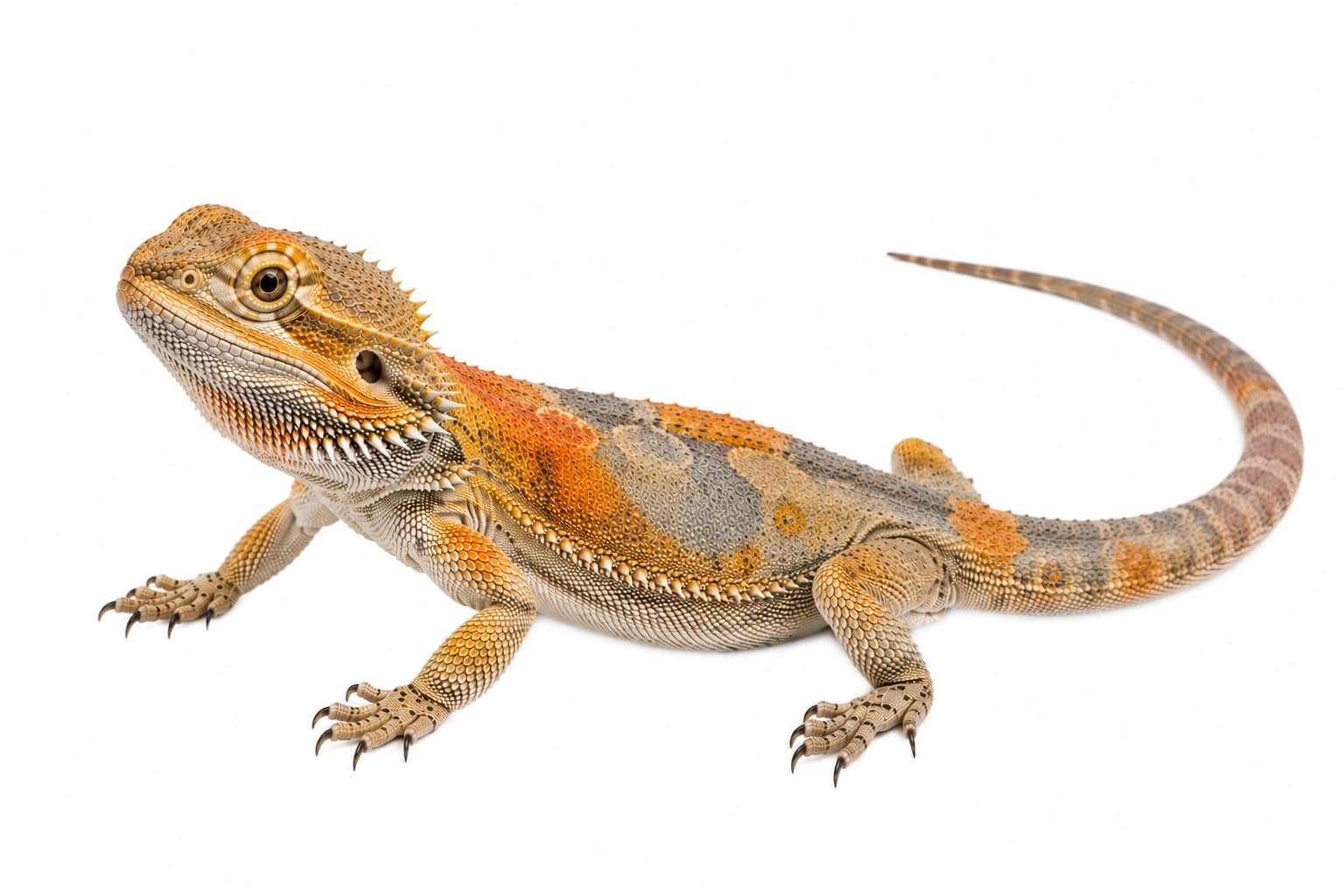
An unpredictable phenotype recognised by irregular patches of unexpected colour that do not follow the dragon's ordinary body pattern.
A Paradox Bearded Dragon displays random, asymmetrical areas of unexpected pigmentation that do not follow the animal's normal pattern or the predictable appearance of its underlying morphs. Paradox is a descriptive phenotype rather than a proven simple dominant or recessive mutation.
Trait type
Anomalous phenotype
Inheritance
Not predictably established
Markings
Random and asymmetrical
Possible colours
Blue, grey, purple, red or dark
Scale type
Depends on underlying genetics
Reproducibility
Not guaranteed
Morph DNA
Paradox Morph Profile
trait
Paradox expression
trait Type
An anomalous visual phenotype involving unexpected localised pigmentation or pattern expression
inheritance
No reliable simple dominant, recessive or incomplete-dominant pattern has been established
visual Expression
Random spots, patches, streaks, smudges or divided areas of unexpected colour
hidden Traits
There is no established Het Paradox carrier category comparable with Het Hypo or Het Zero
beginner Friendly
Care can be standard when the dragon is otherwise healthy, but accurate identification requires caution
Morph Overview
What Is a Paradox Bearded Dragon?
The Paradox Bearded Dragon is recognised by unusual patches of colour or pattern that appear independently from the animal's expected appearance.
The term Paradox is descriptive. It identifies an anomalous visual phenotype rather than one established simple mutation with predictable Mendelian inheritance.
A Paradox dragon may display random blue-grey, lavender, purple, black, red, orange, white or unusually pale markings across the head, body, limbs or tail.
These markings do not form the organised bands, stripes or symmetrical shapes associated with ordinary Bearded Dragon pattern.
One animal may have a small isolated patch, while another may display extensive contrasting pigmentation covering a significant portion of the body.
The left and right sides may look completely different. A marking may occur on one limb, one side of the head or one section of the tail without a corresponding mark on the opposite side.
Paradox expression can occur over other visible morphs and colour lines. A dragon may therefore be described as Hypo Translucent Paradox, Zero Paradox, Genetic Stripe Paradox or another combination when its underlying traits are independently established.
Paradox should not be treated as a standard recessive trait. Breeding two Paradox dragons does not guarantee Paradox offspring.
There is no established Het Paradox category equivalent to Het Hypo, Het Translucent, Het Zero or Het Witblits.
Several biological mechanisms can potentially create paradoxical appearance, including genetic mosaicism, chimerism or localised differences in pigment-cell development.
The exact mechanism behind every Paradox Bearded Dragon has not been confirmed. Visually similar animals may not all share one biological cause.
For this reason, Beardie App uses careful language and does not present all Paradox dragons as expressions of one proven gene.
The term has sometimes been associated with particular breeding projects or combinations, but breeder observations should be separated from conclusions confirmed through molecular testing.
Paradox appearance itself does not automatically prove poor health. However, breeding decisions should consider the complete lineage and health history rather than selecting exclusively for unusual markings.
Head Details
Head, Eyes and Facial Markings
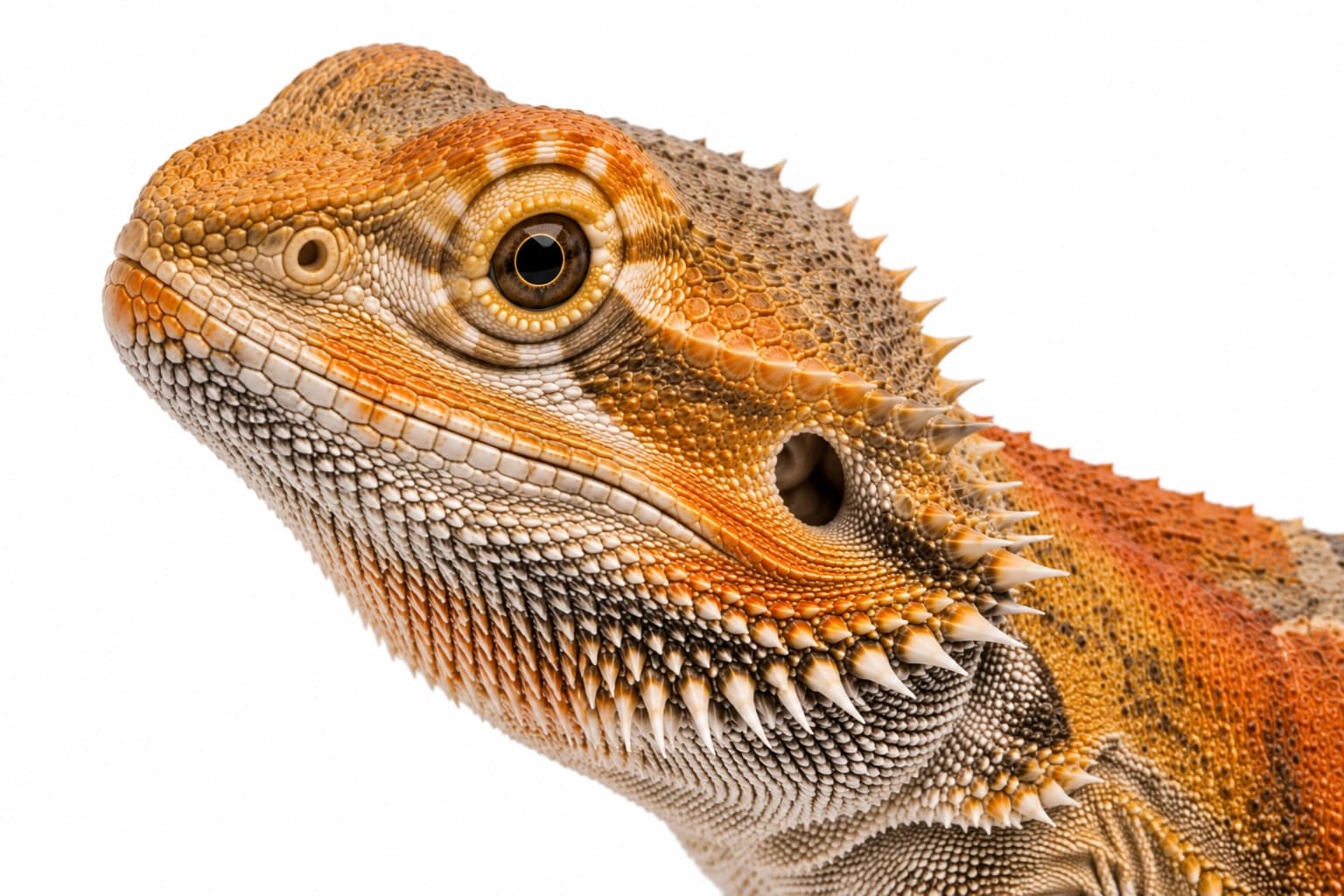
Paradox expression can affect the head in many different ways.
One side of the face may contain pigmentation absent from the other side. A patch may cross the snout, brow, cheek, jaw or beard without following the ordinary facial pattern.
Some animals display a sharply divided facial appearance, while others have only a small isolated mark.
Eye appearance can also differ when the dragon carries other traits or when pigment expression around the eyes is asymmetrical.
Different-looking eyes should be evaluated carefully. Paradox labelling should not be used to dismiss inflammation, injury, retained shed or other ocular concerns.
The head retains the ordinary triangular anatomy and facial scalation associated with the dragon's underlying structural genetics.
A Paradox Leatherback may have reduced scales, while a standard-scaled Paradox retains ordinary facial and dorsal scalation.
The beard can still darken during stress, courtship and territorial behaviour. Temporary beard darkening is not itself Paradox expression.
Characteristic Feature
Random Patches of Unexpected Pigmentation
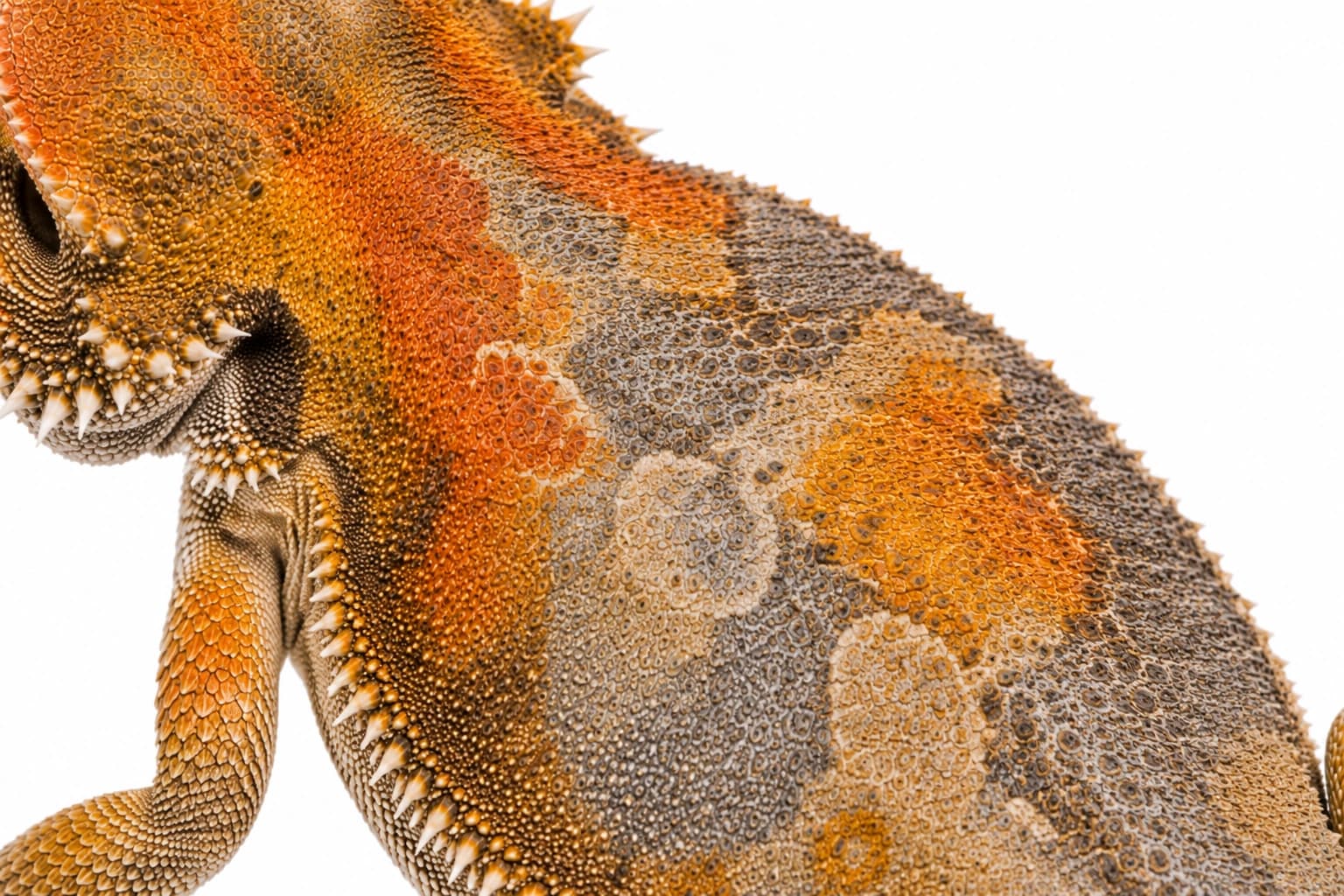
The defining characteristic of Paradox is a localised area of pigmentation that contradicts the dragon's expected colour or pattern.
The marking may look like a splash, spot, streak, smudge or sharply defined patch.
It generally appears without symmetry and does not follow ordinary dorsal bands, tail rings, tiger markings or genetic stripes.
The colour can be dramatically different from the surrounding skin. Blue-grey, lavender, purple, black, red, orange, white and cream patches have all been described.
Expression varies from subtle to extreme. A small patch can qualify as anomalous, but identification should be cautious when only one weak mark is present.
The feature must be distinguished from environmental staining, retained shed and injury.
Substrate, food, faecal material and enclosure decoration can temporarily stain the skin.
Approaching shed can create pale or dull patches, while burns, bruising, scars and infection may produce abnormal colour.
A persistent marking present across shedding cycles and supported by reliable developmental photographs provides stronger evidence than one isolated image.
Identification Guide
How to Identify a Paradox Bearded Dragon
Identifying Paradox requires careful observation and exclusion of non-genetic causes of unusual colour.
Begin by examining whether the marking follows an ordinary body pattern.
Normal bands, tail rings, tiger markings and Genetic Stripe expression are organised features. Paradox patches generally appear irregularly and without predictable symmetry.
Compare both sides of the body. Paradox expression is frequently asymmetrical, although asymmetry alone does not prove the phenotype.
Review photographs taken during earlier life stages and across several shedding cycles.
A persistent or developing colour patch that remains after shedding provides stronger evidence than a temporary pale area.
Check whether the area can be explained by retained shed. Skin approaching a shed commonly becomes dull, pale or cloudy before separating.
Check for environmental staining from food, substrate, waste or enclosure surfaces.
Inspect the skin for swelling, broken tissue, crusting, tenderness or other evidence of injury or disease.
Burns, bruises, scars, infection and pigment-cell tumours can produce localised colour changes and require veterinary assessment.
Evaluate all underlying traits separately. Clear claws suggest Hypo, dark eyes may suggest Translucent and reduced dorsal scales indicate Leatherback.
Paradox does not replace those genetic labels.
Reliable breeder records can support identification, but no pairing can guarantee Paradox expression under a simple inheritance model.
The strongest identification combines persistent anomalous pigmentation, developmental history, exclusion of health problems and knowledgeable evaluation of the dragon's underlying morphs.
Juvenile Development
What Does a Juvenile Paradox Bearded Dragon Look Like?
Juvenile Paradox Bearded Dragons may display anomalous pigmentation from hatching, but expression can also become more obvious during growth.
A young dragon may initially have only a small blue-grey, lavender, purple, dark or unusually pale mark.
As the animal grows and sheds, the patch may become larger, darker, more sharply defined or easier to distinguish from the underlying colour.
Other individuals show dramatic expression from an early age, with extensive contrasting patches across the head, body, limbs or tail.
The markings usually do not form the symmetrical bands and organised pattern elements expected in ordinary juveniles.
Juvenile identification requires caution because young Bearded Dragons undergo frequent shedding.
Skin approaching a shed can appear pale, grey, cloudy or uneven. This temporary appearance should not be mistaken for Paradox expression.
Environmental staining from food, substrate or waste can also create temporary colour patches.
Developmental photographs taken under neutral lighting are valuable. A persistent mark visible before and after several sheds provides stronger evidence than a single image.
A juvenile should still demonstrate healthy growth, movement, appetite and behaviour.
Unusual colour accompanied by swelling, damaged skin, weakness or behavioural change requires veterinary assessment and should not be assumed to be a harmless morph characteristic.
Appearance
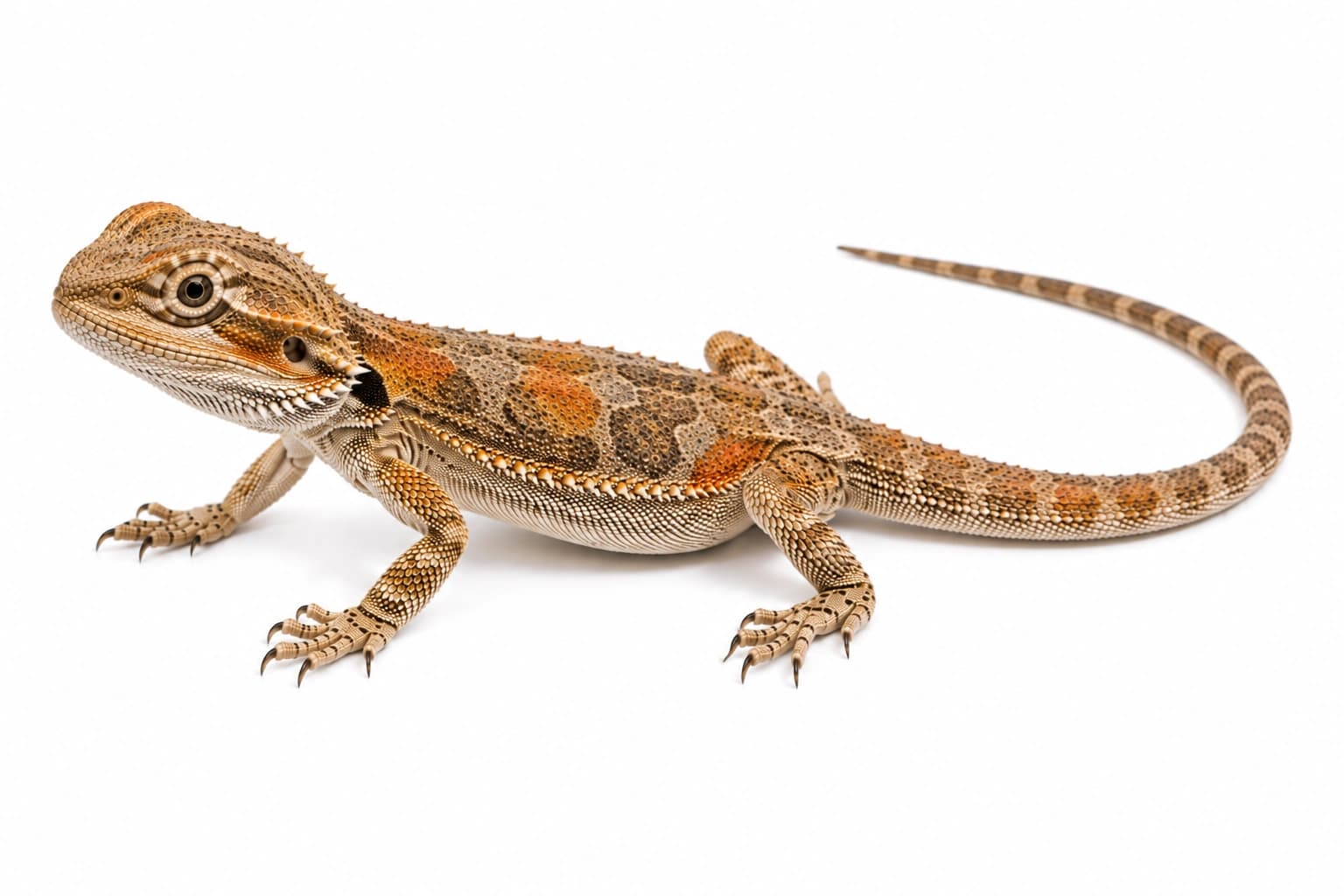
Paradox Bearded Dragon Appearance
Paradox Bearded Dragons can vary more dramatically than almost any established morph category.
The defining markings may appear as spots, streaks, splashes, smudges, sharply divided areas or irregular patches.
Possible colours include blue-grey, slate, lavender, purple, black, brown, red, orange, white and cream.
Not every Paradox dragon displays purple. The phrase Purple Paradox is a hobby description for particular purple or lavender expression rather than a requirement for all Paradox animals.
The anomalous colour may contrast strongly with the base phenotype.
A pale Hypo Translucent dragon might develop dark blue-grey patches. A warm orange dragon might display irregular purple, black or cream areas.
The markings generally do not follow ordinary dorsal bands, tail rings or symmetrical facial pattern.
Some animals display unilateral expression, with one side looking significantly different from the other.
More dramatic individuals may appear divided into contrasting sections, although an extreme split appearance is not required.
Pattern and colour can develop or become more obvious as the dragon grows.
The underlying scale structure depends on other inherited traits. A standard-scaled Paradox retains ordinary dorsal scales, while a Paradox Leatherback has a smoother back.
Paradox does not inherently produce clear claws, black eyes, reduced scales or a patternless body. These characteristics belong to separate traits.
A genuine anomalous patch should be distinguished from retained shed, staining, burns, scars, bruising, infection and other skin abnormalities.
Any sudden colour change accompanied by swelling, tissue damage, pain or behavioural change should be treated as a possible health problem rather than assumed to be Paradox.
Adult Development
Adult Paradox Bearded Dragon
Adult Paradox Bearded Dragons retain irregular areas of pigmentation that do not follow the expected body pattern.
Expression varies from one small patch to extensive contrasting colour covering large sections of the body.
The markings may be blue-grey, lavender, purple, black, brown, red, orange, white, cream or another colour that contrasts with the base phenotype.
Some adults display sharply defined patches, while others have softer smudges, speckles or streaks.
One side of the body may differ substantially from the other. The head, limbs and tail can each display separate forms of anomalous expression.
Not all adults become more dramatically marked with age. Some remain relatively subtle, while others show increased contrast after repeated sheds.
The underlying colour, scales, claws, eyes and pattern are determined by separate traits.
A Hypo Translucent Paradox can display clear claws and Translucent eye characteristics alongside anomalous colour patches.
A Paradox Leatherback has reduced dorsal scales because Leatherback is independently inherited.
Adult Paradox dragons can still darken or lighten temporarily due to temperature, stress, shedding and social behaviour.
Persistent anomalous markings should be distinguished from sudden localised colour changes caused by injury, burns, infection or pigment-cell disease.
New or changing adult skin lesions should be assessed by a reptile-experienced veterinarian rather than automatically labelled Paradox.
Genetics
Paradox Genetics and Inheritance
Paradox does not have an established simple dominant, recessive or incomplete-dominant inheritance model.
The term describes an anomalous visual phenotype rather than one confirmed allele with predictable breeding outcomes.
A Paradox dragon cannot be treated like a visual Hypo, Zero or Witblits for genetic calculations.
Breeding two Paradox dragons does not guarantee Paradox offspring.
Likewise, a Paradox parent may produce no visibly Paradox offspring, while anomalous expression can occasionally appear in offspring from animals without obvious Paradox markings.
There is no established Het Paradox category.
A visually ordinary offspring of a Paradox parent should not automatically be advertised as carrying a hidden Paradox gene.
Several biological mechanisms could potentially produce visually paradoxical animals.
Mosaicism occurs when groups of cells within one individual develop different genetic or pigment expression after fertilisation.
Chimerism occurs when an individual contains cell populations originating from more than one early embryo.
Localised developmental changes affecting chromatophores or pigment distribution can also create unusual patches.
These mechanisms are not interchangeable, and visual appearance alone cannot confirm which process occurred in one particular dragon.
Not every Paradox-labelled animal has received molecular or cellular testing.
For this reason, Beardie App does not claim that every Paradox dragon is scientifically confirmed as a chimera or mosaic.
Underlying established morphs must still be calculated normally.
If a Paradox dragon is proven visual Hypo, the Hypo gene follows recessive inheritance regardless of the unpredictable Paradox patches.
If the animal is Leatherback, Translucent, Zero or another established morph, those traits retain their own inheritance patterns.
Breeders should record the confirmed genetics separately from the descriptive Paradox phenotype.
Classification
Anomalous visual phenotype rather than a confirmed simple mutation
Inheritance
No predictable dominant, recessive or incomplete-dominant model
Het Paradox
Not an established or reliable carrier category
Paradox × Paradox
Does not guarantee Paradox offspring
Possible mechanisms
May include mosaicism, chimerism or localised pigment-development differences
Underlying morphs
Hypo, Translucent, Leatherback and other confirmed traits must be calculated separately
Care Guide
Caring for a Paradox Bearded Dragon
A healthy Paradox Bearded Dragon generally requires the same core husbandry as another healthy Pogona vitticeps.
Paradox describes unusual pigmentation rather than one established structural mutation with unique environmental requirements.
Care should be based on the dragon's complete phenotype.
A standard-scaled Paradox generally requires standard Bearded Dragon husbandry.
A Paradox Leatherback retains reduced dorsal scales but normally follows ordinary scaled-dragon care.
A Paradox Silkback requires specialised lifelong skin management because of the independently inherited scaleless phenotype.
A suitable enclosure must provide sufficient space for movement, climbing, basking, hiding and behavioural thermoregulation.
The dragon should have access to a bright basking zone together with a cooler shaded area.
A suitable linear UVB system is essential for vitamin D3 synthesis, calcium metabolism, skeletal health and normal muscular function.
Paradox markings do not justify weaker UVB or different temperatures.
Heating and UVB should create safe gradients, allowing the dragon to move between stronger exposure and shaded areas.
Diet should be appropriate for the animal's age, body condition and health.
Juveniles generally consume a greater proportion of appropriately sized live invertebrates, while healthy adults usually eat a larger proportion of varied leafy greens and safe vegetables.
Live food should be well nourished, appropriately sized and supplemented according to the animal's needs.
The skin should be monitored carefully because new discolouration can be mistaken for Paradox expression.
A stable genetic marking is different from a sudden area of redness, swelling, bruising, tissue damage, crusting or unusual pigment change.
Retained shed, burns, injuries, infection and pigment-cell tumours can produce localised changes in appearance.
Photographs taken regularly under similar lighting can help distinguish a stable marking from a developing health problem.
A veterinarian experienced in reptile medicine should assess new, changing or damaged areas of skin, especially when accompanied by pain, swelling, reduced appetite or behavioural change.
UVB
Provide an appropriate linear UVB system overlapping the basking zone, together with access to shade.
Heating
Create a bright basking area and a cooler end so the dragon can thermoregulate naturally.
Diet
Offer an age-appropriate balance of nutritious live food, leafy greens and safe vegetables.
Underlying morphs
Adjust care for independently inherited structural traits such as Silkback rather than for Paradox pigmentation itself.
Skin monitoring
Photograph stable markings and monitor for new swelling, wounds, crusting or rapidly changing pigmentation.
Shedding
Do not confuse temporary pale pre-shed areas with permanent Paradox markings.
Health changes
Sudden localised discolouration should be evaluated as a possible health problem.
Veterinary care
Consult a reptile-experienced veterinarian about new, damaged or rapidly changing skin areas.
Breeding
Paradox Breeding and Genetic Outcomes
Paradox should not be bred using a simple Punnett-square calculation because no reliable single-gene inheritance model has been established.
Pairing Paradox to Paradox does not guarantee Paradox offspring.
A breeder may produce no anomalously marked offspring from such a pairing, and the degree of expression cannot be predicted reliably.
A pairing involving a Paradox animal should instead be calculated using its confirmed underlying genetics.
For example, a visual Hypo Paradox paired with a visual Hypo is expected to follow the normal recessive Hypo calculation.
The possibility of Paradox markings is a separate and uncertain question.
Terms such as Het Paradox, possible Het Paradox or carrier Paradox should not be used as though Paradox were a proven recessive mutation.
Breeders should document the parents, confirmed morphs, health history, hatchling survival, developmental abnormalities and appearance of every offspring.
Unusual colour alone should not take priority over health, genetic diversity, body structure and temperament.
Paradox projects may involve multiple stacked traits and historically restricted bloodlines. This makes careful outcrossing and lineage management particularly important.
Claims that every Paradox dragon is unhealthy or neurologically affected are not supported by sufficient peer-reviewed evidence.
However, breeders must not use the absence of definitive research to ignore repeated health problems within a particular line.
If a pairing or lineage produces reduced hatchling survival, developmental abnormalities, neurological signs or poor overall vigour, breeding should stop regardless of the commercial value of the markings.
The ethical goal should never be to maximise unusual colour at the expense of viable, healthy offspring.
Paradox × Paradox
No reliable percentage can be provided. Breeding two Paradox dragons does not guarantee Paradox offspring or a particular level of expression.
Paradox × non-Paradox
Paradox expression cannot be predicted reliably. Confirmed underlying genes must be calculated separately.
Hypo Paradox × Hypo
The established Hypo genetics can be calculated normally, but the probability and appearance of Paradox markings remain unpredictable.
Translucent Paradox × Het Translucent
Translucent inheritance can be calculated using its recessive model. Paradox expression cannot be assigned a reliable percentage.
Leatherback Paradox × Normal-scaled
Approximately half may express Leatherback when the Leatherback parent carries one copy. Paradox expression remains unpredictable.
Zero Paradox × Het Zero
Approximately 50% visual Zero and 50% Het Zero may be expected from confirmed genetics. Paradox markings cannot be predicted using the same calculation.
Paradox Is Not Predictably Reproducible
Paradox should not be marketed as a simple gene with guaranteed breeding outcomes. There is no established Het Paradox carrier state, and Paradox × Paradox does not guarantee Paradox offspring. Breeders must separate confirmed underlying genetics from the descriptive appearance of anomalous colour patches. Claims about mosaicism, chimerism or a specific cellular mechanism should not be presented as confirmed for an individual animal without appropriate testing. Health, hatchling survival, development, body structure and genetic diversity must take priority over unusual markings. Repeated health or developmental problems within a particular pairing or bloodline should be treated as a reason to stop breeding, even when a direct connection with the Paradox phenotype has not been scientifically proven. The absence of predictable inheritance makes Paradox unsuitable for guaranteed outcome claims or simple percentage-based marketing.
Identification Mistakes
Common Misidentifications
Paradox vs Normal pattern variation
Normal dragons can have asymmetrical bands and naturally irregular markings. Paradox patches usually contradict the expected pattern and colour rather than simply varying within it.
View comparison morph →Paradox vs Blue Bar
Blue Bar describes organised blue-grey lateral bars associated with selected lines. Paradox blue-grey pigmentation appears as irregular patches or smudges that do not follow consistent lateral placement.
View comparison morph →Paradox vs Tiger
Tiger describes repeated contrasting bands across the body. Paradox markings are random, asymmetrical and do not form an organised repeating pattern.
View comparison morph →Paradox vs retained shed
Skin approaching a shed becomes pale, grey or cloudy and eventually separates. Genuine Paradox pigmentation remains visible after the shed is completed.
Paradox vs environmental staining
Food, substrate, waste and enclosure surfaces can temporarily stain scales. Persistent pigmentation across cleaning and shedding cycles provides stronger evidence of Paradox expression.
Paradox vs burns or injury
Burns, bruises, scars and damaged tissue may create localised colour changes. Swelling, wounds, pain or behavioural change require veterinary assessment.
Paradox vs pigment-cell disease
New or changing areas of unusual pigmentation can have medical causes. A rapidly developing lesion should never be labelled Paradox without veterinary evaluation.
Morph Comparison
How Paradox Compares With Other Morphs
Frequently Asked Questions
Paradox Bearded Dragon FAQ
What is a Paradox Bearded Dragon?
A Paradox Bearded Dragon displays random areas of unexpected pigmentation that do not follow its ordinary body pattern or predicted morph appearance.
Is Paradox a true genetic morph?
Paradox is more accurately treated as a descriptive anomalous phenotype. It does not have an established simple dominant, recessive or incomplete-dominant inheritance model.
How do you identify a Paradox Bearded Dragon?
Look for persistent irregular colour patches that do not follow ordinary pattern, while excluding retained shed, staining, injury, burns and medical skin changes.
Are all Paradox Bearded Dragons purple?
No. Purple or lavender patches can occur, but Paradox markings may also be blue-grey, black, red, orange, white, cream or another unexpected colour.
What is a Purple Paradox Bearded Dragon?
Purple Paradox is a hobby description for a Paradox dragon displaying purple or lavender pigmentation. Purple colour is not required for the broader phenotype.
Are Paradox markings symmetrical?
They are commonly asymmetrical and may appear on only one side, limb or section of the body.
Can Paradox markings develop with age?
Yes. Some markings are visible from hatching, while others become clearer or more extensive during juvenile development.
Can Paradox markings change after shedding?
Their visibility can change as the animal grows, but genuine pigmentation should remain after shedding. A pale patch that disappears was likely related to the shed cycle.
Is Paradox dominant or recessive?
Neither inheritance model has been reliably established for Paradox as a general phenotype.
What does Het Paradox mean?
Het Paradox is not an established genetic category. A visually ordinary dragon should not be advertised as carrying a hidden Paradox gene under a simple recessive model.
Will two Paradox Bearded Dragons produce Paradox offspring?
Not reliably. Breeding two Paradox dragons does not guarantee Paradox offspring or any particular degree of expression.
Can a non-Paradox pairing produce a Paradox dragon?
Anomalous expression can appear unpredictably. The precise cause and probability cannot be calculated using a standard single-gene model.
Is every Paradox dragon a chimera?
No. Chimerism is one possible biological explanation, but visual appearance alone cannot confirm that every Paradox-labelled dragon is a chimera.
Is every Paradox dragon a genetic mosaic?
No. Mosaicism is a possible mechanism, but confirming it in an individual animal would require evidence beyond visual appearance.
Can Paradox be combined with Hypo?
Yes. A Paradox dragon can independently express Hypo, including reduced melanin and clear claws.
Can Paradox be combined with Translucent?
Yes. Translucent genetics can occur alongside Paradox expression and must be recorded separately.
Can Paradox be combined with Zero or Witblits?
Yes. Anomalous colour patches can appear over patternless Zero or Witblits phenotypes, although expression remains unpredictable.
Can Paradox be combined with Leatherback?
Yes. A Paradox Leatherback has anomalous pigmentation together with independently inherited reduced dorsal scales.
Do Paradox Bearded Dragons need special care?
Paradox pigmentation alone does not normally require different husbandry. Care should be adjusted for independently inherited structural traits and individual health.
Are Paradox Bearded Dragons healthy?
Paradox appearance alone does not prove poor health. Health should be assessed using the individual animal, its lineage, development and complete genetic background.
Can retained shed look like Paradox pigmentation?
Yes. Skin approaching a shed can become pale, grey or cloudy. Genuine Paradox pigmentation remains after the shed is complete.
Can an injury look like a Paradox marking?
Yes. Burns, bruises, scars and damaged tissue can create localised colour changes. New or damaged areas require veterinary assessment.
Should Paradox Bearded Dragons be bred specifically for their markings?
The phenotype cannot be reproduced reliably. Breeding should prioritise health, genetic diversity and viable offspring rather than attempting to guarantee anomalous colour.
Can Paradox offspring percentages be calculated?
No reliable Paradox percentage can be calculated. Only confirmed underlying traits such as Hypo, Translucent, Leatherback or Zero should receive standard genetic calculations.
Continue Exploring
Related Morphs
Continue Learning
Bearded Dragon Care Guides
Explore our practical guides covering enclosure setup, UVB lighting, heating, feeding, humidity, enrichment and everyday Bearded Dragon care.
Explore Care Guides →Scientific References
This article was prepared using established zoological, husbandry and scientific references.